What about “They?” Arlene Miller answers.

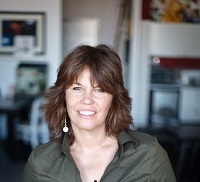
  • Arlene MillerGuest Blogger Arlene Miller, The Grammar Diva, gives us a sneak preview into her recently published second edition of The Best Little Grammar Book Ever!

    If you are a member of the nerdy world of grammarians, you know that there are “controversial” grammar topics. One of those is the use of the Oxford comma. Another is the use of the singular they.

    I use the Oxford comma, and I don’t use the singular they. But both these issues are up to you. Let’s talk about the singular they.

    They is a pronoun. A pronoun is a word that stands in for a noun. We know that they is third person plural. Third person singular pronouns are he, she, and it.

     Now how many times have you said, or heard someone say, Everyone is bringing their book to the meeting or something similar? Let’s pick that sentence apart:

    This is an issue of agreement: a singular subject has a singular verb form to go with it. And a singular noun or pronoun will have a singular pronoun of the same gender stand in for it. Everyone sounds plural, but it is singular. You can tell because you use a singular verb with it; you wouldn’t say Everyone are bringingBut you would say They are bringing because they is plural. Okay, so we have a singular subject (everyone) and a matching singular verb (is bringing), but what about their book? Their is plural. It doesn’t agree.

    Now if we said Everyone on the girls basketball team has her uniform, we would all be happy.

    But if everyone refers to a mixture of male and female, or if we simply don’t know, what do we do? Well, we used to just say his or her and be done with it. Actually, before that, we probably used to just say his and be done with it — but that is not politically correct and will not do any longer.

    What to do . . . what to do . . .

    Well, most everyone just uses their. It is easier to use one word than that clunky old his or her. The English language, so far, doesn’t have a word that can stand in for either a singular male or female.

    The sentence Everyone is bringing their book to the meeting is now acceptable and considered correct. Most people use it and have been using it, without knowing or caring, forever. But many people, especially when making a speech, do use he or she, or his or her

     Many grammarians and language purists are horrified by the use — and even more, the acceptance — of the singular they.

    My advice is to rewrite your sentence to avoid the issue entirely. It is usually really easy to do: Everyone is bringing a book to the meeting.

    Problem solved . . .

    Six years ago, I published my first book, The Best Little Grammar Book Ever!. Since then, I have written five more grammar books and a novel. Now, a second edition of that first book, with a new format, a new subtitle, and new information has been published. New information, you might ask?  Does grammar change? Yes, slowly, but things do change, although there are always those (me, among them) who would rather stick to the “rules”!

    Arlene Miller, The Grammar Diva, is also a blogger, copyeditor, speaker, and former English teacher.  She is a member of Redwood Writers and Bay Area Independent Publishers Association, where she has been a featured speaker.

    Book Launch for the Second Edition of The Best Little Grammar Book Ever! Speak and Write with Confidence/Avoid Common Mistakes  will be in the form of a Grammar Workshop at Petaluma Copperfield’s Books on Saturday, August 6 at 1 p.m.

  • Shirin BridgesGuest Blogger Shirin Bridges sheds light on Ingram Spark, BookBaby, and CreateSpace.

    The following is an excerpt from Shirin Bridges’ June 24, 2016 blog post on Goose Tracks.

    I was recently asked for the pros and cons of Ingram Spark vs. BookBaby. The answer, I quickly realized, is a complex one, greatly dependent on the particular publishing goals for the book. I also thought that in any decision tree, Amazon’s CreateSpace would have to rate a mention. So what follows is my attempt to delineate the decision tree I would adopt in choosing between these three services . . .

    [Note from Marlene: For the full post, please go to Shirin’s informative blog, Goose Tracks].

    1. How important are bookstores to your sales strategy?
      If NOT VERY, skip to 4.
      If VERY, keep reading.

    Self-published authors will find it almost impossible to get wide distribution in bookstores. Period. The reasons are legion but boil down to two words: workload and risk. Most self-published authors aren’t represented by distributors that bookstores are already doing business with, and there’s little incentive to slog through the paperwork to set up a new account or to take your books on consignment and handle you outside the system.

    . . .  bookstores might be a valid cornerstone of some self-publishers’ sales strategies. A good example would be if you have a book with a very specific market that can be reached through very specific bookstores. Take Katy Pye‘s Tracking the Flash: My Lighthouse Travel Log. Where would you sell that? Gift shops attached to lighthouses, or bookstores in the neighboring towns. If you’re a buyer in one of those stores . . .  You’d probably at least take a peek at something so specifically lighthouse-y.

    You may also decide for emotional reasons that getting into bookstores is important to you. It’s perfectly valid to feel that if you’re going to go to all this trouble to write, fund, and publish a book, you’re going to enjoy a book launch party and the pride of having your book on a shelf in your local bookstore(s). Depending on your relationship(s) with your local bookstore(s), this might be a real possibility and may even lead to a reasonable number of sales. Amanda Conran, for example, was guaranteed a launch party at Book Passage in Corte Madera, for the excellent reason that she works there. She sold around 120 copies of The Lost Celt on her big day. That’s about half the total sales of most self-published titles . . .

    . . . if you decide that bookstore sales are important to you, then drop CreateSpace right off the bat. Most independent bookstores will not knowingly take a CreateSpace book. They hate Amazon that much, and Amazon doesn’t help out by playing ball either: CreateSpace offers roughly half the discount (read profit margin) that bookstores are used to getting from other distributors and publishers.

    Ingram, on the other hand, already has a relationship with just about every bookstore in the USA and an established (and accepted) discount schedule. Within the industry, Lightning Source, Ingram’s original print-on-demand offering, was thought to provide much better production quality than CreateSpace—better color handling, more trim sizes, fewer typographic anomalies, etc. Spark has probably inherited some of this perception as a halo effect, even though its production process is different. (Lightning Source accepts printer-ready PDFs, forcing someone to pay attention to typography—or so one would hope; Spark, like CreateSpace, uses a “meat grinder”—an automatic formatting system that, in CreateSpace’s past, at least, was prone to errors.)

    The Amazon stigma, if you’re targeting bookstores, is a compelling argument for favoring Ingram Spark. But how do you choose between Spark and BookBaby?

    1. Do you want someone to produce your book for you?
      If you want help, keep reading.
      If you think you can do it yourself, skip to 3.

    As Ingram wholesales for other book producers, you can benefit from Ingram’s bookstore relationships without producing your book with Ingram. BookBaby is a popular option.

    When authors gush about their experiences with BookBaby, and quite a few of them do, it’s usually because BookBaby makes everything so easy. You pay them; they take care of it. Then, once your books are produced and in all the promised sales channels, they are out of the picture. No ongoing royalties, etc. It’s a straight “for fee” service.

    They are credited with an excellent support staff who actually answer the phone. They provide easy, one-shop access to professional book designers and editors. (BARNT BARNT, that’s my alarm system blaring: for a professional-quality book, you need both of these services!) If I wasn’t a publisher myself and didn’t have easy access to designers and editors, etc., I’d probably consider using BookBaby.

    1. Do you think you can produce a book yourself?
      On the other hand, some self-publishers don’t need BookBaby’s menu of services. Some are already working with editors. I’ve been retained by a few of them, and these clients are a determined bunch who want to be more than authors—they want control of the entire publication process. (I actually brought one an invitation to submit from a traditional publisher, and he turned it down because he wanted to retain all creative control.) They want to pick their own illustrators and/or designers and have control of the cover art. They relish the challenge of marketing. They are digitally adept enough to deal with the meat grinders without suffering dangerous spikes in blood pressure. If you have your stable of professionals in hand and don’t need much additional production help, Ingram Spark is the most direct route into the Ingram database. As Ingram is America’s largest book wholesaler, that’s the catalog most independent bookstores will use when placing an order.

    Be very clear that Ingram Spark, BookBaby, and nearly all similar services offer production, fulfillment, and easy ordering of your books, but although they use the word “distribution,” they are not full-service distributors. Industry distributors like Perseus and Independent Publishers Group have sales forces. In theory at least, their sales reps will go out there and plug your book. (In reality, their sales forces have thousands of books they can plug; they will plug what they think they can sell.)

    Ingram and BookBaby, et al., do not offer sales services. They do not sell to the trade. YOU have to do the work to get a bookstore to place an order. Although you will be in the Ingram database, that database during any given season includes thousands upon thousands of titles, so unless the bookstore is actively looking for it, your book will not be found.

    1. Are you primarily interested in online sales?
      . . .  If your intent is to go online-only, the choice comes down to Amazon vs. someone like BookBaby.

    BookBaby’s advantages were covered in #2 and they apply whether or not you’re interested in bookstores . . .  BookBaby will take care of production of the print-on-demand (POS) book and conversion of the e-book, and usher both into the appropriate retail channels, dominated by Amazon for POS, and Kindle for e-books. They’ll charge you a fee for their services, and then you will take all profits minus the cut to your retailers.

    Amazon is a little trickier in that not only do you have to handle print book production yourself, you have to handle ebook production also. Even if you are not intimidated by this, there will still be two separate Amazon companies with their own procedures that you’ll have to deal with: CreateSpace for the POS book; and Kindle for the e-book. If you would like your e-book available for every device, you will also have to convert your book into multiple e-book formats and distribute them separately to non-Kindle platforms like iBooks and Kobo.

    One plus of persevering and tackling CreateSpace and Kindle yourself is that you can take advantage of Kindle’s Select program. This gives you higher royalties and various marketing perks in exchange for a period of exclusivity—at a minimum, 90 days. Another advantage is that your POS books are directly in the Amazon system. You don’t have to ship books to them; they print them right off their own printers. But one of the most compelling reasons to consider the CreateSpace + Kindle bundle is profit. By not paying the likes of BookBaby, you can invest less in the production of your book. (Although, repeat repeat: I would really urge you to pay for a book designer for the cover, a professional editor, and ideally a separate copyeditor—so any apparent savings may be a false economy.) CreateSpace is also thought to generally offer lower per-book prices than Ingram Spark, although costs vary with page count and format. When you get into the publishing business, you will be bowled over by how thin the margins are, so any penny saved is a penny earned.

    OK, at this point I’m not sure if I’ve bored or depressed you into a stupor or confused you with all the branches of my decision tree, so I’m going to close with one last question:

    1. Do you really have to choose between them?
      Going back to the original question of whom I would choose, BookBaby or Ingram Spark, and having introduced Amazon as a third candidate myself, here is what I would try if I were a self-publisher with a commercial fiction novel. If, say, I had a romance, or a piece of sci-fi, or a mystery—all genres that do well digitally—and I were a first-time publisher with few professional contacts, I would:

    Go to BookBaby and have them help with design and editing, because, as I hope I’ve made abundantly clear, both are necessary to give your work its best shot, and unless you are from an affiliated field, you might not know what good design and editing is. BookBaby not only gives you access to those services, but their suppliers have been vetted, and from what I can see, BookBaby knows a thing or two about professionalism and design, so “better than nought” as they say in northern England (pronouncing the “nought” as “nowt”).

    Have them distribute your POS book, including to Amazon and Ingram. You will get the world’s largest online retailer, and the world’s largest bricks-and-mortar wholesaler as sales channels—recognizing that the responsibility for sales (pushing consumers to those channels) falls 100% on you.

    Order 100 (more if you’re really brave) print copies and sell them hard to friends and family. Take sample copies into all the independent bookstores within a 50-mile radius (my personal definition of “local”) and try to negotiate consignment deals. Do the math carefully here because you should expect to give away a commission of at least 40%. That may leave you with little profit.

    At the very least, negotiate a book launch party with the best independent bookstore within that radius. I work very, very hard at bringing my own crowd, knowing that I will get exactly three members of the public who happened to wander in.

    Have lots of photos taken signing books. This is your author’s moment, and most self-published authors will look back and realize they spent a few thousand dollars on it, so suck as much joy out of this marrow as you can.

    In the meantime, happy writing!

    Note from Marlene: Please go to Shirin Bridges’s blog, Goose Tracks, for the rest of her amazing and thorough report on this topic.

  • Guest Blogger Elaine Silver: How to show your expertise in your writing.

    Think about any book that you have read that really grabbed you. Take some time to read parts of that book again with the idea in mind of writerly authority.  Once you start looking for it, you will be dazzled at the facility with which the author commands the story.

    You can write like that too.

    Let’s examine the word authority. What feeling do you get reading the word “authority?” Do you feel rebellious, like you don’t want to listen to someone else? Do you feel like you want to immediately say “no” to a request? If you answered yes to these questions, then you think of authority as something that subjugates you.

    Or conversely, when you think of authority, do you feel secure knowing that someone else knows more than you do about something? Do you envision someone who can give you guidance and advice? Does having someone around in authority make you feel like all is handled?

    Or do you have both reactions to the word—positive and negative?

    It is my experience that many people are ambivalent about authority—both as it is exercised by others and by themselves. We seem, as a culture, to be confused about it. To whom do we give authority and why? When do we claim it ourselves? This ambivalence is understandable since we live in a heterogeneous culture with many value systems and many people claiming power over us who may not have our best interests at heart.

    What does this have to do with writing, you may ask? Well, actually, everything.

    The word authority comes from the word  “author.” From the Latin:  auctoritatem (nominative auctoritas) “invention, advice, opinion, influence, command,” from auctor “master, leader, author.”

    In my work as an editor, one issue that I deal with frequently is a writer who is reluctant to become an author, a leader—someone who is actually claiming authority over what the reader is reading and understanding.

    I can tell you that the writer/author/leader who does not claim authority might as well hang up her keyboard and call it a day.

    Here are two examples:

    I recently helped a vocal coach with a book about the technique she has developed to teach her singing students. She is without question an absolute authority on teaching singing and her students have had remarkable results using her methods. However, the initial version of the book did not reflect these facts. She backpedaled on many of her explanations of her methods. She wrote in passive sentence structures

    I asked her to describe to me how she acts in her studio sessions with her students. She painted a picture of herself as a confident leader who creatively deals with every issue that comes up and inspires her singers to move past their perceived limitations to achieve vocal prowess that they did not think possible. Armed with that knowledge, we changed her book and her writing to reflect this powerhouse of a teacher. Now her message comes through beautifully and forcefully, as it should.

    Another client of mine who is writing a memoir found herself awash in a powerful story but she was writing it as if she had no idea what was going on. This made me, as surrogate for the reader, uneasy and insecure. How am I supposed to trust this author if she doesn’t trust herself?

    This writer made the mistake many writers make. She did not take charge of the story and instead let her main character (her younger self) run the show. And the show she ran was a meandering and bumbling mess, much like her life. The author was confusing the actions of her main character with her own role as author. Once she began to differentiate between herself and her protagonist, the book gained cohesion and clarity while story remained an account of chaos and confusion. What a lovely achievement!

    No matter what the story is or who the main character is, the author must act as captain and keep steering the ship with a steady hand even in unruly seas.

    We read because we want to see the world through the eyes of the author. We want to know what he knows. We ask and expect her to be our leader and show us some new terrain. We expect our author authority to navigate us safely into and through an uncharted, exciting land that we have not experienced before.

    Know your story. Know the journey you want to take your reader on. Lead with confidence. Write with Authority.

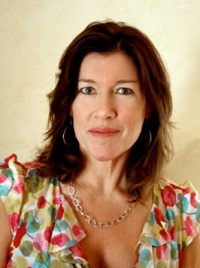
    Elaine Silver.200Elaine Silver helps writers realize the greatest potential of their writing by discovering their true intent and translating it to the pages of their books. She has written on topics as varied as choosing the right college to the innovations in green building techniques. Elaine’s specialty is seeing how your message will be perceived by others and guiding you to create your best work.

    Elaine will be one of the editors on the Editors Panel at Writers Forum on July 21, 2016, 6:30 pm to 8:30 pm at Petaluma Community Center.

  • Ellen SussmanGuest Blogger Ellen Sussman writes about the novelty of new places and how this opens interesting problems and possibilities for fictional characters.

    When I travel abroad I expect to be surprised. Life shouldn’t be the same in a foreign country. I want to shake up my world, to expose myself to new tastes and sounds and smells and voices. I want to see things that are so novel, so startling, that my eyes open wider. That experience – of expanding my horizons while traipsing across a new horizon – should not only transform me while I’m gone, but it should deliver me home again in some new, improved way.

    High demands for a little vacation.

    My sister travels to the same resort in Florida every year. She doesn’t want what I’m looking for. She wants food she’s familiar with, experiences that don’t challenge her, sheets with the same thread count as the sheets in her own house. I don’t think she’s alone. There are so many resorts around the world that look the same as each other – one could forget that one is in Mexico or Thailand or Italy. It will be easy to get a hamburger at that hotel and everyone will speak English and the gates are locked at night.

    But for those of us who want a foreign world that is, well, foreign, we head off in different directions.

    Three of my own novels, French Lessons, The Paradise Guest House and A Wedding in Provence, are set abroad — in Paris, Bali and Cassis. My American heroes discover that once they’ve traveled to a foreign country their world tilts on its access, that nothing is as they thought it was. It’s great material for fiction because a new world presents conflict as it rubs up against the status quo. And I have a grand time making my Americans fumble their way through unfamiliar places and cultures.

    A year ago I moved from Palo Alto to Sebastopol. I have never lived in the country before. Like a traveler in a foreign land, my eyes are wide open. I love this new landscape, the slower pace of life, these gentler neighbors. And I’ve found that my creative juices are flowing. My senses are sharper, my imagination is fired up. Now I understand that changing the landscape can happen right here at home. And it’s a wonderful thing for a writer to experience.

    Sussman.A Wedding in Provence

    Ellen Sussman is the New York Times bestselling author of four novels, A Wedding in Provence, The Paradise Guest House, French Lessons, and On a Night Like This. She is the editor of two critically acclaimed anthologies, Bad Girls: 26 Writers Misbehave and Dirty Words: A Literary Encyclopedia of Sex. She teaches through Stanford Continuing

    Studies and in private classes.

    Ellen Sussman will be the presenter at Writers Forum of Petaluma on Thursday, June 16, where her books will be available for purchase.

  • If you have written with me (Marlene), or if we have worked together on a writer/editor collaboration, you have heard me say “give the reader a visual.”  I’m so excited to discover Margie Lawson and her thoughts about visuals. The following is an excerpt from her May 20, 2016 guest blog post on Writers In The Storm.

    Margie Lawson – Guest Blogger:

    Most writers know Show Don’t Tell, but sometimes they think they’re showing when they are telling.

    Here’s my oh-so-easy check.

    Read the sentence that you think SHOWS the reader something.

    Ask yourself —- What’s the Visual?

    You may be surprised that the sentence doesn’t provide a visual.

    Wondering why I care?

    Wondering why I think you should care?

    Most readers have a video playing in their mind of the scene they are reading.

    If a writer TELLS instead of SHOWS, the reader’s screen goes blank. No imagery. No power.

    When the writer TELLS, they’re sharing what the POV [point of view] character is thinking. They’re intellectualizing for the POV character.

    The writer is not putting the emotional power on the page.

    TELLING:

    He looked angry.

    She seemed agreeable to the plan.

    He made a face.

    She didn’t say anything, but he could tell she was pleased.

    He knew she was nervous.

    She looked like she wanted to go with him.

    Jake seemed out of sorts.

    If you’ve read one of my blogs before, or taken one of my online courses, or consumed one of my lecture packets, you know I always provide examples that support my teaching points.

    Here comes the fun!

    Example 1:

    “Someone got hurt.”

    She studied Susan’s face. “Are you okay?”

    Whoops. What’s the visual?

    We’re missing the subtext. We need to know Susan’s facial expression.

    Example 2:

    The POV character is watching Sam.

    Sam moved around in an agitated manner.

    What’s the visual?

    Both parts of that short sentence are TELLING.

    How did Sam move?

    How does the POV character know Sam is agitated?

    What’s his facial expression?

    Example 3:

     Mike is the POV character.

    Traci seemed upset. “I need to leave.”

    Mike touched Traci’s arm. “Don’t leave. We need to talk.”

    What’s the Visual?  Mike touched Traci’s arm, but the reader doesn’t know how Mike can tell Traci is upset.

    The writer could SHOW, and share subtext, with Traci’s actions or face or voice.

    Writers don’t need to add SHOWING to every sentence or paragraph. But many sentences need those visuals. They share the emotion, hook the reader.

    Please click Margie Lawson’s Guest Blog Post to read the rest of Margie’s post on Writers In The Storm.

    Margie Lawson—editor, international presenter—teaches writers how to use her psychologically-based editing systems and deep editing techniques to create page turners. Margie has presented over ninety full day master classes for writers in the U.S., Canada, Australia, New Zealand, and on cruises in the Caribbean.

    To learn about Lawson Writer’s Academy, Margie’s 4-day Immersion Master Classes, her full day Master Class presentations, on-line courses, lecture packets, and newsletter, please visit www.margielawson.com.

    Writers In The Storm – very cool blog with a fabulous resources list.

    Writers In The Storm is a group of seasoned writers. We write in different genres and bring unique perspectives and strengths to the table.

    Along the way, we’ve discovered that there’s more to life than writing, and sometimes life can be the richest story of all.

    We chose Writers in the Storm as the name of this blog because every writer must weather the storm within: self doubt, rejection, deadlines and balancing our writing passion with everyday life. Not to mention the storm raging outside – the paradigm shift in the publishing industry.

    We began this blog in April of 2010. Over the years, we’ve narrowed our focus, to writing craft and inspiration. Many writers have helped us on the path, and we hope to give a hand back to aspiring writers.

    Writers in the storm


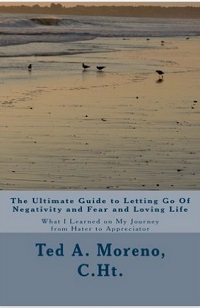
  • Guest Blogger Ted A. Moreno writes about description versus story and making up stories:

    Do you have a habit of making up stories? We know some people who have a tendency to exaggerate the truth. We think we know what is real. But do we really?

    Something that happened to me this morning:

    I was out for my morning walk when a police officer pulled up alongside of me in his car. He asked me my name and for my ID. He said that they had been looking for a missing person that had the potential of hurting themselves and that I fit the description. I gave him my ID, told him I wasn’t the one he was looking for and he drove away.

    Now, let me tell you a story.

    I was taking a walk, minding my own business, when a police car passed me. I nodded to the officer. A few minutes later he came back because he had nothing better to do and decided to harass me. He demanded my ID, and made up some story about looking for a missing person. I know he just wanted to mess with me because I nodded to him and they don’t like when you do that.

    What really happened?  Which is real? What is reality?

    We can spend days talking about reality, so why don’t we just try to stay in touch with reality. We want to deal with what’s real don’t we? We don’t want to waste our time dealing with what’s not real. Yet, the truth is, we do that all the time.

    I suggest that #1 is a description of what happened and that #2 is a story of what happened. See the difference?

    Those who study quantum physics have concluded that there is no objective reality “out there.” That means, for there to be reality, there must be you to describe it.  (Check out this video about the paradox of Schrodinger’s cat.)

    So we could say that reality is what we perceive, or experience. However, is it possible for two people to perceive the exact same thing, but have a different reality of that thing? Absolutely.

    The fact is that we each have our own individual reality. The reason that our personal reality can be so very different from someone else’s reality is not because of what we perceive, but because of what we make it mean. The meaning comes from us, making up stories. One of the defining characteristics of human beings is that we give meaning to just about everything by making up stories about it.

    In my work as a hypnotherapist, I help people see that we are all making up stories about what  happens to us. Because we are always making up stories, we believe them, and we can become “hypnotized” by them.

    Our reality consists of two parts:  There’s what happened, and then there’s us, making up stories about what happened. There is perception, and then there is interpretation.

    In my case, there’s what happened, (a police officer stopped me and asked my some questions) and then there’s my story of what happened (a police officer harassed me). The problem is, it’s really easy to get the two confused. We believe that our story about what happened is what happened, and that becomes our reality. Then we make decisions based on a story that for the most part, is made up.

    Meaning Making Machines Making Up Stories

    The fact is, humans are meaning making machines. We are always  making up stories about what happens to us, we can’t help it. That’s what gives each life its unique flavor. What that flavor tastes like will depend on what kind of stories you are making up. “My business failed, that means I’m a failure” has a pretty bitter taste. On the other hand “Because my business failed, I learned something that will help me succeed next time” is a little more palatable, as well as being infinitely more useful.

    Stuff “happens” all the time.  Most of the time, we can agree about what happened. Up to a point.

    We can agree that the weather is hot. But we’re not going to stop there; we are always making up stories about the weather!  We have to make up a story about what happened, it’s our nature to do so. For example:

    What happened: The temperature outside is hot.

    Your story of what happened might be: I’m going to suffer today because I hate the heat. Or, if you are a kid, you might make up a different story: It’s hot so we get to swim in the pool!

    Sometimes though, the stories we make up can be really lousy:

    WH (What Happened): I asked mommy to buy me a pony and she didn’t.

    SWH (Story of What Happened): Mommy didn’t love me.

    or

    WH: I don’t live in a mansion like the people on TV.

    SWH: I’m a loser!

    One of the biggest obstacles people have to personal happiness is that they are making up stories that are really crappy about what happened to them!

    It’s very easy to believe that what happened and the story of what happened are the same thing, but they rarely are. And if we tell this story over and over repeatedly, we can “hypnotize” ourselves into believing that the story is what happened, and that our story is reality, when all it is us making up stories which may or may not be accurate.

    If that’s not bad enough, we act as if our stories are real. In other words, we base our behavior on a made up story, sometimes with dire consequences.

    For example:

    WH: Mommy didn’t buy me a pony

    SWH: Mommy didn’t love me.

    Behavior based on your story: I resent my mother and we don’t talk. (I want to make it clear that this is just an example. Of the eight kids my mom had, I’m her favorite. That’s my story and I’m sticking to it!)

    WH: I don’t live in a mansion like the people on TV.

    SWH: I’m a loser!

    Behavior based in your story: Since I’m a loser, I’ll break the law to get what I want.

    One of the most important skills we can learn is to distinguish between what happened, and our story of what happened, because the stories that we make up will affect our lives, for better or worse.

    The quality of our lives is not determined by what happens to us, but by the stories we tell about what happens to us. What we do in our lives will in a large part be determined by the meaning we attach to our life’s circumstances. If we can become aware of those stories and how they affect our lives, then we have a choice. We can begin making up stories that empower us, instead of making up stories the dis-empower us.  The meaning of our lives is made up by us, so it’s all invented anyway. We are the creators of our lives. The only question is, what do you want to create?

    Much of my work with my hypnotherapy clients involves helping them identify stories they are telling themselves that are disempowering and downright scary. These stories rob a person of confidence, self esteem and aliveness, while perpetuating fear, doubt and unhappiness. The first question I ask of them is: “Ok, something happened to you, but what’s the story you’re making up about that, and what is that doing for you?”

    I help people to stop making up stories that do nothing for them and I use hypnosis to help people’s minds become comfortable with making up stories that speak to their courage, strength, intelligence and ability to overcome challenges.  It doesn’t take that long to start telling a new story. It all depends on how invested you are in your old story.

    So the next time you feel anger, or fear, or doubt or sadness, ask yourself: What is the story I’m telling that makes me feel this way? You can choose to tell a different story, or you may want to keep that story for now, and that’s ok. It’s your story, after all. We all have one.

    In conclusion, let me suggest that you don’t believe a word I’ve written. It’s just my story, and it works for me. I hope at least some of it works for you as well.

    Ted A. Moreno

    Originally posted on The Moreno Method Blog on March 30, 2016

    Moreno.cdNote from Marlene: I have used Ted’s relaxation cds for years and I highly recommend them for relaxation and de-stressing.

    Hypnosis Audio Recordings By Ted A. Moreno, Certified Hypnotherapist

    Hypnosis audio recordings in the form of CDs and mp3 downloads are a popular and effective way way to reinforce positive changes in your life. By listening to these recordings, you can easily go into a hypnotic state and benefit from  positive suggestions reinforcing relaxation, motivation and the desire to reach your goals.


  • Guest Blogger Francis H. Powell writes about creating a great story.

    Confronted with a blank screen, poised to  tap away,  how to go about creating that great story. Perhaps one primary consideration is the theme.  Maybe the theme should  be a ghostly shadow within the confines of the story, not screaming at the reader, but there none the less.  It may make the reader think about their own lives, there might be a moral to be learned, but a writer should not take on the role of a preacher.

    Then there has to be a plot, all the conflict or struggle that the main character or characters go through. The conflict should develop in intensity and excitement, reaching some kind of climax.  If you are writing a novel there may be a number of conflicts interspersed, but a short story will have only one principal conflict.

    Moving onto story structure,  the story has to entice the reader, right from the first sentence.  Equally then, ending has to round things off perfectly.  You may have your theme and an outline of the story, but how are you going to tell it… a writer needs to decide about writing the story either in “first person” or in “third person.”  Will you be using “he,” “she,” and “it”—so writing in third person means telling a story as if it’s all about other people., or will you be writing using “I”—so writing in first person means telling a story as if it happened to you.  If in your head you have a rough idea of the theme,  you will also know which tense you are going to use,  either “present tense” or “past tense.” Writing in past tense means writing as if the story already happened, which is typical  manner in which most stories are written. Writing in present tense means writing as if the story is happening right now.  Normally you can’t mix the two.

    An important consideration is the characters.  I like to “live” with characters in my head, before committing to write about them.  For me the name of the character, says a lot about the character, for example in my short stories, I have a character called “Bugeyes” and the story revolves around the fact that he is a person who suffers intensely, due to his oversized eyes.  Lead characters should be someone readers can feel something in common with, or feel empathy. In my stories I love to create evil characters.  My characters are far from perfect, have flaws and idiosyncrasies.  Characters are interesting if they are not too one dimensional,  even evil characters have to have some kind of redeeming feature, or perhaps they have been victims themselves in one way or another.

    Settings are also paramount. In my book there is quite a range of different settings,  some are set in America, for example my story “Opium” is set in America, post-civil war.

    Then there is the question of language,  it has to really correspond with your story.

    A writer will tend to use actions and speech to let readers know what’s happening. Showing , rather than telling, using  direct more “real life” quotes like “Go away!” instead of indirect quotes like “She told him to go away.”

    You don’t have to write over elaborately to write well. Don’t shy away from using simple words and simple sentences, so you words and sentences cut through easily.

    I often spend a long time mulling over what is the best word to use, glued to a thesaurus. Each sentence and paragraph should resonate, I often spend a lot of time, writing and rewriting so as to get the optimum sentence. Some sentences or paragraph can be redundant. You can get carried away, lose sight of the story, or go off on tangents.

    Francis H. PowellFrancis H. Powell‘s, Flight of Destiny , is a book of 22 short stories.  Born in a commuter belt city called Reading  and like many a middle or upper class child of such times, Powell was shunted off to an all-male boarding school at eight, away from parents for periods of up to twelve weeks time.  What better way to put all angst into short stories.

    Powell began writing while living in Austria.  His writing evolved while living in Paris. Flight of Destiny won the Compilation/anthologies category in the Pacific Rim book festival.


  • Mary C. MooreGuest Blogger Mary C. Moore (literary agent) writes about the rejection form letter.

    I recently wrote a short story, my first in over a year. Inspiration struck and I listened.

    Unlike novel writing, short stories are short-term rewarding because you reach “the end,” while you are still loving that muse whispering in your ear. I was particularly excited about this story, as I knew exactly which magazine I was going to submit it to. A few years ago, said magazine had rejected another story of mine, but with glowing praise and a request to see more of my work. I kept that in mind, because this magazine is a professionally paying market and one that would be quite a feather in my writing resume. Thus after some furious late nights, anxious waiting for the beta reads to come back, and a lot of editing, I sent off my beautiful 3k-word gem to this magazine.
    Another rather sweet aspect of short stories is these days most magazines use submission software. This means you can stalk, I mean track, your submissions. And, at least in the SciFi/Fantasy professional market, many of them have fairly quick turn around times. This is in part because they don’t allow simultaneous subs in part because the stories are shorter. Altogether it’s a much quicker and less frustrating process than novel submissions.

    So a week full of checking the website later, there it was, that email. I took a deep breath and opened it to find… a form rejection letter.

    The range of emotions that followed is one every writer is familiar with. But there was one more.

    Understanding. Working for a literary agency, I’ve sent out hundreds of form rejection letters over the years. And recently I opened up my own inbox to queries. In the beginning I tried to make each response a bit personal, a note here, a comment there. I knew what it was like to be on the other side, and that experience pushed me to communicate personally as much as I could, especially if the writing had potential. However, I discovered, to my dismay, that the majority of personal rejections were not appreciated, in fact they were often responded to with a “could you clarify this?” or “can you take this further?” or “what can I edit to change your mind?”

    My personal notes were not received as the compliments they were meant to be, but rather as an opening for an editorial conversation. One that I had to ignore. It made me feel guilty, not continuing the conversations, but there is not enough time in an agent’s schedule to answer every author question that floats through our inbox. I was also spending more time coming up with ways to make the reason I was passing on the project sound nice and encouraging and editorially useful, rather than focusing my energy on considering each submission carefully. Which made me reluctant to open my inbox. I had burned out. Thus more and more I found myself responding with a form rejection, both in the interest of time and clear communication. My defense of the form rejection:

    • It’s a clear answer.
    • You receive said answer faster.
    • It’s less emotional.
    • It helps prevent slushpile burnout, so the agent/reader can focus on what’s important, considering the submission itself, rather than coming up with something to say in response to it.
    • The form rejection helps to keep expectations in check.

    I know most authors who don’t do their research don’t understand this, because they don’t see the other side. I can’t count the number of times I’ve heard writers say, “it couldn’t be that hard to respond to a query!” Let me tell you, yes, yes it can.

    Every once in a while, if the writing jumps out at me, or if I’ve met the author in person, I will still respond personally, but for the most part I’ve become a fan of the form rejection. Sure you could argue that if I hadn’t gotten that personal response back in the day, I wouldn’t have been as eager to submit to the magazine, but I also wouldn’t have had as high of hopes. At least you can take comfort in the knowledge that I’m getting them as good as I’m giving them. We all just have to keep on keeping on. My so-called gem of a short story is already sunk into another slushpile.

    Originally posted 1/4/16, “In Defense of the Form Rejection,” on Mary C. Moore’s Blog.

    Mary will be the Writers Forum presenter on May 19, 2016

    Mary C. Moore has been with Kimberley Cameron & Associates since 2012. Mary specializes in science fiction and fantasy, although she does appreciate a wide breadth of the literary canon. She started reading at an early age, and her love of reading continued, as she earned her B.S. in biology from the University of California San Diego. She was a veterinarian’s assistant, then a field biologist, and then a zookeeper.

    Mary’s passion for writing and books caused her to veer off her original path and drew her to publishing. She graduated from Mills College, Oakland with an MFA in Creative Writing and English and after freelancing for two years as an editor and writer in non-literary sectors, she began an internship with Kimberley Cameron & Associates and found she loved working as a literary agent as much as she loved writing.

  • A conversation with Rachael Herron, author of Herron. The Ones Who Matter MostThe Ones Who Matter Most.

    “How did you get the idea for this book?”

    “The original idea for any of my novels usually gets buried so deep that by the time I’ve finished writing, I can barely remember what the first ideas was. This book, though, was different. The first scene was my original idea.”

    “Do you always know the endings of your novels when you start them?”

    “I wish! I know writers who know their endings and aim for them like marksmen. Rather than apples to be hit with arrows, though, my endings are always asymptotes. I write toward them forever, getting closer and closer but never quite getting there. Usually I have to revise the whole book (minus the ending) a few times until I figure out what should really happen.”

    Excerpted from the Conversation Guide at the end of Rachael Herron‘s book, The Ones Who Matter Most.