Is there a ghost in your future?

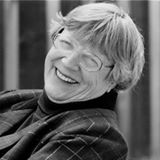
  • Guest Blogger Holly Robinson writers about ghost writing:

    Recently, I appeared on a radio show to promote a literary event. We were talking about my latest novel, but inevitably the host asked, “So you’re a ghostwriter, too? Who have you written for?”

    I laughed and gave my standard answer: “Sorry. If I told you, I’d have to kill you.”

    “But don’t you even care if your name’s not on the cover?” he asked, sounding offended on my behalf.

    The truth? No. I write novels, essays, and articles under my own name, but when I’m ghostwriting, my job is to stand behind the curtain and channel a voice.

    By now, I have ghosted over twenty books. I fell into the profession accidentally when my agent, who knew I’d studied biology in college, asked if I’d be interested in helping an editor fix a messy health book written by a doctor. In other words, I was the book doctor to the doctor. It was fun, and it paid enough that I started fantasizing about taking out smaller college loans for my kids.

    Fixing that one book quickly led to another. The jobs seemed to fall into my lap. Ghostwriters may be invisible to the public, but editors know who’s behind the curtain. Gradually I expanded my projects from just health and science books to include memoirs by business executives, cookbook authors, and celebrities. I was being introduced to whole new worlds both on the page and off.

    These projects also led me to develop more creative ways of working, since one reason celebrities make all of that money is because they never sit still. I interview my clients in person occasionally, but more often by phone, as the client rushes to the next TV shoot or salon appointment. One actress was so busy on a stage production that she had to answer my questions via Dropbox; I fed the questions to her talent agent, who then sent me audio files of her responses. Another actor could call me only late at night, after hosting his TV show.

    “I bet you hate not being able to write fiction full-time,” a friend said recently, when I mentioned a new ghostwriting project. “I mean, it’s not like a book is really yours if you’re ghostwriting it, right?”

    Yes, it’s a little surreal to walk into a bookstore during an author event, as I did recently, while someone else is reading a chapter I wrote—especially in a sonorous male voice very unlike my own. It’s often difficult for me to sit quietly in the audience without shouting, “Hey! Read from chapter four! That’s the really exciting part!”

    But, once you finish ghosting a book, it’s not yours anymore. The book now belongs to your client, as well it should. And writing these books is a gold mine for a fiction writer like me who is interested in studying character development, new settings, and how to build narrative tension. “Ghostwriting” can mean anything from developing a messy partial manuscript to riding shotgun through another person’s life in real time. Sometimes I’m acting as a journalist, researching background material. More often, I’m in a therapist’s role, asking, “How did you feel when that happened? What impact did that have on your life?”

    My goal is to ferret out the truth of a story. I love hearing a client say, “Wow, I can’t believe I just told you that,” because then I know we’ve got something raw and real that we can polish and share.

    Journals on quiltOnce I’ve gathered the material I need, I become a quilter. I remember my grandmother laying out her swatches of fabric on the living room floor until she found patterns that pleased her. That’s what I do, too: I take these fascinating scraps of material from people’s lives and piece them into unique patterns. Yes, I might add my own touches with the hand stitching, but that is strictly ornamental. The tone and cadence should belong distinctly to my client, so that anyone who reads the book can recognize the voice.

    The longer I do this work, the more honored I am. I have learned to banish my own experiences and expectations of what a story “should” look like. Instead, I let the pieces emerge and fall around me in an infinite variety of patterns, so that I can piece together powerful stories that deserve to be told.

    Originally posted on Holly’s Blog, February 24, 2016.

    Novelist, journalist and celebrity ghost writer Holly Robinson is the author of several books, including The Gerbil farmer’s Daughter: A Memoir and the novels Beach Plum Island and Haven Lake. Her articles and essays appear frequently in The Huffington Post, More, Parents, Redbook and dozens of other newspapers and magazines. She and her husband have five children and a stubborn Pekingese. They divide their time between Massachusetts and Prince Edward Island, and are crazy enough to be fixing up old houses one shingle at a time in both places.

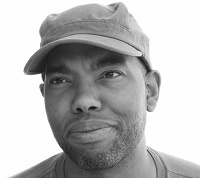
  • Guest Blogger Daedalus Howell reveals a tried and true method to reach new audiences.

    The revolution will be serialized. As it’s always been. Much of episodic entertainment, from our favorite shows on Netflix or premium cable to the summertime superhero blockbusters, are issued in discrete elements that comprise a whole story. Comic books have long functioned in this manner, ditto popular literature, which was once serialized in newspapers. And, of course, there’s the staggeringly popular Serial podcast, which not only popularized a new storytelling medium but so embraced the concept of serialization that it branded itself with it. Clearly, serialization is back, representing to some, a vanguard in publishing. It can also be an integral part of your creative process.

    Howell.Quantum DeadlineThis is what I’ve found creating Quantum Deadline, a sci-fi crime romp that comically explores the death of newspapers through the foggy lens of a reporter tripping through the multiverse. Like many authors, my project found its first iteration as a National Novel Writing Month novel — one November, I arranged 50,000+ English words in a manner that produced the general effect of a novel. Despite the fact that the result was an unholy (if occasionally inspired) mess, I remained committed to seeing it through the bitter end of a Kindle download.

    I put it in the proverbial drawer through the winter to cool and found when I exhumed it the following spring, I was ready to rewrite it. That said, there is no “National Rewriting Your Novel Month” and I loathed the notion of working alone sans the esprit de corps I’d experienced with NaNoWriMo.

    I tried. I failed. I had no sense of accountability or “ticking clock” to compel me back to the work. Not that I was enthralled with the prospects I perceived in the book, it’s just that, as a career-long newspaper columnist, I’d grown accustomed to a weekly deadline. And someone to enforce it. With a speculative, self-generated project like Quantum Deadline, there was neither a deadline nor an irate editor to make me deliver. That’s when I began to contemplate serialization. I needed to feel accountable and I needed a schedule — two aspects of serialization that I theretofore hadn’t realized were possibilities.

    Moreover, I suspected serialization would allow me to “course correct” if I found that my readers were losing interest or recognize possibilities in the work that I hadn’t. I think of it as akin to The Lean Startup concept of creating a “minimum viable product” that allows for pivots between plot points.

    “The fundamental activity of a startup is to turn ideas into products, measure how customers respond, and then learn whether to pivot or persevere,” writes Eric Reis, The Lean Startup’s main advocate and author of a popular business tome of the same name.

    If we replace the term “startup” with the word “writing,” the path to serialization becomes self-evident. Instead of hunkering down, alone in the back of a Starbucks, the premise of releasing iterations of your work while refining it allows you the opportunity to grow and create community around it in the meantime.

    The trick is to be responsive to the concerns of your readership rather than defensive. You’re creating a feedback loop, not a combat zone. You don’t need to completely alter the vision of your paranormal YA romance when your readership is flagging, nagging or otherwise bagging on your work. However, you do have the opportunity to make adjustments in the next installment (and retroactively as well — serial readers are very forgiving, I find, so long as you point to relevant changes that improve their enjoyment of the work).

    Likewise, authors are advised to read Austin Kleon’s excellent book Show Your Work!, which extols the virtues of sharing your creative process as a means of cultivating an audience. Much in the same way film studios invite entertainment reporters on set to drum up interest in a film prior to its release, Kleon suggests sharing your process and inspirations as you create. This notion also dovetails nicely with “rewriting in public” through serialization.

    Writing a serial not only creates both context and momentum for one’s creative output, it cultivates community with your work as its rallying point. Chapter by chapter, week by week, you steer us deeper into your creative world — a world we may not have seen were it not for the revolutionary resurgence of the serial. As Gil Scott-Heron said, “The revolution will put you in the driver seat.”

    Note from Marlene: The “Now What” feature of National Novel Writing Month supports  “the revision and publishing process. It’s an extension of our anything-goes, wombat-infused noveling philosophy, with the added aim of helping you fulfill your novel’s potential: from first draft to final.”

    Daedalus will be the April 21 Writers Forum presenter, talking about, “Write Who You Know: How to Use Your Personal Life in Your Fiction And Memoir Writing Without Ruining Your Relationships.”

    Daedalus Howell is the author, most recently, of Quantum Deadline. He hosts the Culture Dept. podcast, is a radio personality on KSVY and KSRO, hosts the TV show 707, and blogs for Men’s Health and Petaluma’s Rivertown Report. Otherwise, he’s at DaedalusHowell.com.

  • Jane DystelToday’s Guest Blogger is Jane Dystel, president of Dystel & Goderich Literary Management:

    Over the weekend, I finished a remarkable first novel.  The author had taken many years to complete this work and, in the end, I think the time it took her to do so has paid off (of course, only the marketplace will tell).

    Thinking about this – the time it takes a writer to finish a book – brought to mind how different each writer’s process is.  I found this very interesting piece on the subject in the Huffington Post.

    I have clients who take many years to finish their novels, much like the writer whose work I read this weekend.   Then, there are those who actually ask for deadlines (from me) by when they should have their next manuscript completed.  And then, of course, there are those who can conceptualize their stories and write them down much much faster.

    In the end, there is no right answer to how long it should take a writer to complete his/her manuscript.  It is what works for each individual.  I find it’s best not to compare your process to others’. Do what feels right for you.

    Originally posted on the Dystel and Goderich website, February 29, 2016, “How Long Should It Take Me To Write My Novel?”

    Note from Marlene: Jane’s thoughts about self-publishing are in the May 2016 issue of The Writer Magazine. Here’s an excerpt: “As an agency, we are now more interested in developing . . . authors’ careers and helping them be successful hybrid authors—those who are traditionally published and continue to self-publish at the same time.”

    Jane Dystel, President, has been an agent since 1986. Her publishing career began at Bantam Books. She then moved to Grosset & Dunlap, where she was a managing editor and later an acquisitions editor. From there, she went on to become Publisher of World Almanac Publications, where she created her own imprint. When she joined the agency that would soon become Acton and Dystel, Inc., she quickly developed a reputation for honesty, forthrightness, hard work, and real commitment to her authors and their writing careers. In 1994, with a growing roster of clients, she founded Jane Dystel Literary Management, which became Dystel & Goderich Literary Management in 2003. Born in Chicago, Jane grew up in Rye, New York. She is the daughter of publishing legend, Oscar Dystel, who is currently a consultant for DGLM. In her teens, she was an accomplished figure skater. Jane received her BA from New York University and attended Georgetown law school for one year before leaving for her first job in publishing. She has an abiding interest in legal subjects. She is married to Steven Schwinder and has a daughter, Jessica, and a son, Zachary. She lives in New York City with her family and two dachshunds and is a tenacious golfer.


  • irlThursdays are Guest Bloggers days on The Write Spot Blog. If you have tips about the craft or the business of writing, you could be a guest blogger. Email your idea to Marlene.

    Perhaps you have tips about:

    ~How to find time to write

    ~ Ways to develop characters

    ~How to incorporate location in writing

    ~Writing Resources

    ~Helpful writing websites

    ~How to research

    ~How to write realistic action during a dialogue scene

    Being a guest blogger is a great way to share what you know about writing. Think of it like writing an article for a writing magazine. What is your special writing tip?

    BLOG HOP – Before participating as a Blog Hopper, I wondered what that meant. I could not picture it. Right now, I’m part of a St. Patrick’s Day Blog Hop, organized by author and blogger Francis H. Powell. Here’s how it works:

    Click on Blog Hop. You will be swiftly transported to a landing page that Francis created for this blog hop. Scroll down. Click on a blogger’s name and quicker than a leprechaun can tip his hat, you can explore the terrain of an entrepreneurial blogger.

    Bloggers: Contact Marlene or Francis to join us in our next Blog Hop. It’s really easy! And a fun way to get to know other bloggers and writers.

    March.Blog Hop

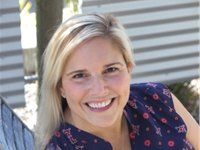
  • Guest Blogger Amanda McTigue . . .

    I’ll confess with some dismay that contrary to the many uplifting articles and memoirs I have read about the serenity of older age, it continues to elude me. Serenity, that is, not the march of years across my face, kneecaps and pelvic floor muscles.

    I’m looking forward to any later-in-life serenity that may come my way. Indeed, I practice all kinds of meditations and mantras and daily exercises, etc., to invite it in. But my emotional set point tends to be what it’s always been: low-level (self)doubt.

    That’s the place whence I write. If that’s true for you, let me offer some slant wisdom here from some fellow artists. Take Tatiana Maslany. You may have seen her in a futuristic TV show called “Orphan Black” in which she plays (gorgeously!) multiple clones of herself. She’s a hell of a young actor, and here she quotes one of the great dancer/choreographers, Martha Graham:

    “It is not your business to determine how good [your work] is, nor how valuable it is, nor how it compares with other expressions. It is your business to keep it yours clearly and directly, to keep the channel open… There is no satisfaction whatever at any time. There is only a queer, divine dissatisfaction, a blessed unrest that keeps us marching, and makes us more alive than the others.”

    Snaps to Ms. Graham and Ms. Maslany.

    Or here’s a writer I love, Peter Schjeldahl, describing the work of the painter Albert Oehlen. I know next to nothing about the visual arts, but I always look for Mr. Schjeldahl’s columns in The New Yorker because I love the ways in which he helps me see things:

    “Oehlen’s process has evinced endless sorts of borderline-desperate improvisation—until a painting isn’t finished, exactly, but somehow beyond further aid. He told me, ‘People don’t realize that when you are working on a painting, every day you are seeing something awful.’”

    “Divine dissatisfaction.” “Blessed unrest.” “Beyond further aid.” These are my kinds of people.

    Good work, great work, and certainly awful work: it all comes out of whatever souls we’ve been assigned. While I wait for serenity to grace my days, I write. Often the moments before addressing the page are filled with dread, needless dread, yes, but it’s my dread. It doesn’t matter. I write. This is something I’ve taught myself. You can too. When my unrest isn’t “blessed,” my rule is, write it, don’t read it. Not yet. If I think things need fixing, they’ll get fixed later, but in the moment, I write. I slap it down. Just the way I’m doing here about slapping it down.

    I’ll cop to a suspicion I carry—really something closer to superstition. I wonder whether my unrest is precisely what makes me productive. You may wonder the same. But let’s let the rest of the world chatter over that one, while we get to the page.

    Confident or not, joyous or dread-filled, I’m going to go ahead and climb into the boat I keep tethered right here at my desk. I’m going to untie that hitch and launch. Some days I motor out. Some days I just drift. But out I go, untethered to how I feel about the work. The feelings may come with me, or not. Either way. Out we go. So be it. I’m writing.

    Citations:

    Dickinson, Emily. Tell all the truth but tell it slant. Poem #1263.

    Loofbourow, Lili. (2015, April 5). Anywoman. The New York Times

    Schjeldahl, Peter. (2015, June 22). Painting’s Point Man. The New Yorker

    Amanda will be the March 17 Writers Forum Presenter: Writing Emotion: How Do You Catch a Cloud and Pin it Down?

    Amanda’s novel, Going to Solace, was cited by public radio KRCB’s literary program “Word by Word” as a Best Read of 2012. She holds the West Side Stories Petaluma championship for live storytelling (2013 and 2014). She also makes regular appearances with the monthly “Get Lit” gathering at Petaluma’s Corkscrew Wine Bar. She’s just returned from Cuba where she was researching her second novel. In 2016-17, she’ll be directing “The Magic Flute” at Sonoma State University.

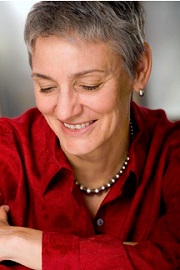
  • Leslie Larson (2)Guest Blogger Leslie Larson gives us the scoop on where stories come from.

    Writers on reading tours can be pretty sure that as soon as it’s time for Q & A, someone’s going to ask them where they got the story. That’s the word that’s usually used, got, as if the author might have picked up the story in the maternity ward at San Francisco General Hospital, or found it in the frozen food aisle at Safeway. The question might be offhand, as in, “Where’d you find those chenille throw pillows? or it may be asked with the earnestness and urgency of a child questioning the existence of God. It’s often followed by a swarm of spinoff questions. Did the story come to you all of a sudden? Did you just start writing and see what happened? Did you start with an outline? Did this happen to you?

    Some writers give sly responses to the inevitable question of where they get their ideas.

    “I steal them from girls,” Dorothy Allison quipped at a reading I attended. Robin Hemley, who wrote Turning Life Into Fiction answered, “Joyce Carol Oates gives me her extras.”

    No matter how many times I’m asked this question (and it ranks right up there with “How did you decide to become a writer?” and “What is your writing routine?”), I still don’t know the answer. I suspect that most writers spend a fair amount of time wondering where their stories come from, though they probably spend more time worrying about where their stories are going.

    “Where a story begins in the mind I am not sure,” Annie Proulx said in an interview in The Missouri Review. “A memory of haystacks, maybe, or wheel ruts in the ruined stone, the ironies that fall out of the friction between past and present, some casual phrase overheard. But something kicks in, some powerful juxtaposition, and the whole book shapes itself up in the mind.”

    Personally, I don’t care so much where stories comes from, as long as they come. One of the most exciting times for me is the state of fidgety nervousness, or perhaps excitement, that signals something’s out there, something’s taking shape. I begin to hear whispers. I catch glimpses of shapes I can’t quite make out. Characters materialize in bits and pieces, beginning perhaps with only a bitten-down thumbnail, a lisp, or a weakness for salty foods. It might be a scene: an old kitchen or a vacant lot, a place where something happened or is about to happen. As these tantalizing fragments begin to surface, I start looking everywhere for the story: in dreams, in the newspaper, on the bus. The next bit of conversation I overhear or the discolored scrap of notebook paper I find on the sidewalk may be exactly what I need to launch my story. There’s no telling where it might crop up.

    In the interview mentioned above, Proulx said her character Loyal Blood, from Postcards, leaped complete and wholly formed from a 1930s Vermont state prison mug shot. And there’s the famous case of Thomas Hardy who, while pruning his fruit trees, conceived from start to finish the plot of the greatest novel he would ever write. Unfortunately, he forgot it by the time he finished the job, so he pocketed his shears and went inside for dinner.

    Certain activities are conducive to finding stories. For me it’s walking, weeding, popcorn eating, and personal hygiene—particularly nail clipping and eyebrow tweezing. And reading, that’s a big one. When I’m looking for my story, I sense the presence of untold or abandoned stories in other writers’ books. The roads not taken, the bones and corpses that fertilized that novel, the shoots nipped off before they could bloom. Something might get knocked loose in my head. A cast-off stalk that didn’t find the right soil in one writer’s story might take root in mine and surprise me with a magnificent blossom.

    I’ve found that you can’t force a story to come; you can’t get one—like a new car—just because you want it. But you have to be ready for it: waiting, watching, listening. In this condition, you’re likely to get too many ideas, because everything takes on meaning. You realize how ripe our everyday lives are with intrigue, insanity, loopy characters, hilarity, irony, and twists of fate. We’re surrounded by stories, our own and other people’s. Family secrets, childhood traumas, persistent fantasies. All fair game.

    Do we find the story, or does it find us? Is it already inside us, just waiting to be told? Why do we write about some things rather than others? More than once, I’ve started what I thought was my novel, armed with notes, character sketches, rudimentary scenes, outlines, only to find myself—after ten, or fifty, or two hundred pages—putting it aside so I can crank out what I think will be a short piece, a piece that turns out to be the novel itself—the real story, or at least the story that gets told. The original becomes yet one more stack of aging papers, another dead-end reproaching me from the shelf in my closet.

    Someone else’s story, perhaps, waiting to be found.

    Leslie Larson’s critically acclaimed first novel, Slipstream, was a BookSense Notable Book, a Target Breakout Book, winner of the Astraea Award for Fiction, and a finalist for the Lambda Literary Award. Her second novel, Breaking Out of Bedlam was an AARP Hot Pick and a finalist for France’s Chronos Prize in Literature, awarded by the National Foundation of Gerontology. The New York Times called Breaking Out of Bedlam, “A kick.” Publishers Weekly said, Delightful…Plenty of heart and humor.” And the Boston Globe called it, “A funny, touching novel.”

    Leslie’s work has appeared in O (The Oprah Magazine), Faultline, the East Bay Express, More magazine, Writer magazine, and the Women’s Review of Books, among other publications. She is an editor at North Atlantic Books and a former senior writer at the University of California Press.

    Leslie has taught creative writing workshops across the country, was a writer-in-residence at Hedgebrook, and has been a member of the Macondo Writer’s Workshop since 1995. She was born in San Diego and lives in the Berkeley.

  • Koslowsky_headshotGuest Blogger Rob Koslowsky writes about how . . .

    Mathematicians Address Verb(al) Decay

    Regular verbs feature a past tense that ends in “ed.” Words like brush or bump become brushed and bumped in the past tense. But what do you do with those irregular verbs that don’t follow such an easy rule?

    Arise becomes arose (past simple) or arisen (past participle) while find becomes found in both cases of past tense. English students need not despair. Two mathematicians recently collaborated and uncovered the fact that irregular verbs will convert to a regular form. It just takes time.

    The principle of atomic half-life is invoked. Erez Lieberman and Jean-Baptiste Michel’s formula suggests that the more popular the verb the longer the time it takes to be reduced to a regular form in its past tense. For example, have will become haved instead of had—in 38,800 years—and hold will become holded instead of held, but in a much shorter 5,400-year timeframe. Note that have is used 100 times more frequently than hold, a characteristic leading to its longer half life.

    Erez Lieberman says, “Mathematical analysis of this linguistic evolution reveals that irregular verb conjugations behave in an extremely regular way—one that can yield predictions and insights into the future stages of a verb’s evolutionary trajectory.”

    Their mathematical formula was based on the analysis of a 177-word long list of Old English irregular verbs that have been regularized over time. The extrapolation of the English language that has evolved over time is one that will take time to prove.

    Jean-Baptiste Michel says, “Before, language was considered too messy and difficult a system for mathematical study, but now we’re able to successfully quantify an aspect of how language changes and develops.”

    I suppose we’ll continue speaking and monitoring which verbs become regularized. I suspect my descendants will one day comment with wonder on this article that they seed (formerly saw) and readed (formerly read).

    Rob Koslowsky has spent 34 years in the high technology field of optical fiber transmission systems and solar energy systems. His early writings were based on personal experiences and historical non-fiction in the areas of science and technology. This work built upon his first book entitled A World Perspective through 21st Century Eyes (2004) and provides stimulating content for his monthly newsletter A World Perspective, now in its twelfth year of publication. His second book, The Upstart Startup: How Cerent Transformed Cisco, was published in 2014.

    Rob has served as an officer of the Redwood branch of the California Writers Club and has written numerous short stories, song lyrics, and poems.

    Breach of Trust: A Laura Paige Murder Mystery (2015) is his first novel.

    Rob is a member of the IEEE, Sonoma County Astronomical Society, and the Northern California Science Writers Association.


  • Zoe Fitzgerald CarterGuest Blogger Zoe FitzGerald Carter, author of Imperfect Endings: A Daughter’s Story of Love, Loss, and Letting Go (Simon & Schuster), writes about being a reluctant memoirist.

    I never intended to write a memoir. As a reader, I’ve always preferred fiction to non-fiction and my book, Imperfect Endings, which is about my mother’s decision to end her life after struggling with Parkinson’s for many years, started off as a novel.

    I wanted to write a fictionalized account of my experience growing up as the youngest of three girls and explore how it felt to have two powerful older sisters fighting over my soul. My idea was to create a crisis in my characters’ lives as adults and then show how the old alliances and animosities from their childhood were re-ignited by this “current” event.

    At the time, I was struggling to make sense of my mother’s suicide and I thought, “Hmm… well there’s an interesting crisis.”

    After writing the first 50 pages, my agent suggested that I turn the book into a memoir, claiming that it would have more impact as a “true” story. (I think she also figured it would be easier to sell than a novel.) After much hemming and hawing, I decided to give it a shot.

    Despite my fears, as soon as I made the switch from fiction to nonfiction (and tossed out all the made-up stuff), the tone, language and pacing of the book seemed to fall into place. It may sound strange to say that writing a book about your mother’s suicide was enjoyableand there were parts that were difficult to re-livebut I did find writing “from life” more rewarding than I had expected.

    It was certainly easier than writing fiction, as much as I hated to admit it. Now that I was the character and these were my feelings, my experiences, generating new material was a breeze. Instead of making things up, I was excavating what already existed and using that material to fuel the writing process. I can’t say I became a fast writer, but I definitely got faster.

    Day after day, I would settle myself in my office or in a café and focus on an experience or time period that I wanted to capture. Once images and events began to drift up, I would scribble them down, especially if they seemed vivid or emblematic of a central issue or character. I would then take this material, flesh it out andif warrantedturn it into a fully developed scene.

    I came to think of this like translation. I was essentially taking emotion and memory and translating it into language. But being able to enter into an experience while also standing apart from it, observing and recording it, takes a certain dispassion. (No wallowing allowed!) It is fascinating to travel back to an important event or experience and reconsider it from different angles, but you also need to maintain a critical distance in order to turn it into art. This is especially true when you are deciding what to include and what not to include; what serves your story and what is superfluous.

    Once you have your story, the next hurdle is getting it out in the world. And I’m not just talking about the infuriating scramble to find a publisher. Writing memoir involves a HUGE degree of personal exposure. It is not for the faint of heart. (I had a number of heart-stopping anxiety dreams after my book was bought and sometimes wondered if having a publisher was worse than not having one.)

    But whenever I found myself fretting about having sold my soulnot to mention the souls of various family members—I would remind myself of why I wrote the book and whom I was trying to reach. So many people go through some version of my story and I liked to think that reading about how my family made these difficult end-of-life negotiationsimperfect as they weremight be useful and perhaps comforting for someone else. I certainly hoped so.

    Holding on to your personal, complex truth is especially important when your book is published and the story that you wrote while comfortably ensconced in your private writing bubble is suddenly blasted into the public domain. You no longer have any control over who reads itor how they will respond to it. And once you start the invariable mad dance of promoting your book, you can feel like you’ve turned your life – and even your self into a commodity.

    Which brings me back to my original assertion that I am a reluctant memoirist. And it explains why I am currently at work on a novel.

    You can take a memoir workshop with Zoe at Writers Grotto in San Francisco: “Taking Your Memoir to the Next Level.”

    Zoe FitzGerald Carter was born in France and grew up in Washington D.C. She is a graduate of Columbia Journalism School and has written for numerous publications including The New York Times, The San Francisco Chronicle, Salon and Vogue. Zoe teaches memoir writing at workshops and conferences. . . . scroll down for conference information. In addition to her novel on self-help culture, Twenty-One Days to A Perfect Life, she is working on a nonfiction book about race and elected kinship.

  • Today’s Guest Blogger, Ted A. Moreno, writes about how “happiness is our natural state of being.”

    What’s so great about happiness? Why are most of us always striving for happiness? Why is it so hard?

    Wikipedia defines happiness as: a mental or emotional state of well-being defined by positive or pleasant emotions ranging from contentment to intense joy.

    What I think is interesting is that when we are happy, we don’t notice it as much as when we are unhappy. To me, this suggests that happiness is our natural state of being.

    We are very aware of when we are experiencing negative or unpleasant emotions or when we are not content. We try to do something about it. We seem to be more motivated to avoid unhappiness than to pursue happiness.

    I also think that for many, unhappiness can become a habit.

    What is your habit of being?

    Bob Dylan said that happiness wasn’t the point. In one sense I agree with him, because we will often sacrifice our happiness to gain something. For example, we’ll push our bodies during exercise so that we might have health, which could add to our happiness.

    However, I think that it’s safe to say that we want those pleasant and positive emotions as often as we can get them.

    The Big Question of course is, how can we be happy most of the time?

    I’m happy when I’m still and peaceful. When I’m walking out doors. When I’m holding my children, hugging my wife.

    What makes me really unhappy is a lot of noise, disorder and chaos. I’m unhappy when I think I’ve hurt someone’s feelings. Lack of sleep increases my unhappiness.

    I think the thing that most contributes to my happiness is being free to do what I want and need to do.

    Moreno.GuideWhat about you? I’d like to hear your thoughts about happiness.

    I explore this topic in my podcast Ted in your Head. You can listen on my website: Tedmoreno.com/podcast. From there you can find links to subscribe or download via iTunes or Soundcloud or just listen on Stitcher.

    Have A Happy Day!

    Ted A. Moreno, C.Ht.

    Creator of the Moreno Method for Life Transformation

    Hypnotherapist and Success Performance Coach

     Check out Ted’s book:

    “The Ultimate Guide to Letting Go of

    Negativity and Fear and Loving Life”

    Available at Amazon.com

     Offices in South Pasadena and Covina

    (626)826-0612 / (909) 257-8260

    Phone Sessions Available