Guest Blogger Susan Hagen: What I want to tell you…

  • Guest Blogger Susan Hagen wants to tell you something…

    After a long weekend together, I wrote this to honor the courage and heart of the students at my fall writing retreat. I offer it again here to all of you:

    What I want to tell you is that you are not like most people.

    Most people would not be awakened at dawn by the beating of a drum and feel happy about it. Most people would not hurry through their yogurt and bacon to climb a hill and sit all day on a threadbare couch. Most people would not spend four days putting words in a notebook or listening deeply to the words other people spent four days putting in a notebook – and pay for the privilege.

    They would not weep in front of strangers, or talk about their sex lives, or say truth be told, I’m glad my parents are dead. They would not slow down enough to imagine rivers running beneath their skin, or their outbreath a ribbon of air that gives lift to the raven, or their bones redwood trees, or their heartbeats the container for love.

    Who would say I dropped acid and galloped around the neighborhood as a horse spirit?  Who would say I asked the ocean to make love to me and she did? Who thinks about collagen as peach juice, or allows talkback from a spider, or cares about a certain tree only because it’s important to an owl? Who loves water so much it falls from her eyes when she speaks of it?

    Most people would not cry because they feel sorry for a character they’ve just made up. They would not care so much about a pretend Indian on a pretend horse that they cannot move them forward for fear of what might befall them.

    Who loves like that over what most would perceive as nothing? Who loves over nothing so much it hurts?

    Writers do. Writers love like that.

    So this is what I want to tell you. You are not like most people. No one speaks the ceremony of life the way you do. It’s the way you see things, the way you turn them over in your hand, that one silky line that comes with the afternoon rain: “A drop falls, and I am born.”

    I know you are no stranger to this. The stories are in your bones and your blood and your breath. This is who you are. It’s the gift you have been given and the gift you give away. You are not like most people. You are the living story coming through.

    Susan Hagen is an award-winning nonfiction writer, writing teacher, and co-author of Women at Ground Zero: Stories of Courage and Compassion. Her writing programs are inspired by the vision quest, an annual journey into the wilderness that informs her life and work. As a writing guide, Susan combines meditation and nature-based practices to help clear a path to the deeper writing life. She offers writing retreats for women twice a year, and Saturday writing circles at her cottage in Occidental. Upcoming dates are January 18, February 22, March 15, and April 26. Contact Susan at suzhagen@sonic.net or 707-874-9223

  • Guest Blogger Amanda Socci: Getting Inspired by Food Boxes!

    If there is one thing that writers thirst for, it is inspiration. We have a constant need for things to speak to us, create magic for us, and fill our souls with ideas and information that will make us burst out of our skin and onto the paper. Inspiration is everywhere, but sometimes, writers tend to overlook the obvious, hoping to find deeper meanings in things.

    Today, I’d like to take this opportunity to lighten things up a bit by talking to you about an unlikely source of inspiration that appears to be boring or meaningless, but really, is just the opposite. That’s right, I’m here to tell you that food packaging is a friend to writers. All kinds of food packaging is interesting, but most specifically, I’d like to chat about cereal boxes.

    When you go grocery shopping, are you the functional, anal-retentive type who makes a list, sticks to it, and escapes the store quickly in order to run 35 other errands before the day runs out? If that sounds like you, you may wish to alter your strategy and get lazier, creative, and definitely more curious at the supermarket.

    Take a leisurely walk in the cereal box aisle. What are some of the things you might notice? Brand names? Varieties of cereals? Logos? Graphics? All those are good, but I need you to look further. Take the time to really read and pay attention to the writing that is on the cereal boxes. What kinds of things do you notice?

    Here are some of the things that should interest you:

    (1)  Seasonal flavors. Are you familiar with the styles of cereals and their turnover rate? Do you notice how different seasons bring about changes in the style and appearance of cereals or cereal boxes?

    (2)  Marketing promotions. This is a big one. Writers who are pop culture enthusiasts like me will particularly enjoy this one. Did you know that movies, television, and music offer tie-ins with cereals? Did you know you can collect boxtops and earn branded merchandise?

    (3)  Loyalty programs. Here is another big one that should be right up everyone’s alley. Are you familiar with the concept of loyalty programs? What are they? What are the benefits? Why should you participate?

    You may be asking yourself why you should care about cereal boxes so much if you don’t eat cereal. The real point is not to care about cereal or to have a desire to eat it, but rather, to look at cereal boxes with a different perspective. I encourage you to view cereal boxes, and really, all food packaging, as an easy source of inspiration.

    By taking the time to observe, look at the cereal boxes carefully, and read the boxes with a sincere interest and a natural curiosity, you’ll be doing more than turning into an expert-in-training. You’ll be investing in your career as a writer by giving yourself quick sources of inspiration that will get you motivated to write some really goof nonfiction pieces.

    What are you waiting for? Get ye to a supermarket today and start checking out those cereal boxes! One thing always leads to another and before you know it, you’ll have at least ten ideas for future blog posts, freelance articles, or other writing.

    Note from Marlene: Although Amanda’s post specifies cereal boxes as inspiration for writing, I couldn’t help add a photo from one of my favorite good groups:  Chocolate!  Now . . . go for it. . . get something from your pantry and do a 15 minute freewrite.

    Lindt2                              cereal2


    Amanda M. Socci is a freelance writer and blogger who affectionately describes herself as the Creative Idea Gal for her uncanny ability to come up with 1,000 ideas about any topic. Amanda eats, breathes, and lives all things creative. Easily inspired, Amanda also loves cooking, baking, crafting, photography, recycling, and line dancing when not busy caring for her two precious girls.

  • Guest Blogger Patti Trimble asks, and answers, “Who cares if I write?”

    Sometimes I ask myself, “Who cares if I write, who basically gives a damn anyway?” Then I remember this is a real question that should be asked with a radical change of voice. Who DOES care if I write? Exactly who am I writing for?

    Writing is a mode of conversation: If I don’t know who I’m talking to, it hardly makes sense to speak.

    Once, on a beach, not in this country, I watched twenty men pull in a surf net. At least that’s what I thought they were doing. For several hours I watched them pull—knee-deep in surf, hauling in two fat ropes that disappeared into the sea. As they inched backwards up the slope, one man jumped up; then some young people ran down to help pull. The town was into it because it was good work, hauling in sustenance from the depths.

    I wouldn’t, couldn’t, write if I didn’t have someone—the whole town, or a few friends—helping me pull in stories and poems. I need my audience and I appreciate them. I ask strangers if they care about my topic—and why. I ask editors. I ask my mom. When I write, I address my audience. If I feel their enthusiasm, I want to write generous explanations, a funny line, a personal insight.

    I also need to be honest about audience. If I was writing for the Nobel Committee, I’d have arranged my education, marriage, work schedule, and publicity machine accordingly. When I’m writing a love letter, I lower my voice . . .

    Try it, try asking, “Who the hell cares if I write?” with curiosity and a sense of adventure. Make a list. Test a story on a friend. Write for someone who needs a laugh. Has your daughter heard about your 1980s hairdo? Does the city need your opinion on the asphalt plant? When your heart jumps at the flying geese, who’s jumping up to help pull out a poem? Is it your writer friends, next week’s slam audience, Mary Oliver, or your dad?

    I’m just saying that writing is a collaborative process, and assembling your team makes things easier.

    Patti Trimble is a freelance writer and widely-published poet. She often performs her lyric poems with music, and will have a new CD out in 2014. Patti teaches writing for Arcadia University in Sicily and also in the Bay Area, including an inspiring “mini-memoir” class that begins Jan 21 at Sonoma State Osher Program, and two spring workshops through Pt. Reyes Field Seminars.


  • Guest Blogger Bella Andre shares what it takes to get writing.

    In the workshops I give to writers, I talk a lot about blocking out the white noise (email, Facebook, phone calls, prolonged internet searches for information you don’t really need to know to write your first draft, etc.) and putting on blinders so you can really give your focus to your book. This advice is a lesson I personally relearn with every single book I write.

    That’s the quick and pretty version, but if you pull back the glossy cover, the past 30 months actually look like this:

    * Decide to start my new book.

    * Do everything but start the book.

    * Make more big plans to start the book, for real this time.

    * Freak out about not starting the book.

    * Tell myself that tackling the non-writing items on my enormous to-do list is important, necessary work, so really, how could I start the book yet?

    * Tick through non-writing items on my to-do list and get crankier by the day.

    * Force myself to sit down with my laptop and stare at the blank page and not get up until I’ve written at least 1,000 words.

    * Finally realize (yet again!) that the number-one thing to help both my career and my peace of mind is sitting down and writing. Every single day. From one book to the next.

    Today’s start of Sullivan #12 was no exception. I went through every one of the above steps during the past two weeks until I simply couldn’t stand it anymore. When I woke up this morning, I decided the to-do list could wait. Answering emails could wait. A walk could wait. Eating could wait.

    But the book could not.

    I truly believe that no matter where you are in your writing career, the book is always the most important thing. For a new writer, finishing your first book will likely require great focus and determination. All you want is to finally get to “The End.” But once your book is out in reader’s hands, the most important thing will always be your next book. I’ve seen again and again, in both my own career and others, that the surefire way to create ongoing success is to write the next book. And the one after that. And the one after that.

    Once I finally push myself to start a new book, I always find that’s when the focus finally comes. Fortunately, day by day as I sink deeper into the manuscript, it becomes far easier to block out that white noise and keep focus on the writing.

    Happy writing! Bella Andre.

    Visit Bella’s Facebook Fan Page.

    This “Pep Talk” originally appeared on National Novel Writing Month’s website, nanowrimo.org

    Having sold more than 2.5 million self-published books, New York Times and USA Today bestselling author Bella Andre’s novels have appeared on Top 5 lists at Amazon, Apple, Barnes & Noble and Kobo. After signing a groundbreaking 7-figure print-only deal with Harlequin MIRA, Bella’s Sullivan series are being released in paperback in a major global English language launch in the US, Canada, the UK, and Australia in continuous back-to-back releases from June 2013 through April 2014. Known for “sensual, empowered stories enveloped in heady romance” (Publishers Weekly), her books have been Cosmopolitan Magazine “Red Hot Reads” twice and have been translated into nine languages, and her Sullivan books are already Top 20 bestsellers in Brazil. Winner of the Award of Excellence, The Washington Post has called her “One of the top digital writers in America” and she has been featured by NPR, USA Today, Forbes, The Wall Street Journal, and most recently in TIME Magazine. She has given keynote speeches at publishing conferences from Copenhagen to Berlin to San Francisco, including a standing-room-only keynote at Book Expo America on her self-publishing success.


  • Rachael Herron

    The biggest failure . . .

    Guest Blogger:

    Description: Guest Blogger Rachael Herron talks about the biggest failure. . .

    Last night I went out with (as I think of her) my Young Writer friend. My favorite barista at my beloved but now defunct cafe, she has stars in her eyes about writing, and is applying to MFA programs all over the country. We ate sushi and talked about writing, and I remembered myself in her.

    When I was 25 — her age — I packed up my tiny Ford Festiva with its roller-skate wheels and headed to Mills for my MFA. I was going to light the world on fire with my prose. Or at least, I was going to write. And I lit a lot of things on fire, namely the cigarettes I was still smoking back then. I was giving myself two years in the ivory tower, two years to really focus on craft.

    Then, for those two years, I avoided writing as much as possible. I did the bare minimum, because that’s what we do sometimes, when it comes to what we love most, right?

    Artists don’t draw. Musicians don’t play. Writers don’t write. If we write, we fail (because when we’re learning something, DOING anything at all, we fail. Just part of the process). And as artists, we strive for perfection and failing is really not ideal.

    So we don’t write. I managed my 150 pages of a terrible novel for my thesis. I took an amazing dialogue class in which we read a book famous for dialogue every week and then wrote a three page scene in the voice of that writer (that did more for my skill with dialogue than anything else). I took a poetry class which almost killed me.

    Then I graduated and spent the next ten years also avoiding failure by not writing. Not writing = safe! Not writing = dreaming about the perfect words you’d string together if you just had time.

    What I didn’t realize was this:

    Not writing was the biggest failure of all. 

    No matter how spectacularly I screwed up in the writing itself (which I did! Still do! Spectacularly!), when I finally started to write everyday (thanks, NaNoWriMo 2006), I was succeeding!

    And seven years (JEESH!) later, I’m still writing, all the time. Every day. Even when I fail, I win.

    The job has gotten harder the more I learn. A rank amateur says LOOK I WROTE A BOOK YOU SHOULD READ IT OMG — a writer who’s spent years actively learning how to craft emotion out of words says, Well, you don’t have to read it. It’s the best I could do but it’s still not as good as Murakami. Maybe someday. *kicks rock* (Also known as the Dunning-Kruger effect *see below.)

    I’ve been both of those people. (Admission: I’ve been both of those people this WEEK.)

    But now, after publishing six books with two more on their way to shelves, I know I can do it. And I’ve changed my website a little bit because I want y’all to see that book up there to the left with its quotes and overview and all that because I’m proud of it and I’m excited for it.

    Pack Up the Moon. It’s literally the book of my heart, and it’s available for preorder right now. I’ll be releasing excerpts and reasons for you to preorder at my website, yarnagogo (gifts! prizes! kisses on the mouth if I see you IRL and you want one!) but the real truth is this: It’s a good book. It will make you cry, and then–I hope–it will help heal you a little bit. And maybe it will encourage you to write that book you have been wanting to write.

    I love the stars in my Young Writer friend’s eyes. The funny thing is I still have them, too.

    * “The Dunning–Kruger effect is a cognitive bias in which unskilled individuals suffer from illusory superiority mistakenly rating their ability much higher than average . . . Actual competence may weaken self-confidence, as competent individuals may falsely assume that others have an equivalent understanding.”

  • “Are your parents still speaking to you?” The Dangers of Memoir

    Guest Blogger:

    “Are your parents still speaking to you?”

    This question—a darn good one—comes up pretty much every time I do a Q&A. The short answer is “Yes.” My parents and siblings are all still talking to me; we still get together for holidays and birthdays and no blood gets shed. But this is not the case for other memoirists; I know several who are estranged from their families. Discussing family matters, revealing secrets, shining light on our most vulnerable and tragic moments including bad behavior or naive mistakes, and getting just our version into print, so it sounds like the official word on the subject: If this is what we do when we write memoir, then offending the people in our lives is one of our occupational hazards.

    The long answer is that this question is a great opportunity to discuss the distinction between the process of writing a memoir or personal essay and the process of publishing one. When writing, I don’t think about anyone, such as my parents, reading it, because I need to write freely and allow the thoughts, feelings, and images to emerge. Censorship in any form, including self-censorship emanating from a fear of hurting someone, hampers the creative process. But publishing–making this writing public–is a whole other story. When you get to the publishing stage, however, you have some decisions to make about what you are willing to reveal and risk in your life, for the sake of your art. When the memoir manuscript I’d been writing for ten or so years was finally about to become a book, I realized with a shudder that this was serious now, that the characters I’d been writing about were real people, with feelings and lives, that my looseness with words might accidentally hurt someone. So I gave it another close read, ignoring plot problems, repeated phrases, and awkward-sounding sentences to look solely at how I had portrayed the people in my life, especially the ones I wanted to remain in my life. Were there places where I tossed off a flip, and not really accurate, remark for the sake of humor or malice?  If so, was the result—a laugh, a cringe—worth the risk of insulting a real person? Sure enough, I found spots here and there throughout the book that felt rude, possibly hurtful, and most of them were not very entertaining or even very true. Many of these spots involved ex-boyfriends, some of whom I still love. Editing out insults turned out to be no sacrifice to the art of the work. What I nipped and tucked did not hurt the veracity of the memoir, and may even have improved it, because I applied an extra layer of empathy. And empathy is so crucial to a good memoir—and to good relationships, and to family Thanksgivings in which everyone comes out alive.

    Frances Lefkowitz is the author of TO HAVE NOT, a memoir about growing up poor in 1970s San Francisco which was named one of 5 Best Memoirs of 2010 by SheKnows.com. An award-winning and much published writer of fiction, personal essays, memoir, and flash fiction, Frances is also an editor, writing coach, and writing workshop leader. The former Senior Editor of Body+Soul magazine (aka Martha Stewart’s Whole Living), Frances is the book reviewer for Good Housekeeping and a manuscript reader for a leading literary agency. She blogs about writing, publishing, and footwear at PaperInMyShoe.com.    

  • Commitment and Success

    Guest Blogger:

    Today’s guest blogger is Ted Moreno, success performance coach and certified hypnotherapist.

    One of my favorite movie quotes comes from “Unforgiven” starring Clint Eastwood.

    William Munny (Eastwood), is a former murderer and outlaw. He’s got his shotgun aimed at the sadistic town sheriff, on the ground, already shot.

    The sheriff begs “I don’t deserve this. I was building a house. ”

    Munny replies “Deserve’s got nothin’ to do with it.”

    You can probably guess what happens next, if you know anything about Clint Eastwood films.

    It’s a harsh reality. What you feel you deserve has little to do with what you actually get.

    Because what you feel you deserve is only that: what you feel.

    And what you think and feel isn’t truth. It’s just what you think and feel.

    There were many times I didn’t feel like writing my book. Or editing it. Or re-writing parts that needed it. But I had made a commitment to my mastermind group to get it done by a certain date. The idea of not meeting the deadline seemed akin to not getting up in the middle of the night to see what my six year old was crying about.

    It’s easy to be ruled by what you feel you deserve, or like, or don’t like about what you have to do. But how you feel’s got nothing to do with it.

    It’s about what you are committed to.

    When you have a powerful commitment, such as to your child, it exists independent of how you feel, what you like or want, or what you deserve.

    People who consistently take action because of the strength of their commitments are called Extraordinary.

    Maybe you have no interest being extraordinary.

    But if you are reading this, I’m pretty sure you’re not committed to being powerless.

    Because that’s how we feel when we are unable or unwilling to take action and honor our commitments and our word.

    Up until 2003, the only thing I was committed to was not committing to anything. Someone told me “Ted, you don’t have a lot to hang your hat on.” Ouch. Not only did I feel powerless, I felt downright crappy

    But from 2003 to 2008:

    • I went back to school
    • Got married
    • Started a business
    • Had two kids
    • Bought a house
    • Started teaching a class
    • A couple of year later I wrote a book.

    What happened in those five years? Simple:  I made some commitments with the intention of keeping them.

    Do you have commitments that you are not living up to or that you know you should make?

    What would you have to do to make them in a way that inspires you and leaves you feeling powerful and unstoppable?

    Get a coach. Join a mastermind group. Figure it out. Then choose your commitments powerfully and wisely.

    Because when all is said and done, and it’s time for an accounting of your life, how you felt or what you thought you deserved will have nothing to do with it.

    It will be what you did because of your commitments that count.

    Ted A. Moreno

    Success Performance Coach

    Certified Hypnotherapist www.tedmoreno.com
    626.826.0612

    From Marlene:  Ted’s work is extremely effective. He listens carefully, offers appropriate feedback and suggestions that are helpful in getting to the heart of the situation. He is extremely perceptive, kind and understanding. If you think hypnotherapy might work for you . . . Ted’s your guy. 

  • The Truth About Fiction

    Guest Blogger:

    Guest Blogger L. Avery Brown writes about The Truth About Fiction.

    “It’s no wonder that truth is stranger than fiction.  Fiction has to make sense.” – Mark Twain

    Smart fellow, that Mark Twain. He really understood the difference between storytelling via the written word as opposed to the tradition of oral storytelling. Case in point . . . my father was a master storyteller.

    And any little thing could trigger one of the stories in his ginormous mental Rolodex of memories. Every time he told a story it was slightly different and yet it was always the same. The people, the setting, the ending – they were always fairly consistent even if he left out little details. But that was fine, because his storytelling did what it was supposed to do . . . it planted the seeds of memories I didn’t realize had even taken root until years later when something would shake them loose. Suddenly, all those evenings listening to my father when I was a child, felt like they happened yesterday. That is the gift of oral storytelling.

    However, when it comes to the written word there is no ‘wiggle room.’ The setting, rising action, the climax, the falling action, and the resolution are always the same. And for those of us who write fiction, no matter what it may be, if we make use of ‘real’ locales and times (the present, the past, or the near future), we have to make wholly fictional stories borne from the recesses of our minds, as real and plausible as possible.

    Our heroes must be real enough they could be a neighbor, or the guy who owns the pizza parlor, or that lady who sells jewelry she makes. They have to have real issues. There has to be an honest reason for them to take on the role of the protagonist. What’s more, these fabricated people have to be so real that they’re flawed. Otherwise, they become cartoonish. And if that happens, it’s difficult for real people to latch on to characters who are so perfect they cannot envision those characters as being . . . them.

    Likewise, when we create villains, they must have a sinister quality that can make people shudder in fear or roll their eyes in disgust. But we must be careful to not create antagonists who are so ‘out there’ it’s hard for readers to imagine these dastardly fiends could actually exist. After all, really scary bad people are the ones whose darkness sneaks up on us like a thief in the night and before we know it, we’re caught in their web of lies and deceit.

    But it’s not just the characters that must be ‘real.’ We must create real situations that take place in plausible locations and that have logical resolutions otherwise our readers will go: This is ridiculous! This wouldn’t really happen.

    If a story has a great backbone but the overall picture…the sum of its parts, so to say…ends up making it come across more like Frankenstein’s monster than a delicate porcelain doll, it can be the death-knell for a writer. And today, readers are a picky and fickle lot. It only takes one poorly executed story to deter readers from ever picking up another title by the writer who almost got it right.

    So the truth about fiction is . . . keep it as real as possible.  Make the events, people, and all those little nit-picky things we often don’t think about so real, your readers aren’t just entertained by your words, they’re transported by them.

    Yes, Twain hit the nail on the head with his observation. Perhaps that’s why he was and is considered to be an iconic writer of fiction.

    L. Avery Brown is a former secondary level educator with over a dozen years devoted to the fields of history, special education, and curriculum development. Since 2007 she has become a devoted writer, something she’s loved to do for as long as she can remember. Professionally speaking, when Avery isn’t busy working on her own writing projects, she is also a freelance editor, publishing consultant, and digital media promotions consultant for Independent Authors like herself at BrownHousePrintWorks.com

  • An unforgettable essay.

    Guest Blogger:

    The best view in Santa Rosa, it is said, is from Paradise Ridge Winery. The tasting room looks westward toward the semi-organized suburban sprawl where we live and thrive and call home. There is, however, another view from just a tiny bit down the mountain from the winery.

    On Round Barn Circle.

    A slightly different view.

    Sutter Oncology Clinic has the same view, just not as high on the mountain. And the people who get to see it truly appreciate the vista. Sutter Oncology Clinic is the place where people go to receive a drip, drip, drip that will hopefully cure their cancer.

    I have had the opportunity to savor the panoramic splendor of Santa Rosa, California from the glassed-in aerie of this clinic.

    It’s a beautiful view. It’s a beautiful city.

    We, from here, can see the city sprawled out before us. We can also see the clouds and storms from the Pacific bringing us fog, drizzle, rain.

    Today as I waited, patiently and hopefully, for the juice to enter my veins for my specific illness I savored the view of this city of Santa Rosa. From up here, as the medicine seeps into my veins, I have a sense of distance from the ant farm that is the modern American city. There is another community, another city, brought together because we are in the same leaky rowboat, of cancer patients who see this panorama – this beautiful city of Santa Rosa – while accepting the latest and hopefully most effective and propitious drug.

    Drip, drip drip.

    An impromptu community.

    I have been coming here since June for my particular problem and I have to say that I have never been more welcomed, befriended, and accepted as I have been every time I show up for my chemotherapy.

    And I think it might be the view.

    Today I walked in and two of the nurses greeted me by my first name and asked if the restaurant where I worked, The Farmhouse, was busy. I said yes, indeed, we were. Booked until Thanksgiving. They nodded and efficiently, elegantly, found a proper vein for the drip, drip, drip, that I would be receiving for the next seven hours.

    In those seven hours I would learn that I am, indeed, the luckiest guy on the planet. I do have a bit of cancer that’s circulating, perambulating, goofing off in my bladder. This little drip, drip, drip, of chemotherapy that I receive will address and resolve that problem.

    I wish it were so simple for the people in the chairs surrounding me. I’m here for seven hours and I am one of the few without a port. A port is a plastic junction where the chemotherapy is injected. It is a semi-permanent appliance where cheerful and smiling nurses inject merciless, hopefully effective, drugs for deadly and mysterious ailments.

    A beautiful young lady sat next to me and had her elixir administered through such a plastic port. This thirty-year-old woman endured visits from in-laws and friends. Obviously in pain, she perked up whenever someone visited. She was the perfect hostess in English and Spanish as the visitors arrived and left.

    Until her children arrived.

    The boys, aged nine and eleven, spoke perfect English to the nurses and myself when I said “Hey” but they spoke in Spanish to their mother and their aunt who had accompanied them. Their mother had been on her medication for about two hours before they arrived. I could tell by her breathing that it was not a comfortable situation. But when her boys appeared she became a vibrant and caring mother. She transcended the side effects of whatever drug, whatever poison, for whatever malady was in her system and she became a mama. In Spanish the youngest son said, “My baseball game is at 10 o’clock on Saturday.”

    Auntie raised a finger and said in Spanish to her sobrino, “There are more important things right now.”

    The young man fought back tears and said, “You are right.”

    This stuff that they are pouring into my veins is truly miraculous. Whether or not it snuffs out what is growing wildly within me really doesn’t matter. Today, because I had to be here in this place, at this time, I watched a boy become a man.

    That is the best view in Santa Rosa.

    Because of the people who are in it.

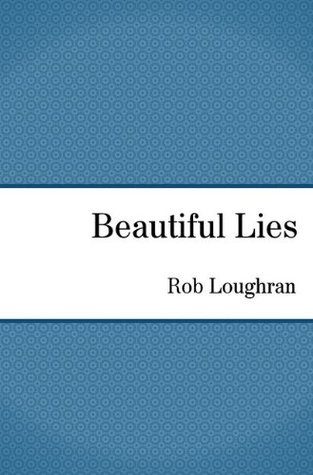
    Rob Loughran usually writes about sillier stuff. His latest novel Beautiful Lies is available at Pages On the Green bookstore in Windsor, CA