Writer’s Block = Argh!

  • Today’s Guest Blogger is Lisa Alpine.

    Originally published on her blog, Lisa Alpine, Dancing Through the World of Words, Lisa shares her thoughts about how to crawl out of the swamp of writer’s block.

    Stuck again in the swamp of writing defeat and word avoidance even though I love writing my stories. What’s up?  I’ve been a writer for 35 years. Holy moly. Can’t I just sit down and write? Why do silly menial chores seem suddenly inviting?

    But I have found, once I chain myself to the blank page and force words to be birthed, with a story in mind, I thrash but the engine thrums and starts. Those dang words begin to flow. I’m ready. I’m willing. I’m psyched. The story emerges—but only after a hell-of-a struggle.

    And I have a method:

    I make an agreement with myself that I will write for one hour with no interruption. I set a timer. I turn the phone off. I don’t check email.

    After the hour is up, I give myself the option to go outside in the garden and look at birds, bees, weeds, whatever. The important task is to move and get circulation back in my derriere.

    I allow myself 15 minutes of distraction then it is back to the chair for another hour commitment—still not checking email or voicemail. Both of those are alluring rabbit holes.

    Oh boy—another hour of diligent word-sculpting achieved! The carrot of the garden or yoga—some form of movement—is grabbed for another 15 minutes.

    The intrigue of my story—as it comes into focus on the page—draws me back. I’m over the hump and the opposite effect takes place. I need to force myself to walk away from the page(s) and keep my life rolling forward.

    Try this daily—or a few times a week. Your writer brain will hum with activity and the story will call you back to complete it.

    Give it a try and see what happens for you.

    Note from Marlene:

    Lisa Alpine will be a Writers Forum presenter, along with Kate Farrell and Mary Mackey, on February 10, talking about “Storytelling for the Armchair Traveler.”

    Please join us for this free Zoom event.

    Lisa is a contributor to Story Power. A copy of Story Power will be given away at both the February 10 and the February 18 Writers Forum events.

    Lisa Alpine is a renowned dance teacher, travel writer, and author of Dance Life: Movin’ & Groovin’ Around the Globe, Wild Life: Travel Adventures of a Worldly Woman and Exotic Life: Travel Tales of an Adventurous Woman.

    Her award-winning, dynamically delicious stories grace the pages of many anthologies, including Travelers’ Tales Best Travel Writing.

    When not wrestling with words, exploring the ecstatic realms of dance, swimming with sea creatures, or waiting for a flight, Lisa divides her time between Mill Valley, California and the Big Island of Hawai’i, where Pele’s lava licks at the edges of her writing retreat. Read her timely posts about travel, dance, writing, culture, and inspiration.

  • It’s so easy to get caught up in our day-to-day busyness that we forget we have an inner spiritual core that is the basic strength for everything we do. What do you do to support this core?

    I recently learned about Sankalpa when experiencing a guided meditation class called Yoga Nidra/iRest with my friend and meditation/yoga instructor, Rhonda Gerhard.

    Guest Blogger Rhonda writes:

    Yoga Nidra is a meditation of self-inquiry. In the beginning of this practice, we ask ourselves: What is my Sankalpa (a heartfelt desire or intention) towards healing, strength, and wholeness?

    We welcome our unique Inner Resources—calling up peaceful places or protective and nurturing beings—so that we can draw on our deep inner knowing and loving-kindness. With continued practice, we build our resilience.

    Sankalpa means an intention formed by the heart and mind—a solemn vow, determination, or will.

    A Sankalpa is a way to refine the will, and to focus and harmonize mind and body. 

    Sankalpa is your heartfelt mission, said in a short phrase or sentence, clearly and concisely expressed, using a present tense “I” statement. It is said to ourselves in the present tense because it is in the now, as it is really only now all the time. This sustains your inner felt sense of purpose, meaning, and value.

    Note from Marlene: What is your Sankalpa? Can you form a Sankalpa to sustain your writing life?

  • Guest Blogger Nancy Julien Kopp wrote about choosing a path and exploring your choice. It seems like a perfect writing prompt for the start of a new year.

    Nancy wrote on her blog:

    Life is full of choices. I think often of Robert Frost’s poem that tells us of two roads diverging in a yellow wood, and the poet said he took the one less traveled by. But don’t we always wonder if this choice would be better than that choice or another one?  

    For a writing exercise today, look at the four photos. Each of them is somewhere you can walk. Two have water while the others are filled with green trees. What is your choice? Where would you prefer to walk? A, B, C or D? 

    Choose one and write a paragraph or several paragraphs about the photo you liked best. Study the photo and ask yourself a few questions. What sounds are there? What is the weather like; air temp? Are you going to meet someone? Does a person appear coming toward you? Does the weather make a distinct change? Can you smell anything? Are you happy on this walk? Or are you despondent? Do you have a destination in mind? Or are you walking aimlessly? Are you hungry? Thirsty? Barefoot or wearing shoes? 

    Think about all those questions before you begin to write. Hopefully, you’ll end up with the beginning of a story, or even a piece of flash fiction. Or a bit of memoir. There is no limit to where you can go with this exercise. 

    If you enjoyed one, try another with the same questions and see what happens. Remember that writing exercises allow you to flex your writing muscles in any way you like. Let your creativity flow.

    Original post on Writer Granny’s World by Nancy Julien Kopp.

    Nancy Julien Kopp lives in Manhattan, KS where she writes creative non-fiction, fiction for children, personal essays, articles on the craft of writing, and poetry. She has been published in 22 Chicken Soup for the Soul books, newspapers, magazines, and ezines, and several anthologies including The Write Spot: Possibilities and The Write Spot: Writing as a Path to Healing (available in both print and as an ebook at Amazon).

    Nancy was the Kansas Authors Club Prose Writer of the Year in 2013.

  • Guest Blogger Suzanne Murray shares why freewrites inspire writing:
    I have taught the creative writing process for more than twenty years, working in part with a technique known as “freewriting” where I encourage participants to “just let it rip”. We don’t worry about punctuation, spelling, grammar or whether it is good. We suspend the censor and let our first thoughts spill out onto the page. People new to the class are always nervous about this kind of letting go. Since I write and share my own raw writing with the group, I was rather nervous when I first started teaching the classes but found that by maintaining a safe and sacred atmosphere of unconditional acceptance for whatever wanted to come forth it really calmed the fear for everyone.

    We learn quite early to fear making mistakes. We all have a well-developed censor that confines us within the limiting parameters of being socially acceptable. Neuroscientists have identified a part of the brain, the dorsolateral prefrontal cortex (DLPFC) that is closely associated with impulse control. It keeps us from embarrassing ourselves or saying the wrong thing to our boss or spouse.

    Young children create so naturally because their censors don’t yet exist. The DLPFC is the last part of the brain to fully develop. Around 4th grade it engages and children lose interest in making art in the classroom. If we are worried about making a mistake, saying the wrong thing or doing something poorly we often end up doing nothing at all. The censor has us holding back our latent talent.

    In a study by a neuroscientist looking at brain activity in jazz musicians engaged in improvisation, research subjects showed increased activity in the medial prefrontal cortex, the part of the brain associated with self-expression, while at the same time the DLPFC or censor appeared to deactivate. At this point there is a surge of raw material coming forth but rather than being random or chaotic it is organized or structured by the rules of the form. In the case of jazz musicians, they naturally improvised in the right key and tempo.

    I have noticed this tendency in my freewriting workshops. Students bypass the censor yet they also naturally wrote in the form that seemed to most call or appeal to them. Individuals drawn to poetry and who read a lot of poetry had the raw writing take on a poetic quality.

    The same was true with fiction, memoir or non-fiction. It’s why I always tell people that reading the kind of writing you want to do is one of the best things you can do to improve your work because when you let go and let the creativity flow, your brain then has a sense of how to organize it. When we let go, we have access to the vast storehouse of the unconscious mind.

    I really encourage creative play and practice, free from the expectation that we have to produce something, as a way to opening up to our creative gifts and talents. Learning to let go and create an atmosphere of inner permission, acceptance and allowance can really help us more fully express ourselves creatively.

    Now in the time to really let our creativity fly in our own live and the world.

    Wishing you all well. Sending you all lots of love and inspiration,
    Suzanne

    Suzanne Murray is a gifted creativity and writing coach, soul-based life coach, writer, poet, EFT practitioner and intuitive healer committed to empowering others to find the freedom to ignite their creative fire, unleash their imagination and engage their creative expression in every area of their lives.
    Emotional Freedom Techniques (EFT)
    Combining Western psychology with Chinese acupressure, it works to actually rewrite subconscious patterns and limiting beliefs that keep us stuck. I’ve had miraculous results and have been working with EFT in new ways that allow us to laser in on the issue and shift it at the core and change your life from the inside out. We often make significant shifts in a single session. Sessions are available by phone and Skype.

    CREATIVE LIFE COACHING Would you like to live from an expanded place of grace, ease and flow? Would you like to tap the wisdom and power of your heart and soul? We work with soul based ways to let go of limitation and gain clarity of the next steps to living a more joyful, authentic life.

    CREATIVITY COACHING
    Do you want to experience the pleasure and joy that comes from adding satisfaction and meaning and a sense of well being to your life through creative expression. I will offer practical, emotional and soulful strategies to help you fully uncover your creative gifts and support yourself in expressing them. I will provide encouragement and support in understanding of the creative process and its stages and exercises for accessing the wisdom of your imagination. I’ll help you set realistic goals and support you in achieving them. We will work with tools for coaching yourself through the issues that get in the way of your creativity including career concerns, blocks, limiting beliefs, relationship issues and the existential and spiritual questions that can arise from wanting and needing to create. 

    THE HEART OF WRITING COACHING
    Do you want to ignite your creativity and show up to your writing on a regular basis or go deeper into the process and craft? I  offer online coaching to support you and coach you through any resistance or problems along the way. I can send you daily lessons and assignments that cover important aspects of the writing process and information on craft. I hold the space of unconditional acceptance and support to nurturing your unique voice  and work on the stories that are really important to you.  

    The Heart of Writing eBook

    Jumpstart  the Process, Find Your Voice, Calm the Inner Critic and Tap the Creative Flow

    I have been working an exercise a day through your The Heart of Writing eBook. I love it! It’s like being in class again. – Tonya Osinkosky
    Now available on Amazon Kindle! http://amzn.to/1d7oe60
      or still available is a pdf download from my website
    (includes a one hour mp3 interview about writing process)
    https://www.creativitygoeswild.com/the-heart-of-writing/  

    For more detailed information on all my offerings check web site at  https://www.creativitygoeswild.com  or call Suzanne Murray at  707.360.7776  or email  creativitygoeswild@gmail.com . Also check out my Blog at  https://www.creativitygoeswild.com/blog-1/  for ideas on writing, creativity and life coaching.  Follow me on Twitter at @wildcreativity where I tweet inspirational quotes for creativity and life.
  • An honest evaluation by Guest Blogger Nina Amir:

    I had to get really honest with myself. And then I had to get honest with others . . .

    I have been unhappy. I have not been successful. I have given away my power. I have not followed my own path. I have lived up to other people’s expectations.

    I have not lived the life I wanted to live or done the work that is my purpose in this lifetime—my life’s work.

    And something had to change. I had to change. My life had to change.

    I’d been starving my soul.

    Now, I am feeding it. I am creating, day by day, a life that feeds my soul.

    And every day I’m a bit happier and fulfilled.

    I’m starting to recognize myself again.

    I’m making little changes that put me back on the path I want to walk.

    People have asked me: “Why are you offering a program about personal and spiritual growth? You are an expert on writing, publishing, and blogging.”

    Well . . . I’m also a Certified High Performance Coach—which makes me an expert in personal growth.

    And I’ve been studying and writing about spirituality and metaphysics for years. And I’m a Law of Attraction (LOA) coach and a minister. I guess that makes me an expert in spiritual growth.

    And . . . more than any of the credentials, writing and coaching about personal and spiritual growth makes my heart and soul sing. It’s my passion. It inspires me.

    And, if I am going to live a life—create a life—that feeds my soul, I have to focus on my life’s work. I have to write and speak and coach about personal and spiritual growth.

    Watch the changes happening . . . to my website, my offerings, me . . .

    And ask yourself: Is your life starving your soul or feeding it?

    In this crazy world . . . at this crazy time . . . start living a life that feeds your soul. None of us know what will happen to us tomorrow.

    You are a creator. You are meant for more. Create a life that feeds your soul.

    If you want to know how to do that, go to www.ninaamir.com/ICC.

    Nina Amir is known as the Inspiration to Creation Coach because she helps her clients combine their passion and purpose so they Achieve More Inspired Results. It’s Nina’s mission to help people step into the best version of themselves, fulfill their purpose, and achieve their potential as they create fully lived lives.

    Nina Amir’s Books
    Nina is a hybrid author who has self-published 18 books. Her traditionally published books include How to Blog a Book, The Author Training Manual and Creative Visualization for Writers.

    Nina’s Blog

  • Guest Blogger P.A. Cornell explores measuring success with writing . . . when can you call yourself a writer?

              Not so long ago I was speaking with someone about how much I’m enjoying being a short fiction writer. I was trying to convey all the great opportunities that short fiction can offer: variety in setting and characters, finding your voice, etc. They kept nodding, but I could tell my words weren’t really penetrating, and when I finished, they said, “Okay…but why think so small? You’re working on a novel, right? I mean, go big or go home is where it’s at!”

              Is it though?

              In our society we tend to equate success with tangible things like fame and income, and this does have some validity, but is this the right measure of success for all of us? When it comes to writing, there are some very specific signs of a successful career: fame and fortune—if you can achieve them—are at the top, but along the way there are other markers like getting an agent, publishing a book (preferably with a Big Five publisher), and winning the top awards. Many people both in and out of the industry still have the attitude that if you aren’t working toward these lofty goals, you’re not a “real” writer. I disagree.

    Before I was published, I was told I wasn’t a real writer, but every author in the bookstore was once an unpublished writer. And when you think about how many books are submitted to publishers each year and how few actually end up published, the odds are not unlike winning the lottery. Does this mean that every book that’s rejected is garbage? Are their authors not real writers? As someone who once read the slush pile for a publishing house, I can assure you that many of those rejected books are great, but there are only so many spaces to fill. Published, or not, their authors put in the work of learning their craft and completing their book—something which is no small achievement. And what about someone who chooses to self-publish; are they not a real writer?

    To me, a writer is someone who expresses themselves through the written word and does so in a way that’s dedicated, with the aim of one day having someone else read what they’ve written. That’s it. I say this because I see so many writers beating themselves up for not fitting the description of the “successful author” that seems so prevalent. And if they’re not belittling their own efforts, there are so many others who will see a writer who hasn’t gotten a major book deal, or won awards, or who writes as a hobby rather than as their main career, as somehow less-than. I’m here to say it’s okay to think small.

              There are so many paths available to us as writers, and none of these is superior to any other. None of them make you more of a writer. The goals we set for ourselves are so personal and have such varied motivations behind them—our measure of success should be just as personal.

    It’s also okay if your goals change over time. When I was younger, I too fell into the trap of what it meant to be a successful writer. I wanted to publish a book—or series of books—and have them all become bestsellers and have the world know my name. The thing is, I didn’t so much want these things for myself, I wanted them as a means of proving to other people that I was a real writer.

    As I’ve grown older, I’ve reexamined what my measure of happiness is as far as my career is concerned, and a lot of this goes back to what made me want to be a writer in the first place, when I was a little girl. Back then I just loved stories. Stories to me were magical, and when I learned that they came from the imaginations of people called writers, I just wanted to be a part of that. To me, that was how I could contribute to the world and somehow make it just a tiny bit better. That’s exactly what I’m doing right now, as a short fiction writer.

              Do I have other goals? Sure, but fame and fortune aren’t really what I’m striving for these days. Sure, it would be nice to see my own book on store shelves, and I certainly wouldn’t turn down a decent advance. Likewise, if someone wants to give me an award I’d be elated. But are these things I need in order to consider myself successful? No.

              My goals these days are simple. I intend to continue writing—and hopefully publishing—my short fiction. One day I’d like to publish a short story collection, but how it’s published is something I’ll decide when the time comes. I know writers who are published traditionally, self-published, or are hybrids of the two, and all these paths have pros and cons to consider, but all are valid options. One thing I do know is that short story collections tend not to be huge money-makers, especially if you’re not a big-name author—and I’m okay with that.

              Maybe I’ll even write a novel one day, but I no longer dream of a long career as a series novelist. There’s nothing wrong with choosing that if it’s right for you, and I suppose if I did have a super successful first novel and publishers were knocking down my door begging for the sequel, I’d consider it. What I’m trying to say is that in the scenario where that doesn’t happen—the one where I quietly publish a book and it’s not widely read, doesn’t make me rich and famous, but a few readers do enjoy it and tell their friends—I’m still happy, and I’m still a real writer. I no longer feel the need to prove that to anyone.

              I have friends who want more, and that’s fine. I’ll cheer them on as they achieve their goals. I’ll spread the word about their major book deal, movie option, or award. I’ll buy all their books and tell people I “knew them when.” I’ll be incredibly proud of them—but that doesn’t mean I want to be them.

              There are real people behind every story, book, or article that’s written. People with lives that don’t always allow them to “write every day.” People with enormous obstacles to overcome. People who write for fun. People for whom the very notion of fame is enough to trigger their anxiety. People who are yet to be published but are working diligently on a story they know will one day see the light of day, even if they have to publish it themselves. And there are people who—like me—are just enjoying exploring new worlds and characters through short fiction or poetry or what have you, and who’ll decide later if they want something else. All these people are still writers, and every one of them is the real deal.

    P.A. Cornell is a Chilean-Canadian SFF writer who wrote her first science-fiction story as a third-grade assignment, and still has it in her possession over three decades later. A member of the SFWA and graduate of the Odyssey workshop, her short fiction has appeared in several anthologies and genre magazines. For a bibliography visit pacornell.com.

    Note from Marlene: I relate to: “. . .  I quietly publish a book and it’s not widely read, doesn’t make me rich and famous, but a few readers do enjoy it and tell their friends—I’m still happy, and I’m still a real writer. I no longer feel the need to prove that to anyone.”

    My series of Write Spot books fills the category of “not widely read,” but for the readers who have enjoyed them: Thank you! And even if those books weren’t published, I would still call myself a writer, which took me years to be able to say.

    I am a writer. How about you? Are you a writer? Say that out loud.

    I am writer.

    Welcome aboard the writing train!

  • Today’s post is inspired by Nancy Julien Kopp’s blog post about using sound in writing.

    Nancy wrote:

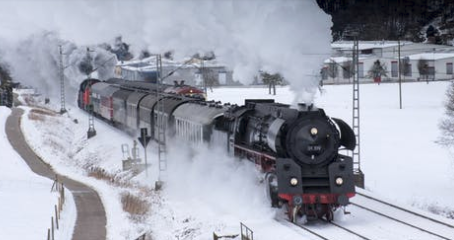
    This morning, I was catching up on email when I heard the whine of a train whistle, blown several times. I wondered if it was the historic Union Pacific train, known as Big Boy, making its way across Kansas this week in celebration of 150 years of the Transcontinental Railroad. It was due to stop here in our town at 9:30 a.m. 

    The sound of that whistle made me stop and listen. I always liked to hear train whistles when I was a child. We lived across the street from the railroad tracks, so we were treated to that arresting sound on a frequent basis. I can remember being in bed on a summer night, windows open, hoping for the train to come by and announce its presence. When I did hear it, I wondered where it was going. My own world in those days was quite small, but I knew a train went to many places.

    What do you think of when you hear a train’s whistle? Does it trigger any memories for you? Do you think of it as mournful or cheerful? Is it different at nighttime when the train moves through the darkness than it is on a sunny day? 

    Readers knows what a train whistle sounds like, so you don’t need to write “The train blew its whistle.” You can enlarge that thought to make it more interesting: The train’s whistle whined loudly as it passed by the crossing gates, growing dimmer and dimmer as it sped down the track. 

    Write a sentence or two for each of the items below, using sensory detail.

    jet plane

    waves on the shore

    ball hitting a baseball bat

    washing machine

    school bell

    air brakes on a bus

    popcorn popping

    crying child

    church bells

    piano

    cow mooing

    birdsong

    Note from Marlene: Adding sensory details enhance the story and help readers “see” the scene and the characters.

    The Magic of Sensory Words by Enchanting Marketing.

    Write Spot Posts about sensory detail:

    The neurological impact of sensory detail.

    Imagery and sensory detail ala Adair Lara Prompt #277

    Sensory Detail – Sound

    Sensory Detail

    Using sensory detail in writing.

    See more posts about using the senses in writing by typing “sensory detail” in the Search Box on The Write Spot Blog.


  • Today’s Guest Blogger post is about inspiration, by Suzanne Murray.

    Excerpted from Suzanne’s September 5, 2020 Creativity Goes Wild Blog Post.

    “You can’t wait for inspiration. You have to go after it with a club.” — Jack London

    Recently a new writing coaching client emailed me to say, “I haven’t been writing. I just don’t feel inspired.”

    I immediately shot a message back, “You can’t wait for inspiration. If you get nothing else out of our coaching together, this awareness will make a huge difference in your creative life.”

    No writer or other artist waits for inspiration before showing up. Painter Chuck Close said, “Inspiration is for amateurs. The rest of us just show up and get to work.” Flannery O’Connor, the noted Southern writer,
    described her habit of going to her office every day from 8 am to noon, “she wasn’t sure if anything was going to happen but she wanted to be there if it did.” 

    Most writers just start writing and find inspiration along the way. John Steinbeck would always end one day’s writing in the middle of the page, so he could pick up the thread the next day. He insisted that “In writing, habit seems to be a much stronger force than either willpower or inspiration.”

    Research in the neuroscience of the brain shows that creativity is activated when we are in the brain wave states of alpha and theta which are associated with meditation, intuition and information beyond our conscious awareness. This is why a writer often needs to write a page of what feels uninspired in order slow the mind down and hit the zone. 

    This is true of all acts of creativity. We have to show up and begin to play with the process to access the place of inspiration. The more we commit to our creativity through our intentions and actions the more our creativity flows and the more juiced, excited and inspired we feel.

    Now more than ever we need to play with our creativity in whatever way that calls to us and see where it leads. Even small creative acts can help lift our spirits and energy as we face the many challenges we see in our world. Exercising our creative muscles can open us to new possibilities and inspiration.

    Note from Marlene:
    Many writers use a method of freewriting to warm up before embarking on their writing project. You can use a prompt to inspire freewrites. Writing Prompts on The Write Spot Blog.
    Suzanne Murray is a gifted creativity and writing coach, soul-based life coach, writer, poet, EFT practitioner, and intuitive healer committed to empowering others to find the freedom to ignite their creative fire, unleash their imagination, and engage their creative expression in every area of their lives. 

    THE HEART OF WRITING COACHING Do you want to ignite your creativity and show up to your writing on a regular basis or go deeper into the process and craft? Suzanne offers online coaching to support you and coach you through any resistance or problems along the way.   She holds the space of unconditional acceptance and support to nurturing your unique voice and work on the stories that are really important to you.  

    The Heart of Writing eBook   Jumpstart the Process, Find Your Voice, Calm the Inner Critic and Tap the Creative Flow

    * Follow Suzanne on Twitter at @wildcreativity where she tweets inspirational quotes for creativity and life.      

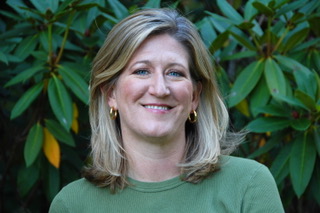
  • Today’s Guest Blogger, Lindsey Crittenden, muses about fiction and decides to take a risk.

    A few weeks ago, early planning started for an upcoming fiction class during which I’ll be giving a talk: What Is Fiction? Yes, it’s a question both daunting and exhausted. Nothing I can say here that’s particularly new. And I’m wary of definitions that suggest fiction is any one thing. Escapism? Moral duty? Truer than truth? Totally amoral? A pack of lies? All of the above.

    But the more I keep thinking, the more excited I get. Examples tumble out like toys from a cupboard, begging my attention—and they surprise me. I’ve taught fiction long enough to have the anthologized standards at the ready. You know, those classics with clear, dramatized change manifested in action or image: “Barn Burning,” “Araby,” “Roman Fever,” and, for a more contemporary example, a terrific Dagoberto Gilb story called “Uncle Rock.” Great examples, all. In most of those stories, there’s a character you can easily identify with, a character you can readily see yourself as. But the stories clamoring for my attention right now fall into another category.

    Denis Johnson’s “Work” and Grace Paley’s “The Little Girl”; Flannery O’Connor’s “Everything that Rises Must Converge” and Tobias Wolff’s “Bullet in the Brain” feature liars and pimps and junkies and addicts, bigots and fools and snobs. People you’d want nothing to do with, in situations you’d pray to avoid. That’s exactly what makes the stories particularly useful, I think, in looking at love. Love, not like.  

    Many students who take the upcoming class are new to fiction writing, and to workshops.  Because of this, their reactions often touch on how much they like, or relate to, the characters and situations.

    “We just didn’t love Ed,” an editor told a friend of mine, by way of passing on my friend’s novel. Ed is a key character in the book, but not the main protagonist. He’s a bit of a jerk—self-absorbed, haughty, manipulative. Human, in other words. Flawed. Who among us isn’t? Who among us doesn’t love others who are? If love allows us to see the whole person, to glimpse the humanity in even the most despicable behavior, I can think of fewer better venues than fiction.

    Yes, the insufferable book critic Anders, in “Bullet in the Brain,” and the tiresome Grandmother from “Everything That Rises Must Converge” do undergo change. Or, in the word used by Aristotle, metanoia—the same Greek word used by the writers of the Christian gospels to signal repentance, turnaround. The book critic and the grandmother pay an enormous price, but their completion brings grace.

    As a fiction writer, I struggle with the tension between narratively earned resolution (to borrow from workshop-speak) and credibility. Hearing a reader say, “I just don’t believe this would happen” tells me something different than if she’d said, “I just don’t believe he would do this.” The second sends me back into the words, back into craft. The first sends me to a place beyond words, a place I don’t like visiting, as much as I need to.

    A few months ago, a writer friend spoke of spending a week in her office thinking. Not writing, not even making notes—just thinking. I shuddered. I couldn’t imagine doing that. I need to feel productive, to feel constructive—and what better way than to keep tapping words on the keyboard? Stuck? Write some more! You’ll write your way out of it!

    And often, I do. But other times I just create more words. My friend’s experience got me thinking. What if I did just what she’d spoken of? What if I sat in my office—okay, maybe not all week, but for a few hours—and didn’t write a word? It would be like sitting with someone in silence—not my favorite thing, either (unless I know the person very well). It would be like prayer, when I stop thinking and asking and worrying and start listening. It would be difficult and perhaps a bust. Or perhaps completely transformative. Or, most likely, something in the middle.

    I might consider an ugly act, or a tawdry thought. I would need to stay open to such possibility, suspend my oh-so-eager judgment, take a risk. The kind that takes my breath away. The kind of love that earns the word. This week, as I work on an unlikeable character in my fiction, as I try to make her a full person if not a commendable one, I decide to try.

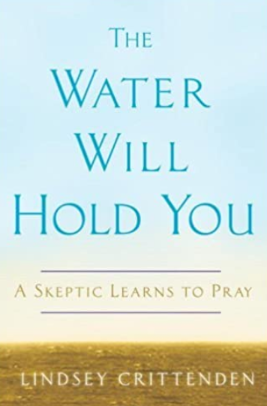
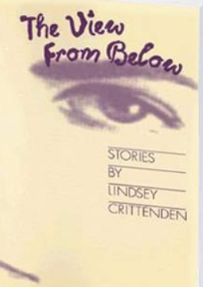
    Lindsey Crittenden is the author of The View From Below: Stories and The Water Will Hold You, a memoir. Her essays have appeared in Cimarron Review, the Washington Post, the New York Times, Best American Spiritual Writing, Real Simple, and Image. Lindsey’s award-winning short fiction has been published in Mississippi Review, Cimarron Review, Glimmer Train, Quarterly West, and elsewhere. In November, 2019, her story “The Ruins” was performed onstage by Word for Word Theater Company as a winner in the “Exactly!” They Said celebration of California short fiction. Lindsey lives in San Francisco and is a member of the Writers Grotto. 

    Lindsey read “Ice Cube Moon” at her recent Writers Forum event.

    Amazon link to Lindsey’s books