Guest Blogger Nancy Julien Kopp and The Writing Fairies
Guest Blogger Nancy Julien Kopp writes about her struggles and success with Good Fairy/Bad Fairy.
2012
I’ve had a story swirling in the recesses of my mind for several weeks. One that I think would work for a Chicken Soup for the Soul book. Last night, I opened a blank page in Word and began to write the story.
I wrote for well over an hour. The story seemed to be coming together nicely. I was aiming for 1200 words, and by the time I was ready to call it quits for the day, I had over 700 words and still a lot to be told. I didn’t take time to read over what I’d written, knew there would be time to do that in the morning.
I got ready for bed, feeling satisfied that more than half the first draft was complete. I settled down in bed to watch the news but while the news anchor and weatherman jabbered on about the day’s events, something began to gnaw at me. My story!
I knew that the story wasn’t right but what, I wondered, was wrong with it. I mentally replayed what I’d written, and the answer came. The first two paragraphs were fine, but the rest of it went into background that threatened to take over the original story. It would overshadow the original premise. Maybe I’d find a solution the next day.
Then the Bad Writing Fairy whispered that it would be a shame to lose all those words that I’d so painstakingly written. “Leave it the way it is and keep going.” The Good Writing Fairy rapped her over the head with her Writer’s Wand. but smiled sweetly at me. Then she said, “Dump all except the first two paragraphs and keep going.” I knew which one I should heed. I pushed both fairies off my pillow and decided to sleep on their advice.
The next day there was no doubt in my mind that I had to begin the story again. The first thing I decided to was to delete more than 500 words, no matter how much it hurt. There was no reason to sabotage my own story with words that didn’t belong.
A good many stories that are published look nothing like the first draft. It’s a practice round to help a writer know what direction to go. We begin and often begin again. Writing isn’t easy. Well, maybe the Bad Writing Fairy might tell you it’s a piece of cake, but the Good Writing Fairy is going to remind you that it’s hard work but well worth the effort.
2020 If you listen to that Bad Writing Fairy too often, you’ll become a lazy writer. Sometimes she talks loud enough to make you pay attention. You’ll be a lot better off paying attention to the Good Writing Fairy. She will push you in the right direction because she wants you to be the best writer ever.
I was in that Bad Fairy/Good Fairy situation once again. I had a YA story that was finished. Well, maybe it was. It could end in two different ways. I chose one, then finished the story. But the Good Fairy kept tapping me on the shoulder with her wand. I knew she wanted me to write the second possible ending, then decide which one would work best. The Bad Fairy must have been hiding somewhere. I didn’t hear her say to use what I had and forget about writing the best ending.
I know it pays to listen to each of those little nymphs, then make an adult decision.
The Good Fairy is way ahead in scoring points.
Nancy Julien Kopp lives in Manhattan, KS where she writes creative non-fiction, fiction for children, personal essays, articles on the craft of writing, and poetry. She has been published in 22 Chicken Soup for the Soul books, newspapers, magazines, and ezines, and several anthologies including The Write Spot: Possibilities (available in both print and as an ebook at Amazon).
Nancy was Prose Writer of the Year in 2013 by the Kansas Authors Club.
Eight years after our friend, Al, died, and two weeks after his wife, Linda, was put to rest, my husband, Art, and I stood on their doorstep, key hovering at the lock. As the executor of their estate, Art had every right to be there. But still, we felt like trespassers. He gave a small shrug and turned the key in the lock. We pushed the door open, walked inside, and gazed around at the chaos that greeted us.
In the living room, twin oak desks stood in front of a window, their drawers exploding with old mail, catalogues, writing implements, and paper. A couch, laden with a mountain of stuffed animals, was sandwiched between two Tiffany floor lamps. On the floor, handwoven rugs were piled on top of handwoven rugs. The dining room had been transformed into a jewelry making studio, and the counters in the kitchen were obscured by apothecary jars filled with mystery liquids, boxes of costume jewelry, and unopened cooking gadgets.
In Linda’s bedroom, teddy bears ruled the roost. Dressed in elegant attire and jaunty outfits, some wore tutus and some wore nothing more than the fur on their backs. Bears lined the walls, trespassed on the headboard and spilled onto the bedside tables and dresser.
In the second bedroom, a queen size mattress was propped against a wall, and a daybed held more bears, a brass trumpet, cases of adult diapers, and several folded Navajo rugs. No horizontal surface remained visible.
Three decades earlier, Art had agreed to be the couple’s executor and now I turned to him.
“You knew about this?”
Yes, he nodded somberly. “But I didn’t think they would actually die.”
And so began our three year undertaking and the beginning of my book Stuffed; Emptying the Hoarder’s Nest.
I didn’t set out to write a book. But the task we undertook was so unique, troubling, and different than how Art and I live our lives, that I felt compelled to write about it. I found putting down on paper what we discovered, and the profoundly disturbing aggravations we encountered in liquidating this eclectic estate, helped me process the experience.
I wrote to bring about order. It was therapy . . . and it kept me sane
We began by choosing one collection at a time and gathering it up, accounting for every item. This part of the process alone was daunting because there was so much scattered over such a large area.
Al and Linda were well-educated, intelligent, and curious people who were also financially well off. So, not only were they able to acquire things, they had places to store their acquisitions: two houses in southern California, a store in the northern part of the California Bay Area, and a warehouse and apartment building in Berkeley near the UC campus. Stuff was stashed everywhere.
Once we corralled a collection, we needed to ascertain its value before we could decide whether to sell or donate it. The cartons of never-worn-and-still-in-their-original-wrapping plaid shirts, the used table linens, the mounds of staplers and plyers and cabinets filled with financial papers from businesses Al no longer owned were easy to deal with.
As the collections became more extraordinary, however, we needed to research and find experts in the field to advise us: What is a merry-go-round calliope worth? Are these gemstones real? What about the fleet of ’57 Plymouths parked tandem in the apartment garage? Are they worth anything? And the hundreds of player piano rolls? How about the profusion of original artwork by a famous botanical printmaker, each signed, dated, and numbered? The Navajo rugs? And, gosh, the teddy bears: are they of any value?
Dealing with one at a time, we went through the buildings and the collections. Once we knew its value, the entire collection was sold or donated . . . or sent to the dump . . . and I wrote about it.
I introduced the characters we met along the way and wrote about our frustrations and successes. I began bringing what I wrote to my weekly writing group for editing.
I didn’t think of them as such, but before long, my writing buddies began referring to these pieces as “chapters.”
As Art and I neared the end of our journey with this estate, I began to view what I’d written as a book. When we turned what was left over to an estate liquidator, I wrote the final chapter. It came to me as an epilogue, and almost wrote itself.
Now the question became, what did I want to do with it? Did I want to pursue an agent? Look for an editor? How much more time and energy did I want to spend with Al and Linda and their stuff? The answer came quickly: not much. But out of a desire to honor the time we spent and the education we received, I wanted to create something permanent out of these stories. So, working with a local publisher, Stuffed came into being. I held a small and satisfying book launch at our local independent bookstore, Gallery Bookshop in Mendocino, and sold out of my first two runs.
The three years Art and I spent dismantling this estate were disturbing and unsettling for me.
Writing about it as it was happening calmed and comforted me. Putting down on paper how we handled the chaos that surrounded us helped me process the events from the initial sense of overwhelm at the task ahead of us through our frustrations and successes.
Writing was a gift I cherished.
Nona Smith has been part of the very active Mendocino Coast writing community since she moved there in 2006.
Nona is the author of Stuffed: Emptying the Hoarder’s Nest: A True Tale and numerous other published short stories, humorous memoir pieces, and poetry. She is a board member of the Writers of the Mendocino Coast and has been president of the 31-year old Mendocino Coast Writers’ Conference for four years. Nona lives with her patient husband Art and two demanding cats.
What are you writing these days? Some people find it difficult to concentrate. Others are filling pages with poetry, fiction, nonfiction, and creative nonfiction.
It might be a perfect time to chronicle what is going on in your life . . . if you write this as a journalist would . . . just the facts, that’s nonfiction.
If you add vignettes and personalize your story, that’s creative nonfiction.
Here’s what guest blogger Nancy Julien Kopp says about fiction, creative nonfiction, and fictional narrative.
Most people are aware of the difference between fiction and nonfiction. Fiction is made up, nonfiction is true.
There is, however, a differentiation between nonfiction and creative nonfiction. Nonfiction is generally expository in that it describes, explains or is informative. If you wrote about leaves in a forest in Montana, your readers would probably learn a great deal about the topic. You would write it as straightforward as possible after doing some research and using your own knowledge of leaves in this part of our country.
Creative nonfiction is true, can be informative, and written in story form using fiction techniques. It would probably include some dialogue, description of the place and people and relate a story—a true story.
Memoir writers are writing creative nonfiction. So are those who write Family Stories. Inspirational writers might use this form, too.
I was reading an article about writing for children recently. They used a different term for true stories told with fiction techniques. They called it ‘Narrative Fiction.’ It is a way of teaching children factual material by telling stories. For instance, if a children’s author wanted to write about the Chicago Fire of 1871, incorporating stories of real people who had experienced that tragic event, it would bring the facts to life for any child reading it. Writing nothing but the facts would make the piece strictly nonfiction, but telling about a boy who helped someone during the fire brings it into narrative form and heightens interest.
I’ve written countless family stories, and many of you have, too. They are far more than just reporting the facts of what happened. We want to show the people, the place, and what occurred. By adding dialogue, we bring the people to life, and we add feelings which helps the reader relate. We’re writing creative nonfiction.
I like to think of Creative Nonfiction as telling a true tale with the human element first and foremost.
Nancy Julian Kopp lives in Manhattan, KS where she writes creative non-fiction, fiction for children, personal essays, articles on the craft of writing, and poetry. She has been published in 22 Chicken Soup for the Soul books, newspapers, magazines, and ezines, and several anthologies including The Write Spot: Possibilities (available in both print and as an ebook at Amazon).
Nancy was Prose Writer of the Year in 2013 by the Kansas Authors Club.
Guest Blogger Kathy Guthormsen shares her writer’s block woes while sheltering in place. Perhaps you can relate.
Shelter in Place Writer’s Block
Sheltering in place has taken all the words from my brain
Inspiration has disappeared
My muses are sheltering elsewhere
I am numb
I sit at my desk
I start my computer and open three works-in-process
I drink my coffee
I eat my breakfast
I read the paper
I work the sudoku puzzle
I stare at the word jumble trying to make sense of the randomly arranged letters
I read my works-in-process and make some edits
I write a few sentences on a new document
I work an online sudoku puzzle
I check email
I check Facebook
I write items on my to-do list
I delete the sentences I wrote earlier and beg my muses to speak to me
I look at writing prompts
I make more edits to the works-in-process
I write random phrases on the new document
I sigh
I do a load of laundry
I go for a walk, wearing a mask
I go to the grocery store, wearing a mask
I clean out the chicken coop and the cat box and realize I should be wearing a mask for those tasks
I look at recipes and decide what to make for dinner
I sit at my desk again and type a few more sentences
I save all the open documents
I decide not to post anything on my blog – again
I realize what’s wrong
I miss people
I miss hugs
I miss my muses
I long to get lost in writing again
I want my characters to take me to unexpected places again
I ask the magic of writing to visit me again
Kathy Guthormsen
Growing up in Skagit Valley, Washington with its verdant farmland gave Kathy an appreciation for the promise of nature’s bounty. The Cascade and Olympic mountain ranges and old growth forests offered the magic of things unseen.
Occasionally her magical muses refuse to talk with her. She fills those times with gardening, books, chores, puzzles, and lists.
You can see more of Kathy’s creative writing on her blog, Kathy G Space, where she posts essays, short stories, and fairy tales.
Guest Blogger Ruth Harris writes about the realities of trying to write while sheltered in place.
You might have thought because you’re staying at home that you’d have more free time to start/finish a book or take an on-line yoga class. But in reality, because we’re all spending so much time at home, much of that time is consumed by eating which means food prep and cooking (which means there’s a kitchen to clean and dishes to be washed), bathrooms to be cleaned and tidied plus, of course, more toilet paper to be purchased (if we can even scrounge up a few rolls somewhere), laundry duty, garbage and trash removal, dusting, vacuuming and, of course, sanitizing.
As one day melts seamlessly into the next, and we can’t tell Sunday from Tuesday, weekdays from weekends.
Our moods whiplash between “This sucks” and “It could be worse.”
We’re bored, anxious, and tired. We’re having trouble sleeping and concentrating. Much less writing.
“A lot of us are mentally exhausted, because the energy it takes to mentally manage everything that’s happening is very draining,” says Vaile Wright, director of clinical research and quality for the American Psychological Association. “The habits we’ve worked to develop over time to keep us healthy and productive can fall by the wayside.”
It’s not just you.
Feeling overwhelmed by an Everest of laundry or frustrated by a cranky TV remote even as we are bombarded by relentless reports of death and disease, does not contribute to creativity.
Instead of fighting what can feel like an unwinnable battle with the lack of inspiration, let’s consider what we can do that does not take the same level of intense concentration as writing.
Why not take advantage of these strange days to focus on ways we can improve our skills or acquire new ones?
1. Author Platform Care And Maintenance.
Use this Covid-19 pause to reconsider and refresh the elements of your author platform.
2. Better Blurbs For Better Living.
Are your (book) blurbs OK?
As we’ve been told over and over, the cover is the first thing that grabs the reader’s attention. The cover tells him/her what kind of book s/he is looking at: romance (sweet or steamy), women’s fiction, mystery, thriller, horror, sci-fi.
The blurb (also known as the sales pitch, cover copy, or on Amazon, the “product description”) is the second.
But once you grabbed/seduced/lured the reader, then what?
Then you have to make the sale—and that’s where the blurb comes in.
At a time when you’re finding it difficult to write, refreshing an existing blurb can be a productive use of your time, a satisfying outlet for your creativity and an opportunity to increase your sales.
3. M Is For Metadata.
Review your categories.
David Gaughran tells us that “KDP is now explicitly stating that we are permitted TEN categories for each of our books.”
If you haven’t already signed up for DG’s newsletter—he keeps a sharp eye on publishing and is generous about sharing info—now would be a good time.
Revisit your keywords.
Out with the old. In with the new—and more relevant.
Dave Chesson’s Publisher Rocket does the tedious work of searching for keywords (and does ditto for categories) that will help make your book more visible to browses and readers.
4. Brainstorm for Brilliance.
When you can’t write, maybe you can brainstorm, which is, after all, the fun part. When you let loose, when you forget about sparkling prose, passive verbs and adverb infestation, who knows what brilliant thoughts are just lurking in your subconscious, waiting to be unleashed?
5. Liberate Your Inner Artist.
If your sales—and income—have been hit by Covid, DIY art and graphics are more appealing than ever. Learning your way around on-line art sites can be fun that yields practical results.
Maybe you’d like to try making a cover even though you’re not a designer.
Perhaps you could jazz up your blog, Instagram feed, or FaceBook page with a new banner.
Or refresh your ads, create a new business card or bookmark.
6. Orphaned Books. You Know, The Kind That Don’t Spark Joy.
If you’re stuck at home, but, like so many of us, the words won’t come and you can’t write, perhaps this period of enforced down time is ideal for you to revisit unfinished and abandoned books. Maybe the solutions to the problems that once stopped you in frustration, will become apparent now that some time has passed.
Janet Evanovich’s simple method of not-exactly-outlining might help you figure out where you’ve gone wrong and how to go forward.
7. Strengthen Your Characters.
If the plot’s OK, but the characters are wooden (or maybe plastic—and you’re not writing sci-fi), now might be the right time to pay them a visit and give them a pulse.
Here are 8 suggestions about how to create a memorable character.
8. Embrace That Crappy First Draft.
Typos.
Clichés.
Passive verbs.
Banal descriptions.
Lapses in logic.
Adverbs!
We’ve all committed these sins (and more because we’re creative), but, because we take our work and our readers seriously, we don’t give up.
Henry Guinness at the NYT calls himself “a big fan of awful first drafts” and shares a useful trick about how to use that embarrassing first draft to move toward a finished product you can be proud of.
As a long-time editor, I would go even further and say that good editing is (almost) everything. Obviously, you have to get the words down first, but, after that, multiple rounds of editing will help you clarify your thinking and lead to a polished work in a way that can seem (almost) magic.
Another plus is that several rounds of self-editing before you unleash your work on the public or on your editor will save you one-star reviews and your editor time. Which will consequently will save you money.
10. How to Feel like a Real Writer.
If none of these ideas appeal to you or if you’re just feeling generally blah, why not do what real writers do?
Procrastinate. 🙂
Excerpted from Anne R. Allen’s Blog… with Ruth Harris by Ruth Harris.(@RuthHarrisBooks) April 26, 2020
Click here to read the entire blog post, which is chock full of gems.
Ruth Harris is a New York Times and Amazon bestselling author and a Romantic Times award winner. Ruth’s emotional, entertaining fiction has topped Amazon’s prestigious Movers and Shakers list and her highly praised novels have sold millions of copies in hard cover, paperback and ebook editions, been translated into 19 languages, sold in 30 countries, and were prominent selections of leading book clubs including the Literary Guild and the Book Of The Month Club. In their e-book editions, Ruth’s novels have been featured on Ereader News Today, Pixel of Ink and Kindle Nation Daily.
Ruth writes about strong, savvy, witty women who struggle to succeed and, when sometimes they don’t get what they want, they find something even better along the way. Critics have compared Ruth to Nora Ephron and Joan Didion and called her books “brilliant,” “steamy,” “stylishly written,” ”richly plotted,” “first-class entertainment” and “a sure thing.”
Guest Blogger Karen Handyside Ely writes about life while sheltering in place.
2020 has been the longest year of my life, and it’s only April. I really can’t complain (although that has never stopped me before). My adult children, who live in New York City, are healthy and still employed. My husband and I are well, and since I started hoarding toilet paper back in the ‘80s (that is an OCD story for another day) we are literally “good to go.”
I’ve noticed as the days drag by, that I’m slowly getting used to this new reality. Getting used to it, and getting fat. In the very beginning, back in “aught March,” I decided that this was an opportunity to actively pursue FINALLY becoming skinny. I’ve now failed four diets in four weeks. It doesn’t help to have a husband who loves to bake. In the best of times, his sourdough is hard to resist. In these worst of times, I have given up trying. By the time I am able to meet up with friends in the flesh, I will have become a sphere.
For now, I’ve had to content myself with Zoom meet-ups. I am no spring chicken, and admit that I had never even heard of this video-conferencing platform. Hilarity ensued as I tried to be an old dog learning a new trick, a humbling yet rewarding experience. I’m now able to attend meetings, writing groups, and Happy Hours with friends from all over the globe. This too is a double-edged sword; the vino flows much more freely when you are sitting in your own kitchen, watching a screen, and missing your buds – another contributing factor to my expanding girth.
My writing has taken on a rather bi-polar existence. When writing on my own, the words either pour out on the page like torrential rain, or they dribble and drab like a leaky faucet; NO in between. Then every Tuesday, I “Zoom” with a small gathering of writing friends, and we free-write together. There is something so intimate about this virtual experience, and no, it is not because pants aren’t required to attend. This new reality has become a sort of bonding mechanism between us, which enhances the writing sessions. I write with a sharper focus during these group endeavors, even as my self-disciple has gone the way of my diets. I had hoped to have cranked out a book by now, so much free time and all, but while I have fallen woefully short on quantity, I am progressing with quality.
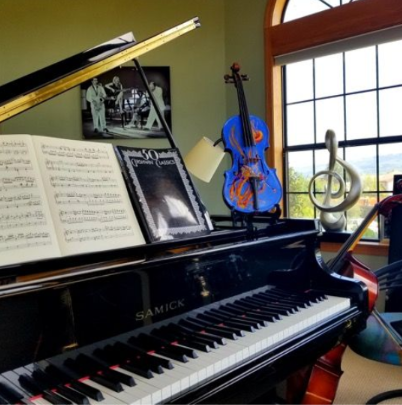
I’ve been spending lots of time in my music room, which is filled with musical instruments that were played by my daughter, my son, and me over many years. I’m very rusty, and the piano needs tuning, but when I close my eyes I am able to remember some of the music that brought us closer together. Sadly, my fingers don’t recollect quite as well, but the music brings me solace, even with the clinkers.
I’ve read several good books, along with some trashy romance novels. I’ve watched some stellar movies, and binged on some Netflix series that I am embarrassed to admit I watched. Sometimes a little “junk” is good for the soul, but I dream of the day that the Symphony reopens, and I can go back to gorging on beautiful, live music. I have also put myself on a news diet – only one hour of televised news a day. It is the only diet that I have not yet failed at, and I am feeling much more fit, at least mentally.
To relieve stress, I stand in my backyard and howl every evening at 8 pm. No, I haven’t “lost it.” Howling has become quite a “thing” here in Petaluma. It feels so good to let-er-rip, not a scream, but a loud, long, mournful howl. Even more gratifying than making this primal sound, is hearing neighbors in their yards howling back. It reminds me that we are in this together, and promises that we will get through this as a community. We are not alone.
Togetherness has taken on a completely different meaning since the onset of this quarantine. My baking husband and I do almost everything together. We take long walks, discovering nooks and crannies in this town that we’ve always been too busy to explore; albeit with covered faces. We twist ourselves into ridiculous pretzels every afternoon, as we try to maintain some semblance of a yoga practice. We spend so much time together, that a fifteen minute shower alone feels like a solo week-end getaway. I don’t know how he does it … puts up with so much “us time”… right now I am even sick of myself.
Honestly, I am tremendously blessed in many ways. I have slowed down, and started to savor the small, everyday things in life. I hear the bees buzzing among our wildflowers, watch the sun set behind my oak tree, and taste the love that my wonderful husband pours into every meal that he makes—although I’m hoping he’ll love me with salad a little more often.
Be safe and well, my friends. With kindness, compassion, and a strong dose of humor, this too shall pass.
Growing up in Petaluma, CA, Karen adored words and stories. She taught herself to read by memorizing pages of the fairytales that her mother read at night to all of the Handyside siblings. The Little Mermaid was her entry into a lifelong love affair with books and writing.
After graduating from UC Davis with a degree in International Relations & Economics, Karen ran away to New York City to seek her fortune. Karen found that working in NYC Corporate banking wasn’t all that it was cracked up to be. She and her husband, James, moved to Scottsdale AZ, where they raised their family. A stay-at-home mom, Karen became a professional (and somewhat out of control) volunteer, working primarily with children’s charities and Arts Education Programs.
Once their chicks left the nest, Karen and James returned to Petaluma. Karen began to focus on the things that she most enjoys doing—music, writing, and travel. Karen and James often travel to Brooklyn to visit their son and daughter.
Karen is active with the Santa Rosa Symphony League, sings with a Petaluma choir, and has been published in The Write Spot to Jumpstart Your Writing: Discoveries, The Write Spot: Reflections, and The Write Spot: Possibilities (all available on Amazon).
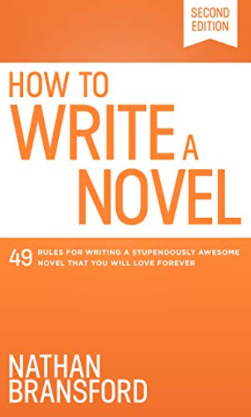
“We need people who are taking the stress of this time and turning it into art, even if it’s solely for the effect it has on the artist.” — Nathan Bransford
Guest Blogger Nathan Bransford shares tips about how to write during stressful times.
Here are some tips that have worked for me [Nathan] when I needed to write and life circumstances were interfering in a big way:
~If you have the means and ability to write during this time, you have it really good. Recognize your luck. Let that privilege sink in. Let it guide you toward being a better and more generous person.
~Self-quarantining and working from home might free up time, which could feel like a huge opportunity that you don’t want to pass up.
Nathan is dedicated to helping authors chase their dreams. His blog has everything you need to know to write, edit, and publish a book. Nathan is available for manuscript edits, query critiques, and coaching!
It’s this pervasive unease, like I’m doing something wrong.
The problem is, I don’t know WHAT I’m doing wrong. Which means that if or when I get in trouble, it’s going to be a terrible surprise.
Because of this, I have my antennae up all day, scanning, looking, wondering what I could be doing that’s awful. I mind my P’s and Q’s and I try so hard to do everything right. I try to stay busy.
I try to be so, so good.
But some part of me knows it won’t be enough. Trouble is still a-comin’.
Which means by the time I get to the end of the day, there is this exhausted part of me that is BEYOND READY to feel safe. To feel good enough. To feel comforted.
That part of me wants to eat ALL the carbs. And drink. And scroll Facebook. And numb, numb, numb. Because it’s painful out there, people.
This feeling has only gotten worse during the COVID-19 pandemic.
Without regular face-to-face check-ins with colleagues and friends, the gnawing unease that I’ve done something wrong only grows. My hankering for carbs only grows. My addiction to Netflix and my phone only grows.
That is, until I stop running and face the darkness. Until I open my arms to the fear and to the pain of thinking I’m not enough and just … sit with it.
I’ve been doing a LOT of writing around this lately. And I’m here for you if you want to do some writing around this, too.
Instead of trying to run from the darkness, let’s invite it in. Let’s listen to it. And let’s meet it with love.
Because that’s the ONLY thing that’s going to help us feel better, feel lighter, and feel whole. If we run from the darkness, it will only continue to chase us. But if we embrace it, we can let it complete us. To help us do just that, Lara is leading a free one-hour online group writing time on Thursday, April 23.
Note from Marlene: If you need ideas for relaxing and de-stressing, here ya go. You might already be doing some of these.
I’m working on the next Write Spot book and will include these self-care tips and more!
And, of course. Write. Write what you know. Write what you want to know. Just write. If you need writing prompts, take a look at The Write Spot Blog.
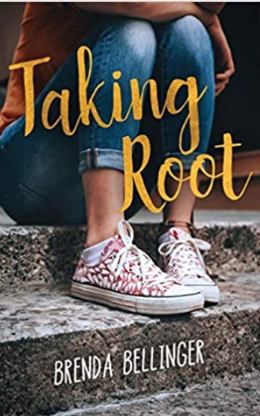
Guest Blogger Brenda Bellinger offers inspiration to write:
In these quiet days of sheltering at home, I’m grateful to be able to sink my ungloved hands into the moist soil of our vegetable garden and ready it for planting. I welcome the dirt under my fingernails and even the resistance of the weeds. There is so much uncertainty right now about what will happen in the next few months when, I’m hoping, our vegetables will be ready to harvest.
There is fertile ground here, too, for us as writers. We are the ones who will be compelled to document what is happening all around us right now in response to the Covid-19 virus and its global effects. Some of us will craft poems to capture the historical significance of this pandemic, its devastation and how it already has, and will likely forever, change some of our behaviors. Others may write about losing loved ones or coping with caring for family members who are ill, at-risk, or distant. So many stories are aching to be told — the stories behind the headlines and incessant tally of grief — mothers giving birth alone, cancer patients faced with deferring treatment, jobs lost, businesses shuttered, our elderly in isolation. Parents who are able to work from home are facing the exhausting challenge of simultaneously home-schooling their children. The points of view are endless: hospital workers, first responders, the unemployed or furloughed, teachers, children, the homeless, migrant workers. The list goes on.
Our lives and daily routines upended, I’m reminded of the five stages of grief: denial, anger, bargaining, depression and acceptance. We’ve had to move quickly through these as best we can in order to cope. We’ve adapted pretty well, in my opinion, to the new “social-distancing” model and limiting ourselves to only “essential” errands away from home. Strangers show kindness and courtesy to each other as we maintain six feet of distance and communicate with eyes that smile or roll above our masks in commiseration. Grandparents have learned to use technology to visit their grandchildren over video connections. Some businesses are retooling equipment to fabricate personal protection devices for medical personnel. A cottage industry of at-home crafters is turning out fabric face masks by the thousands. Comfort foods and homemade cookies have made a comeback. The sky over Delhi, India has turned blue and perhaps the planet is beginning to heal itself, just a teeny tiny bit.
During this rare gift of time in place, I encourage you to step outdoors in the spring sunshine, enjoy the fresh air and listen to the sounds of the birds again. Then, pick up your pen and write your way through this, for yourself and for those who may look to your words for guidance or comfort in the years to come.
Brenda Bellinger writes from an empty nest on an old chicken farm in Northern California. Her work has appeared in Small Farmer’s Journal, Mom Egg Review, Persimmon Tree, THEMA, the California Writers Club Literary Review, and in various anthologies, including The Write Spot: Reflections.
Brenda has been honored with first place awards for non-fiction and flash fiction at the Mendocino Coast and Central Coast Writers Conferences, respectively.
Guest Blogger David Templeton’s tips for successful writing.
I gave a talk as part of the monthly Writers Forum series sponsored by The Write Spot and Copperfield’s Books in Petaluma, California. Specifically, I was asked to talk about the craft of writing plays, and to share any tips and suggestions I may have picked up along the way.
I have learned a few things over the years, which I happily shared Thursday night with the assembled crowd. But later that night, as I was chatting with some friends, it dawned on me that I’d completely failed to mention one tip that I meant to share.
I’d even written it in my notes, and then somehow skipped over it during the actual talk.
It’s one of the most important things I’ve ever learned as a writer.
It is this: Bartenders make the best allies.
It doesn’t have to be bartenders, of course. It could also be a barista, a restaurant wait staffer, or an ice rink snack-bar counter worker.
The important part is — and this is something I learned as an 18-year-old wannabe writer in southern California — a restaurant counter, or a bar, or any spot where stools belly up to a slab of wood behind which servers are working, is a great place to get some writing done.
And the best way to be made to feel welcome when you pull out a notebook or a laptop or a script festooned with multicolored post-it notes is to make the people who work there your ally.
There are many good ways to do this.
The most effective, of course, (and the quickest), is to earn a reputation as a decent tipper.
As a teenager frequenting coffeeshops in Downey, where I grew up, I soon learned to calculate tips, not on a percentage of my overall bill, but on how many 30-45 minute periods I was occupying that stool. It was one generously conversational woman who worked at a coffeeshop called Jon’s, a short walk from my house, who pointed this out. She explained that for someone like her, someone who counted on tips to pay the rent, a frequent and regular turnaround of customers was vital. If my butt on the seat extended past 30 or 45 minutes, then I was taking up space another tipping customer could be occupying.
“So if you’re planning on tipping me two dollars for that first 45 minutes, it’s only fair that you add another dollar or two with every extra 45 minutes to sit there writing in your notebook,” she smiled. “Fair is fair, right honey?”
This was one of those coffee shops where the wait staff called people Honey.
“And here’s another tip, Honey,” she added. “You can always just come in when it’s slow. When the place is empty, you stay as long as you want. Keeps me from getting bored. And if you turn out to be interesting to talk to, well that’s just gravy.”
And so began my lifelong appreciation of coffeeshop workers and, eventually, bartenders.
I know, I know. I could always work at home. And I do.
But home is so full of distractions. When you are working on a writing project at the bar of a restaurant, it is not acceptable to pop up, wander around, flop on the couch, surf the television or go into the kitchen to root through the refrigerator. When you are working at a bar, you tend to stay in place and keep working.
One of my favorite writing spots in Petaluma is the far corner of the bar at Seared restaurant downtown. I call it “the magic corner,” right up against the old brick wall. I’m not the only one who likes that corner – it’s often occupied when I arrive — but when I do manage to score a seat there, I like to think it means my writing is going to go especially well.
One of the bartenders at Seared, Chris, always makes sure to ask how various projects are going, of late showing interest in my most recent play “Galatea.” Chunks of it were written in the magic corner.
Among the many great things about bartenders is that, once they know you are working on something like a play, they really can become your ally. They can skillfully dissuade other patrons from distracting you with questions about what you are doing. They can serve as ready sounding boards when you need some instant feedback on something you’ve just written.
There used to be a classy upstairs bar in Santa Rosa where, for some reason, very few people congregated between its 4 p.m. opening and around 8 p.m., when it began to fill up. Once or twice a week, that was my time. The place was quiet, the staff was genuinely supportive of having a resident playwright at the end of the bar, and I got quite a bit of writing done there. Upon completion of one particular project, understanding that part of the process of developing a play is hearing it read out-loud for the first time, the management of the place offered to host a private first reading. About 30 invited folks showed up one late afternoon to hear a team of actors read the thing, sitting on stools on the venue’s tiny stage. The attendees all bought drinks, of course, so it was mutually beneficial, and a great way to kick off a project.
Several years ago, at the time I was working on a novella-length fiction piece called “Mary Shelley’s Body” — a scary story about the ghost of the author of “Frankenstein”— my favorite writing spot was Grafitti, in the Petaluma Theater District, where Ayawaska is now. In its Graffiti days, the staff there was all-in on my various writing projects, eagerly discussing whatever scene I might be working on, cheering me on as I grow closer and closer to the final page. As it so happened, since that story was set in a graveyard, I occasionally had need of names for my tombstones. As a kind of “Easter egg,” I began embedding the names of the staff into the story as names on various graves and tombs.
One particular bartender (and articulately knowledgeable movie fan) named Josiah Nickerson Knowles IV (yes, that’s his real name) gladly lent me the family moniker for the book. It ended up in a passage where Mary Shelley’s wandering spirit says, “And who is this over here, beneath this crumbling tomb with the ancient stone angel, its head long removed? Josiah Nickerson Knowles IV. ‘A gentleman in the face of all adversity.’ Well, Mr. Knowles. I hope that wherever you are, your gentlemanly head is better attached than the one that once rested on your little angelic guardian here.”
When I happened to mention this little fact to another patron one afternoon, the guy delightedly called across the room, “Hey, Josiah! I hear your name is on a tombstone!”
“It’s actually on a few tombstones,” he called back. “I am Josiah Nickerson Knowles the Fourth, right?”
Eventually, “Mary Shelley’s Body” was published as part of the anthology “Eternal Frankenstein,” by Petaluma’s Word Horde Books. Josiah and many of the other Graffiti staff made sure to get copies, whimsically appreciative of the odd circumstance that placed their names in the story in such delightfully gothic fashion.
A few months ago, while completing the aforementioned “Galatea” — about robots on a space station — I found myself working in a number of local spots as I approached my deadline. A scene in which my main robot character learns a shocking truth from her therapist (yes, in my play, robots have therapists) was written at River Front Café. The fictional “mission statement” of a secret organization of robot designers was crafted while sitting at the large community table at Acre Coffee on Petaluma Boulevard. And the climactic final scene, in which all storylines, robotic and otherwise, come together, was finished while sitting right there in Seared’s magic corner.
“Is that it? Is it done?” Chris asked as I took a breath, typed in the words “End of Play,” and somewhat ceremoniously closed my laptop. “It’s done,” I nodded, accepting Chris’s celebratory high five gesture, and returning my computer to its bag.
It’s a little corny, but kind of nice — and this is another thing I forgot to mention during my talk last week — to live in a town where such personal writerly milestones take place regularly. I can go about my business, and suddenly recognize that, over there, I started such-and-such a project. At that table over by that window, I got a bit emotional writing a particular death scene and the waiter brought tissues gently saying, “Was it someone real or someone fictional?” (True story!) In that corner right there I finished my robot play and got high fives from the bartender.
Bartenders really do make the best allies. And when you finish a play, they can even serve you a drink to help you celebrate.
“Playwriting, coffee shops, bartenders as allies” was originally published the February 17, 2020 issue of Argus Courier.
David Templeton is a Bay Area playwright and award-winning arts journalist best known locally for his work with the Petaluma Argus-Courier and the North Bay Bohemian.
As a playwright, he’s won awards for his writing of Wretch Like Me, which had runs at the San Francisco Fringe Festival and the Edinburgh Fringe Festival in Scotland.
In addition to Polar Bears, his other plays include Pinky, Drumming with Anubis, and Mary Shelley’s Body, adapted from his novella of the same name, published in the 2016 anthology Eternal Frankenstein.
David’s next play, “Galatea,” which was to have had its world premiere at Spreckels Performing Arts Center in March, will now be staged at Spreckels as part of its 2020/2021 season. He is currently at work on a collection of twisted Christmas stories, hopefully to be published in November of 2020.