Write during stressful times.

  • “We need people who are taking the stress of this time and turning it into art, even if it’s solely for the effect it has on the artist.” — Nathan Bransford

    Guest Blogger Nathan Bransford shares tips about how to write during stressful times.

    Writing  is one of the best ways we have to turn darkness into light.

    Here are some tips that have worked for me [Nathan] when I needed to write and life circumstances were interfering in a big way:

    ~If you have the means and ability to write during this time, you have it really good. Recognize your luck. Let that privilege sink in. Let it guide you toward being a better and more generous person.

    ~Self-quarantining and working from home might free up time, which could feel like a huge opportunity that you don’t want to pass up.

    But paradoxically, having a lot of time to write can actually slow you down. And that’s during calm times. You’re probably not going to work as quickly as you normally do. Don’t beat yourself up about it.

    ~ The benefits of meditation for writing during times of anxiety.

    Excepted from “Writing in a time of anxiety,” Nathan Bransford’s March 15, 2020 Blog Post.

    Nathan Bransford is the author of How to Write a Novel and the Jacob Wonderbar series.

    Nathan is dedicated to helping authors chase their dreams. His blog has everything you need to know to write, edit, and publish a book. Nathan is available for manuscript edits, query critiques, and coaching!

  • Today’s Guest Blogger Lara Zielin:

          I often have the feeling I’m in trouble

          It’s this pervasive unease, like I’m doing something wrong.

          The problem is, I don’t know WHAT I’m doing wrong. Which means that if or when I get in trouble, it’s going to be a terrible surprise. 

          Because of this, I have my antennae up all day, scanning, looking, wondering what I could be doing that’s awful. I mind my P’s and Q’s and I try so hard to do everything right. I try to stay busy.

          I try to be so, so good. 

          But some part of me knows it won’t be enough. Trouble is still a-comin’. 

          Which means by the time I get to the end of the day, there is this exhausted part of me that is BEYOND READY to feel safe. To feel good enough. To feel comforted. 

          That part of me wants to eat ALL the carbs. And drink. And scroll Facebook. And numb, numb, numb. Because it’s painful out there, people. 

          This feeling has only gotten worse during the COVID-19 pandemic. 

          Without regular face-to-face check-ins with colleagues and friends, the gnawing unease that I’ve done something wrong only grows. My hankering for carbs only grows. My addiction to Netflix and my phone only grows. 

          That is, until I stop running and face the darkness. Until I open my arms to the fear and to the pain of thinking I’m not enough and just … sit with it. 

          I’ve been doing a LOT of writing around this lately. And I’m here for you if you want to do some writing around this, too.

          Instead of trying to run from the darkness, let’s invite it in. Let’s listen to it. And let’s meet it with love. 

          Because that’s the ONLY thing that’s going to help us feel better, feel lighter, and feel whole. If we run from the darkness, it will only continue to chase us. But if we embrace it, we can let it complete us. 
          To help us do just that, Lara is leading a free one-hour online group writing time on Thursday, April 23. 
          

    Note from Marlene: If you need ideas for relaxing and de-stressing, here ya go. You might already be doing some of these.

    I’m working on the next Write Spot book and will include these self-care tips and more!

    Creativity Coaching

    Alisha Wielfaert 

    Suzanne Murray

    Hypnotherapy

    Ted A. Moreno

    Inspiration

    Hands Free Mama – Rachel Macy Stafford

    Meditate

    Gaiam

    Headspace

    Insight Timer

    Mindful

    Movement

    Dance

    Ten minute Qi Gong

    Yoga

    And, of course. Write. Write what you know. Write what you want to know. Just write. If you need writing prompts, take a look at The Write Spot Blog.

  • Guest Blogger Brenda Bellinger offers inspiration to write:

    In these quiet days of sheltering at home, I’m grateful to be able to sink my ungloved hands into the moist soil of our vegetable garden and ready it for planting. I welcome the dirt under my fingernails and even the resistance of the weeds. There is so much uncertainty right now about what will happen in the next few months when, I’m hoping, our vegetables will be ready to harvest.

    There is fertile ground here, too, for us as writers. We are the ones who will be compelled to document what is happening all around us right now in response to the Covid-19 virus and its global effects. Some of us will craft poems to capture the historical significance of this pandemic, its devastation and how it already has, and will likely forever, change some of our behaviors. Others may write about losing loved ones or coping with caring for family members who are ill, at-risk, or distant. So many stories are aching to be told — the stories behind the headlines and incessant tally of grief — mothers giving birth alone, cancer patients faced with deferring treatment, jobs lost, businesses shuttered, our elderly in isolation. Parents who are able to work from home are facing the exhausting challenge of simultaneously home-schooling their children. The points of view are endless: hospital workers, first responders, the unemployed or furloughed, teachers, children, the homeless, migrant workers. The list goes on.

    Our lives and daily routines upended, I’m reminded of the five stages of grief: denial, anger, bargaining, depression and acceptance. We’ve had to move quickly through these as best we can in order to cope. We’ve adapted pretty well, in my opinion, to the new “social-distancing” model and limiting ourselves to only “essential” errands away from home. Strangers show kindness and courtesy to each other as we maintain six feet of distance and communicate with eyes that smile or roll above our masks in commiseration. Grandparents have learned to use technology to visit their grandchildren over video connections. Some businesses are retooling equipment to fabricate personal protection devices for medical personnel. A cottage industry of at-home crafters is turning out fabric face masks by the thousands. Comfort foods and homemade cookies have made a comeback. The sky over Delhi, India has turned blue and perhaps the planet is beginning to heal itself, just a teeny tiny bit.

    During this rare gift of time in place, I encourage you to step outdoors in the spring sunshine, enjoy the fresh air and listen to the sounds of the birds again. Then, pick up your pen and write your way through this, for yourself and for those who may look to your words for guidance or comfort in the years to come.

    Brenda Bellinger writes from an empty nest on an old chicken farm in Northern California. Her work has appeared in Small Farmer’s Journal, Mom Egg Review, Persimmon Tree, THEMA, the California Writers Club Literary Review, and in various anthologies, including The Write Spot: Reflections.

    Brenda has been honored with first place awards for non-fiction and flash fiction at the Mendocino Coast and Central Coast Writers Conferences, respectively.

    Taking Root is her first novel.

  • Guest Blogger David Templeton’s tips for successful writing.

    I gave a talk as part of the monthly Writers Forum series sponsored by The Write Spot and Copperfield’s Books in Petaluma, California. Specifically, I was asked to talk about the craft of writing plays, and to share any tips and suggestions I may have picked up along the way.

    I have learned a few things over the years, which I happily shared Thursday night with the assembled crowd. But later that night, as I was chatting with some friends, it dawned on me that I’d completely failed to mention one tip that I meant to share.

    I’d even written it in my notes, and then somehow skipped over it during the actual talk.

    It’s one of the most important things I’ve ever learned as a writer.

    It is this: Bartenders make the best allies.

    It doesn’t have to be bartenders, of course. It could also be a barista, a restaurant wait staffer, or an ice rink snack-bar counter worker.

    The important part is — and this is something I learned as an 18-year-old wannabe writer in southern California — a restaurant counter, or a bar, or any spot where stools belly up to a slab of wood behind which servers are working, is a great place to get some writing done.

    And the best way to be made to feel welcome when you pull out a notebook or a laptop or a script festooned with multicolored post-it notes is to make the people who work there your ally.

    There are many good ways to do this.

    The most effective, of course, (and the quickest), is to earn a reputation as a decent tipper.

    As a teenager frequenting coffeeshops in Downey, where I grew up, I soon learned to calculate tips, not on a percentage of my overall bill, but on how many 30-45 minute periods I was occupying that stool. It was one generously conversational woman who worked at a coffeeshop called Jon’s, a short walk from my house, who pointed this out. She explained that for someone like her, someone who counted on tips to pay the rent, a frequent and regular turnaround of customers was vital. If my butt on the seat extended past 30 or 45 minutes, then I was taking up space another tipping customer could be occupying.

    “So if you’re planning on tipping me two dollars for that first 45 minutes, it’s only fair that you add another dollar or two with every extra 45 minutes to sit there writing in your notebook,” she smiled. “Fair is fair, right honey?”

    This was one of those coffee shops where the wait staff called people Honey.

    “And here’s another tip, Honey,” she added. “You can always just come in when it’s slow. When the place is empty, you stay as long as you want. Keeps me from getting bored. And if you turn out to be interesting to talk to, well that’s just gravy.”

    And so began my lifelong appreciation of coffeeshop workers and, eventually, bartenders.

    I know, I know. I could always work at home. And I do.

    But home is so full of distractions. When you are working on a writing project at the bar of a restaurant, it is not acceptable to pop up, wander around, flop on the couch, surf the television or go into the kitchen to root through the refrigerator. When you are working at a bar, you tend to stay in place and keep working.

    One of my favorite writing spots in Petaluma is the far corner of the bar at Seared restaurant downtown. I call it “the magic corner,” right up against the old brick wall. I’m not the only one who likes that corner – it’s often occupied when I arrive — but when I do manage to score a seat there, I like to think it means my writing is going to go especially well.

    One of the bartenders at Seared, Chris, always makes sure to ask how various projects are going, of late showing interest in my most recent play “Galatea.” Chunks of it were written in the magic corner.

    Among the many great things about bartenders is that, once they know you are working on something like a play, they really can become your ally. They can skillfully dissuade other patrons from distracting you with questions about what you are doing. They can serve as ready sounding boards when you need some instant feedback on something you’ve just written.

    There used to be a classy upstairs bar in Santa Rosa where, for some reason, very few people congregated between its 4 p.m. opening and around 8 p.m., when it began to fill up. Once or twice a week, that was my time. The place was quiet, the staff was genuinely supportive of having a resident playwright at the end of the bar, and I got quite a bit of writing done there. Upon completion of one particular project, understanding that part of the process of developing a play is hearing it read out-loud for the first time, the management of the place offered to host a private first reading. About 30 invited folks showed up one late afternoon to hear a team of actors read the thing, sitting on stools on the venue’s tiny stage. The attendees all bought drinks, of course, so it was mutually beneficial, and a great way to kick off a project.

    Several years ago, at the time I was working on a novella-length fiction piece called “Mary Shelley’s Body” — a scary story about the ghost of the author of “Frankenstein”— my favorite writing spot was Grafitti, in the Petaluma Theater District, where Ayawaska is now. In its Graffiti days, the staff there was all-in on my various writing projects, eagerly discussing whatever scene I might be working on, cheering me on as I grow closer and closer to the final page. As it so happened, since that story was set in a graveyard, I occasionally had need of names for my tombstones. As a kind of “Easter egg,” I began embedding the names of the staff into the story as names on various graves and tombs.

    One particular bartender (and articulately knowledgeable movie fan) named Josiah Nickerson Knowles IV (yes, that’s his real name) gladly lent me the family moniker for the book. It ended up in a passage where Mary Shelley’s wandering spirit says, “And who is this over here, beneath this crumbling tomb with the ancient stone angel, its head long removed? Josiah Nickerson Knowles IV. ‘A gentleman in the face of all adversity.’ Well, Mr. Knowles. I hope that wherever you are, your gentlemanly head is better attached than the one that once rested on your little angelic guardian here.”

    When I happened to mention this little fact to another patron one afternoon, the guy delightedly called across the room, “Hey, Josiah! I hear your name is on a tombstone!”

    “It’s actually on a few tombstones,” he called back. “I am Josiah Nickerson Knowles the Fourth, right?”

    Eventually, “Mary Shelley’s Body” was published as part of the anthology “Eternal Frankenstein,” by Petaluma’s Word Horde Books. Josiah and many of the other Graffiti staff made sure to get copies, whimsically appreciative of the odd circumstance that placed their names in the story in such delightfully gothic fashion.

    A few months ago, while completing the aforementioned “Galatea” — about robots on a space station — I found myself working in a number of local spots as I approached my deadline. A scene in which my main robot character learns a shocking truth from her therapist (yes, in my play, robots have therapists) was written at River Front Café. The fictional “mission statement” of a secret organization of robot designers was crafted while sitting at the large community table at Acre Coffee on Petaluma Boulevard. And the climactic final scene, in which all storylines, robotic and otherwise, come together, was finished while sitting right there in Seared’s magic corner.

    “Is that it? Is it done?” Chris asked as I took a breath, typed in the words “End of Play,” and somewhat ceremoniously closed my laptop. “It’s done,” I nodded, accepting Chris’s celebratory high five gesture, and returning my computer to its bag.

    It’s a little corny, but kind of nice — and this is another thing I forgot to mention during my talk last week — to live in a town where such personal writerly milestones take place regularly. I can go about my business, and suddenly recognize that, over there, I started such-and-such a project. At that table over by that window, I got a bit emotional writing a particular death scene and the waiter brought tissues gently saying, “Was it someone real or someone fictional?” (True story!) In that corner right there I finished my robot play and got high fives from the bartender.

    Bartenders really do make the best allies. And when you finish a play, they can even serve you a drink to help you celebrate.

    “Playwriting, coffee shops, bartenders as allies” was originally published the February 17, 2020 issue of Argus Courier.

    David Templeton is a Bay Area playwright and award-winning arts journalist best known locally for his work with the Petaluma Argus-Courier and the North Bay Bohemian.

    As a playwright, he’s won awards for his writing of Wretch Like Me, which had runs at the San Francisco Fringe Festival and the Edinburgh Fringe Festival in Scotland.

    In addition to Polar Bears, his other plays include Pinky, Drumming with Anubis, and Mary Shelley’s Body, adapted from his novella of the same name, published in the 2016 anthology Eternal Frankenstein.

    David’s next play, “Galatea,” which was to have had its world premiere at Spreckels Performing Arts Center in March, will now be staged at Spreckels as part of its 2020/2021 season. He is currently at work on a collection of twisted Christmas stories, hopefully to be published in November of 2020.

    “Playwriting, coffee shops, bartenders as allies” was originally published February 27, 2020 in the Argus Courier.

  • A guide for authors just starting out with a Facebook business page.
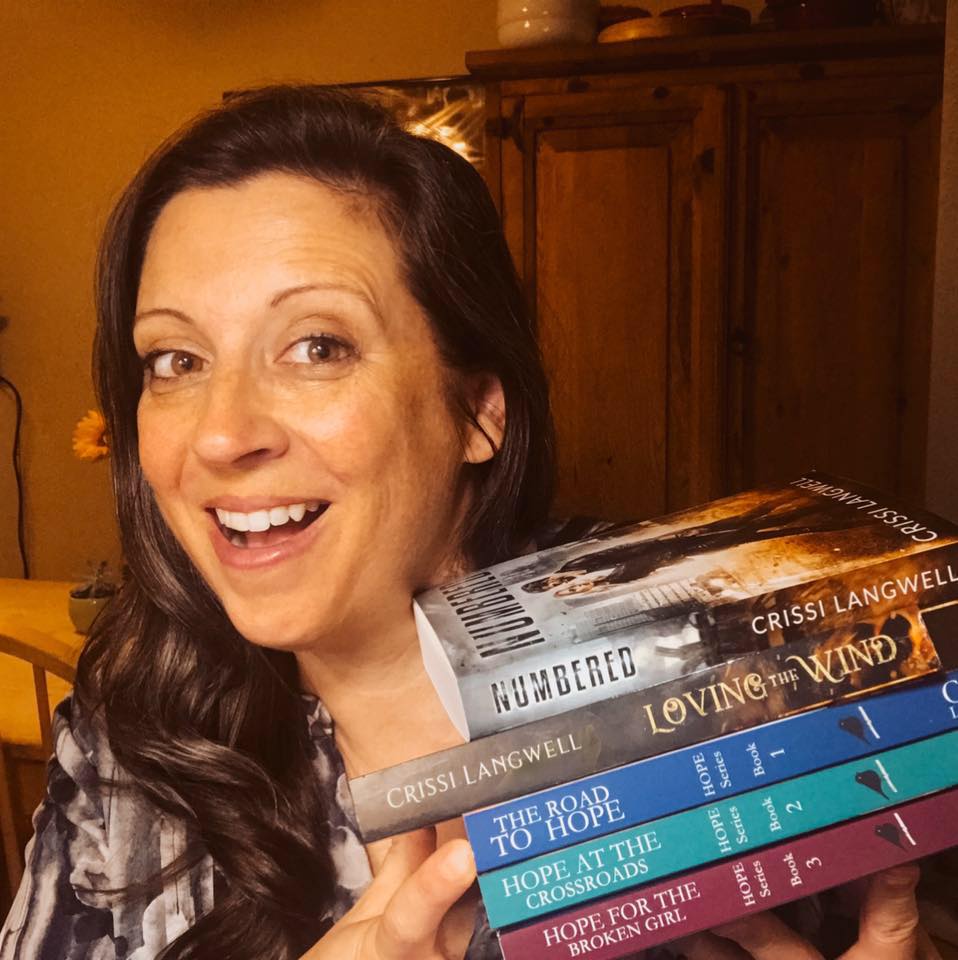
    Guest blogger Crissi Langwell gives us a crash course on using your Author Facebook Page as effectively as you can, even if you feel awkward in the beginning.

    What Should Authors Post on Their Facebook Page?

    If you’re a newly published author, or striving to be one, congratulations! You’ve done the hard work of writing a book! Now it’s time to get word out about your book, which is where social media comes in.

    But before you start spamming your friends with posts to buy your book, let’s take a step back and make a plan, starting specifically with Facebook.

    If  you don’t have a Facebook business page, it’s easy to create one, this tutorial will help.

    Once you have a FB page, then what?  I’m sure it’s daunting to look at that blank page, the status bar telling you to write something, but you don’t know what. It’s especially hard when you don’t have many fans (except one, hi Mom!) who will even read what you write.

    Note from Marlene:  Having an author Facebook page might be scary, but it can be fun. As Crissi says, “Don’t give in before you’ve even started.

    Show Them Who You Are

    First things first, make sure you have a profile picture and a cover photo. Your profile can be you, or it can be your book. On my own author Facebook page, I like to use my own photo most of the time. But when I’m getting ready to release a new book, I’ll change it to show my book cover.

    For the cover photo, you can choose scenery, a collage of your books, or anything that gives readers another clue as to who you are. But make sure the cover image is big enough to fit in that space. Nothing looks more unprofessional on a Facebook page than a pixelated image for the cover photo. The exact dimensions are 820 X 312 pixels.

    Hint: Go to Canva.com and create your Facebook cover there. This is a design website that offers easy templates that make all your designs look fun and professional. Here’s an easy tutorial to learn how to use it.

    Personalize Your Page

    Make sure your Facebook page URL is the exact name you want it to be. In your “About” section, go to the “General” area and edit your Username. Otherwise, your URL will add a bunch of numbers to the address, making it look clunky.

    Finally, fill out your “About” section with your bio, your website, and anything else you want readers to know about you. This section is checked more often than you think, and can be readers first impression of you.

    What to Post!

    Posting Rules

    • Be authentic. Be yourself.
    • Don’t spam your readers with “buy my book” posts
    • Refrain from politics or hot button issues (unless your books are about politics or hot button issues)
    • Post at least once a day, if possible
    • But don’t over-post, or you’ll lose readers

    Ten things you can post about on your Facebook page:

    1. A blog post you’ve written
    2. A quote from your book
    3. What you’re reading now (NOT your own book)
    4. Something funny that happened today
    5. Something in current events or pop culture that your readers would be interested in
    6. A quote from another author or influential person. Go to canva.com and create an image.
    7. A top 10 list of books your readers might enjoy knowing about
    8. News of a book event you’ll be attending
    9. News about your book release, or a sale on your book
    10. A photo of you writing, living life, or having fun

    Please note, only two of these ten items are directly about your book. A good rule of thumb is to follow the 80–20 rule: 80% of your posts are NOT about your book, and 20% of your posts are.

    It’s a good idea, before you post anything, to think about what your readers are like. What kind of person would like to read the things you write? What other things would they like besides your books? Keep these things in mind with everything you post, because what you’re really trying to do is build an audience that is interested in YOU, because this will be part of your platform.

    Your page views will be small in the beginning. Don’t stress about that number. Keep posting content that people will want to like, comment on, or share, and that number will go up. You just need to be consistent.

    Crissi Langwell is a romance author in Sonoma County. Her passion is the story of the underdog, and her novels include stories of homeless teens, determined heroines, family issues, free spirits and more.
  • My dear friend, Nancy Julien Kopp blogs at Writer Granny’s World by Nancy Julien Kopp.

    Last year, Nancy posted:

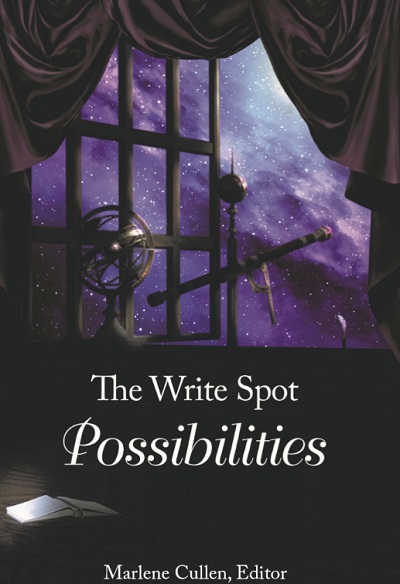
    In mid-November, I posted a review of The Write Spot: Possibilities.  The anthology consists of stories, essays, and poems by several writers. At the end of each offering is a prompt that might have inspired what they wrote and also a paragraph or two of advice for writers.

    Ahhh, advice. It can be given, but is it always accepted? Not by a longshot. Sometimes, we read the advice of other writers with a shield in front of us. The attitude can be Go ahead, teach me something I don’t already know. At other times, we’re wide open to any advice given. We want to soak it up like water in a sponge. 

    I’ve been skimming through the book again looking at the advice the writers offered. I consider it a gift to us, the writer-readers. I’m not going to quote from the book but have chosen bits and pieces of the advice that was given to share with you. Many of the writers repeated similar advice. I find that, when multiple people advise the same thing, I’d better pay attention.

    Advice from other writers:

    Don’t be afraid to share your work

    Join a writing group

    Write!

    Try different mediums of writing

    Never stop growing as a writer

    Find a special place to write that is your own

    Learn from your failures

    Nearly every one of those pieces of advice has appeared on my blog at some time, and often more than once. The suggestions for writers to heed is important enough to bear repetition. 

    One of the reasons I especially liked this anthology for writer-readers is that it offers more than the stories, poems, and essays. The prompts are excellent help for writing exercises, and the advice is worth a great deal. These writers put in a nutshell what some need an entire book to explain. An additional plus is the short bio of each writer. 

    The pieces of advice in The Write Spot: Possibilities and on my blog are simple things. Nothing so technical or intricate that others scratch their heads when they read them. Do all those little things, and you’ll be on top of your game. 

  • Today’s Guest Post spotlight shines on Lara Zielin. When I first read her post (below), my hand went to my chest. I recognized those feelings. I felt those feelings.

    Last summer I experienced a similar situation that Lara describes. The difference though, is that while giving my presentation, I knew I was “off” and I couldn’t get back “on.” I felt like a runaway train took off with me barely hanging onto the caboose. I so wanted to do a great job. Someone recommended me to this group as a presenter. I wanted to make her proud. At the end, I was afraid I embarrassed her and I certainly embarrassed myself.

    And when I read what happened to Lara, I took a deep breath.

    Lara wrote:

    Several years ago, a colleague and I gave a presentation to the board of a national museum.

    In the moment, the presentation felt amazing. I had practiced, done truckloads of research, and I felt like I was on my game.

    But late that night in my hotel room, I sat up in bed from a dead sleep, feeling like I couldn’t breathe. My brain was re-playing the meeting in slow-motion, highlighting all the things that had gone wrong, all the ways I’d been rejected, all the mistakes I’d made. 

    I began crying, recoiling from this terrible movie in my head. I was hardly able to endure the shame. 

    I remember thinking, “What do I DO? How do I handle this?”

    Today, if I could go back in time, I’d have an answer for Lara. I’d be able to help her. 

    I’d remind her this was just an old story rearing its ugly head. This old story was pissed off and scared, because Lara had just done a big, brave presentation, and that didn’t fit with ideas of who this old story thought Lara was. 

    I’d counsel Lara to write her way into a better place. I’d help Lara generate warm, positive feelings for herself based on what she wrote. I’d give her the gift of getting through this awful place in an hour, instead of it taking a year. 

    Today, what gets me out of bed in the morning is the realization that there are people out there doing bold and brave things, whose old stories are rearing up trying to stop them in their tracks. 

    Specifically, I see people trying to finish writing projects and getting stopped again and again, whether it’s finishing a book, or starting a writing business, or launching a blog. 

    My dear authors, if we don’t do battle with our old stories, they win. And we can’t have that. Because the world needs to read what you have to write.

    ~ Sent as an Author Your Life email from Lara on December 10, 2019.

    Note from Marlene:  I know what went wrong with my presentation. Or, I should say the many things that didn’t go right. I decided to be grateful and use it as a learning experience.

    The lesson I learned from what I considered my less-than-stellar presentation: Be gentle with yourself. Sometimes you are on top of your game. Othertimes, not so much. But mostly, cut yourself some slack. You did the best you could. The next time things get derailed, pause, take a breath. Look around. Fix or change what you can. Smile and carry on.  

    Like Lara wrote, people are doing bold and brave things. Are you one of those people? I am, even when I’m not sure I’ll conquer the challenge.

    Lara Zielin is a published author, editor, and the founder of Author Your Life. Her debut young-adult novel Donut Days was selected to the Lone Star Reading List, and her romance novel And Then He Kissed Me (written as Kim Amos) was nominated for a Romantic Times Reader’s Choice Award. Her magazine articles have appeared in Writers Digest, Culture, Medicine at Michigan, and more. Her nonfiction book Author Your Life is about using the power of writing to create a better story for yourself. She lives in Michigan with her husband and dog, and her goal is pretty much to eat all the cheese. 

  • Guest Blogger Joan Gelfand writes:

    I never set out to write a novel. I mean, really? I had cut my literary teeth on Simone de Beauvoir, Virginia Woolf, Willa Cather, Kurt Vonnegut, Gunter Grass and Wallace Stegner. I was satisfied being a poet, known to my local community.

    Writing a novel seemed terribly pretentious, a misguided idea. No. I did not start out to write a novel. I started out with a story that, after two years, and much encouragement from my writing instructor, grew into three hundred pages. I had written my first novel without planning to do so.

     It was with that first novel that I began to understand that becoming a successful writer wasn’t just about writing. It was several years after my first attempt to find a publisher for that first novel that I understood the business of writing.

    I learned that the letter I got back from an agent asking me to revise my manuscript was a serious request, not a rejection. And, I learned the hard way that without confidence, without commitment, and community,  I was never going to become a winning writer.

    While the 4 C’s approach encourages you to improve your craft, it also provides suggestions for the design of a productive work practice, recommends ways to cultivate a supportive network and gives clear and practical examples of how to build your confidence. What makes the 4 C’s approach unique is that the key is to develop all four skills at the same time.

    Does it sound like a lot of work? It is.

    Over the years, I’ve coached innumerable writers who start out insisting that they barely have time for the actual writing. Just getting to their desks, crafting a piece of writing, and finishing it is a tremendous challenge. And it is. But just finishing a piece of writing is not enough.

    After just a few sessions of working with me, these same writers find their priorities shifting as they begin to understand the importance of cultivating a network and building community. They realize that sending out their work one or even ten times is not enough. Soon, they find themselves more confident about every aspect of their work.

    The 4 c’s system: Imagine that your writing career is a stove with four burners: Craft. Commitment. Community. Confidence.

    Each burner has a pot on it that needs care and attention. Each pot is cooking up something tasty.

    Craft is bubbling while commitment is on a low simmer; you are out in the community, seen everywhere! That pot is on full boil. While you were out, confidence has scalded; that last manuscript rejection has you wondering if you’ve got what it takes. Who said you could write your way out of a boiling pot?

    As the Head Chef de Cuisine, your job is to fire up the burners, keep the grill hot, and tend to the ovens.

    Juggling is involved. Timing is essential. But this is your piece de resistance! You can do it.

    Joan Gelfand, MFA, Author, Coach is the author of the #1 Amazon Best Seller, You Can Be a Winning Writer (Mango Press).

    Joan’s three volumes of poetry and chapbook of short fiction have garnered over twenty awards and commendations. Joan’s novel, Fear to Shred, set in a Silicon Valley startup, will be published by Mastodon/C&R Press in March, 2020.

    Key publications include Los Angeles Review, PANK!, Rattle, Huffington Post, Poetry Flash, Prairie Schooner, Kalliope, Meridian Anthology of Contemporary Poetry, Chicken Soup for the Soul, and over 100 lit mags and journals.


  • Rachel Macy Stafford, Author of Hands Free Mama

    I recently started following Rachel Macy Stafford’s blog, “Hands Free Mama.”  

    If you are looking for wise words about life, I recommend “Hands Free Mama.”

    An excerpt from Rachel’s February 29 blog post:

    I can’t quite forget the publisher’s words: “We love the concept of the book, but the title needs work.”

    The title that encompassed the message of hope contained inside the book was rejected. Rejected. It is a harsh word, but it is the truth. 

    Suddenly, it comes to me; I will take the most powerful word of my rejected three-word title and I will write it on every blank slate in front of me.  

    Through tears of determination, I see a pattern:  

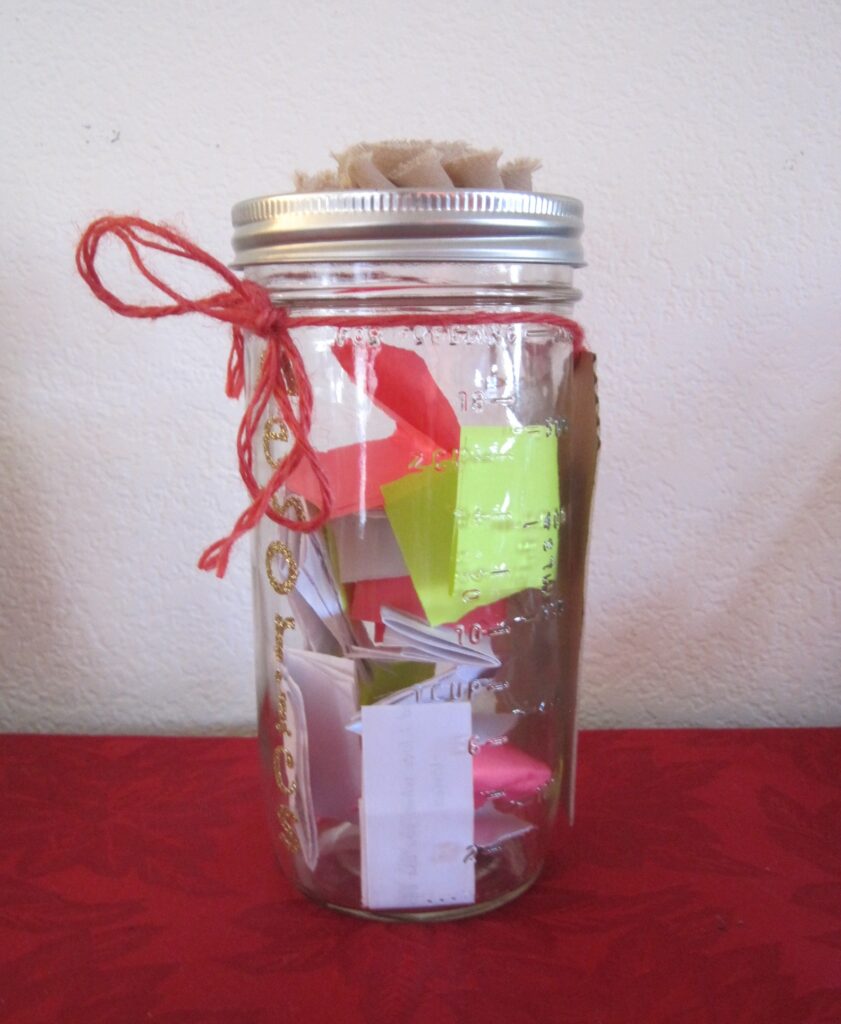
    Write your fears on green notes. 
    Write your triumphs on pink slips.
    Write your rejections on blank slates. 

    Put the notes in a jar.

    The question I asked young people at the end of my classroom talk as I passed out blank index cards:

    If you could give the world one message, what would it be? 

    I wasn’t expecting all the kids to participate, but they did.

    It was as if they were just waiting for someone to ask. 

    “We are all just waiting for someone to notice—notice our pain… notice our fears… notice our hopes… notice our dreams . . .”

    And when we see what is written, we see ourselves in a new, accepting, comforting light. 

    Thank God, we’re a mess, because that is what connects us and catapults us, so we can carry on. 

    Inspiration for Rachel’s book, Live Love Now:

    The index cards I collected over the years were the inspiration for my forthcoming book LIVE LOVE NOW. I put them into categories based on the students’ fears, worries, needs, hopes, and dreams. Those became my chapters, and they contain universal stressors we are all experiencing living in our modern world . . . but there is hope. I felt that hope so strongly while sitting in a tiny recording booth creating the audio for this book. The producer spoke encouragingly into my headset indicating that ALL of me was welcome to show up to deliver this critical message. He said things like . . . “beautiful emotion, keep going” . . . “you’ve drawn me in, Rachel” . . . “your waters run deep” . . . “this is going to be an incredibly rewarding experience for the listener.”

    I have never been so excited to share something I’ve created with you.

    Note from Marlene: Please scroll down for Rachel’s Special Offer.

    Rachel Macy Stafford, Author of Hands Free Mama Writes:

    Hello. I’m Rachel. To know me is to know my personal list of what really matters . . .

    *My daughters matter. My older daughter is 13. She is my brown-eyed girl with an enormous heart. I learned what matters in life by watching her walk right up to the suffering and extend her hand. “Because when you have the important things in life—like love, faith, and family—there is nothing you own that you can’t give away.”


    * My younger daughter is 10. She is my Noticer. She remembers where I parked the car and often leads me by the hand to the right spot. She notices friends’ new hairstyles and gorgeous sunsets before anyone else. She looks for the child struggling to sharpen his pencil or the one who’s off in the corner alone. She hops right up to offer her assistance. That’s probably what I love most about her noticing gift—she doesn’t just notice things, she notices emotion. Her way of life inspired these words: “We are all just waiting for someone to notice—notice our pain, notice our scars, notice our fear, notice our joy, notice our triumphs, notice our courage. And the one who notices is a rare and beautiful gift.

     *My husband matters. He provides me with the grace and love that I freely give others, but often neglect to give myself. His love constantly reminds me of the beauty inside me.  I am certain that his love has added an extra ten years to my life.

    *Writing matters. My second-grade teacher, Ms. Paluska, led me into the world of writing and it has been home to me ever since. Writing for others is my joy.

    *Teaching matters. Before I was a mom, I was a teacher to special education students. I can still remember all their names and wish I could see how each one turned out. I love sharing information in creative and inspiring ways to those who want to receive it.

    *Encouraging others matters, probably because so many people have encouraged me in my life. I remember the name of every person who encouraged me to publish my works so that as many people as possible could read my words.

    *Recognizing angels matters. I strive to notice the angels that come into my life when I need them, and then later telling them about it. Every single day, I want to be somebody’s angel.

    *Faith matters. I have faith that there is plan for my life. In this case, I believe that God chose me to have a revelation about how I want to spend my days here on this earth. And it is because of my faith that I understand why God chose me. I was chosen to tell this story because of what really matters to me. Being a mother, a wife, a writer, a teacher, and an encourager has prepared me to show others how to let go of their own daily distractions and grasp what really matters. Maybe through this blog, I can even become somebody’s angel.

    Which brings me to my last and most recent item that really matters to me . . .

    • Being Hands Free matters.  Before, I was holding on to the wrong things and missing out on life. Finally, I am holding on to what matters, and it has given my life new meaning. Come on and join me; grasp what really matters to you and then start living.

    Rachel’s book LIVE LOVE NOW:

    When you pre-order 2 books, it qualifies you for Rachel’s LIVE LOVE NOW 21-Day Self Care Audio Series.

    If you have pre-ordered a print copy and decide you want the audio book or a signed copy, you can redeem all of your pre-order bonuses and start listening to her self-care audio series today.

    Click here to pre-order from your choice of retailers & and/or redeem your gifts. LIVE LOVE NOW comes into the world in early April, 2020.