Bookstagrammers & Influeners

  • Hello from Marlene, host of The Write Spot Blog,

    I originally read the post below by Julie Valerie on Anne R. Allen’s Blog with Ruth Harris.

    Today’s guest blog post is longer than my usual posts. Take it in small bites. There is a lot of content here. All good stuff.

    I learned so much I didn’t know about things such as bookstagrammers and influencers (the book kind).

    Guest Blogger Julie Valerie:

    From Book Blog to Book Deal

    Julie asks: Does a book blog still land a book deal?

    Of course they do. Great writing and great content will always find an audience, and where there’s an audience, especially a sizable one, there’s typically a book deal waiting to happen. Think Julie Powell, Candice Bushnell, Jen Lancaster, and Jenny Lawson.

    Not to mention, entire empires (with books launched along the way), have been built on the humble foundations of blog sites that just wouldn’t quit. Think ProBlogger’s Darren Rowse and Content Marketing Institute’s Joe Pulizzi.

    Getting Visible is an Uphill Battle – Bookstagrammers and Influencers

    For published and unpublished writers, whether traditionally-published, hybrid, or self-published, it’s often an uphill battle to garner attention for our work.

    Working with influencers such as book reviewers, bookstagrammers, and book bloggers is an excellent way of reaching both a wider audience as well as an audience that may lead to signing with an agent or landing a traditional book deal. (If this is something you are seeking, not all authors share the same goals.)

    Many authors invest considerable time networking with book influencers. Some have worked to build influence and audiences for their work by becoming professional book reviewers, bookstagrammers, and/or book bloggers.

    Julie is one of those authors.

    How Her Book Blog Worked For Julie

    Though I do work closely with bookstagrammers now that the first book in my Village of Primm series is releasing with Lake Union Publishing December 2019, I do not have professional experience as a bookstagrammer. 

    Note from Anne R. Allen: Bookstagram is a book-related platform on Instagram. Here’s more info on becoming a bookstagrammer.

    Back to Julie: As a former book-reviewing book blogger, I reviewed 200+ books in my genre while writing my debut novel, seeking an agent, and signing with a publisher.

    Technically speaking, I was not “discovered” solely because of my book blog, though many authors have been. I did, however, cite my work as a book reviewer and book blogger in the query letter that ultimately led to signing with my agent.

    And I believe the body of work I produced on my blog over the course of many years helped with that. So did the audience I built and the network of fellow writers I nurtured, as well as the market research and knowledge I acquired reviewing 200+ books in my genre. They helped to strengthen my credentials as an author in today’s competitive book publishing industry—whether I had pursued a traditional or indie path toward publishing.

    I signed with an agent who sold my women’s fiction series to a publisher based on the merits of the manuscript, at the time, I was an unpublished writer.

    Having that book blog demonstrated I could meet deadlines, produce a lot of writing on a timely schedule, and sustain a writing life that not only built readership (very important) in advance of the first book, but also one that built relationships with other writers.

    When You Have to Step Aside from Your Book Blog

    Unfortunately, I had to give up my book blog in 2016. The development of the Village of Primm series, coupled with the launch of the 85K Writing Challenge, led to a redesign of my work life.

    I miss my book blogging days.

    But I do produce steady content for my author site at julievalerie.com, including a monthly author newsletter, and I will continue to do so for as long as I’m in the industry. I feel it’s a necessary part of conducting business.

    Why Bother with a Blog or Website?

    There are many benefits of hosting your content on your own website. One, unlike content shared on social media, what you write on your site isn’t fleeting and isn’t bound by the rules of someone else.

    Two, you own that content – not so with content published to Facebook, Instagram, and Twitter.

    And three, as long as you keep your domain name and web hosting services active, no one can pull the plug on what you want to present to the world. Your author site is your space, your portfolio, your home.

    If you’re pursuing a publishing contract, be mindful of copyright law before publishing excerpts of your unpublished work. A publisher may consider what you post as already “published” and in the public domain.

    Was book reviewing and book blogging a lot of work? Yes, it most certainly was.

    Was it worth it in the end? Absolutely. But enough about me.

    Let’s Talk about You

    I’m here to share a broad overview of the “influencer” sector of the publishing industry so that you can decide how best to proceed according to your goals. Who knows where your work in this sector of the book industry might lead you?

    Are you interested in reaching readers, building name recognition, increasing awareness of book titles, and driving sales? Of course, you are. Who wouldn’t be? But how does an author do that? Let’s drill down, starting with why any of this should matter to you.

    Should You Start a Book Blog or Become a Bookstagrammer?

    What are the benefits of working with or becoming a book blogger or bookstagrammer who posts book reviews?

    Though the what, the why, and the how of book reviews, bookstagram, and book blogs differ slightly, what they all have in common is their exceptional ability to reach an author’s end consumer, whether that end consumer be agents, publishers, other industry professionals, or the most coveted end consumer of all: readers.

    Many authors have enjoyed careers that skyrocket after receiving coverage in the book review, bookstagram, and book blog ecosystem. And many writers, while writing their first novel, have gained meaningful access to the book industry through their work as a book reviewer, bookstagrammer, and/or book blogger.

    Book reviews, bookstagram, and book blogs are important constituents within the book industry because they offer authors the opportunity to attract attention that:

    • builds name recognition
    • raises awareness for book titles, and
    • drives sales

    How Does an Author Maximize these Opportunities?

    Start by considering the people behind the book reviews, bookstagram, and book blogs as well as the role those people play as influencers in a crowded book market.

    A great place to start is understanding influencers and influencer marketing.

    What is an Influencer?

    An influencer is anyone who uses their knowledge, authority, social position, audience, or relationship with others to affect the decisions of an audience.

    Types of influencers:

    • celebrities
    • industry leaders
    • industry experts
    • thought leaders
    • content creators
    • journalists
    • book reviewers
    • bloggers
    • micro-influencers
    • social media mavens
    • vloggers, podcasters, booktubers, etc.
    • other authors

    Celebrities are typically considered the original influencers. They play an important role within the book industry, especially celebrities with book clubs. They carry a lot of clout due to their large, already established, and loyal fan base, which helps to move the needle on sales.

    Industry leaders, industry experts, and thought leaders are often executives, brand or genre specialists, and often work for publishing companies, trade publications, professional organizations, and the like.

    Content creators and journalists provide a steady flow of information consumed by broad audiences.

    Book blog reviewers, bloggers, micro-influencers, social media mavens, vloggers, podcasters, and booktubers all fall under the focus of this discussion but differ from the above types of influencers due to their unique ability to speak directly to their audiences with peer-to-peer “voice,” which lends authenticity to their influence through active, often daily interactions with their fan base. With these types of influencers, fan bases are treated as a wide web of interconnected friends.

    Because of this “extended conversation with friends” and the unique blend of highly niche book chatter and its resulting word-of-mouth book recommendations, agents, publishers, industry professionals, authors, and most certainly, readers, take notice.

    I have experience as a book reviewer and book blogger and would love to share a few insights with you.

    The Inside Scoop on Working with Book Influencers

    1. Know what you’re asking. 

    The behind-the-scenes life of a book influencer is hard, time-consuming work.

    When seeking a book review on either Instagram, a book blog, or some other media like a podcast, vlog, or booktube, keep in mind you are asking someone to commit about five to eight hours of their life to you.

    I estimate it took me about four to six hours to read the book, about an hour to write a thoughtful review, and then another hour creating a blog post, scheduling social media to support that blog post, and then finally, uploading the book review to the various book review sites. And that doesn’t count time spent monitoring the published post to engage with readers in the comment section.

    Taking all of this into consideration, what are my tips?

    Be courteous. Submit all materials in a timely manner. Remember to thank them, share their coverage on your social media channels, and be sure to engage with their readership in the comment section of the post.

    2. Research first.

    No one likes a cold call. And it’s frustrating when someone asks you to review a book from a genre you clearly don’t cover. It shows they took no time to get to know you, your work, and your audience.

    My first name is Julie. My last name is Valerie. I make this distinction clear on my website and sign off on all emails as simply “Julie” (with a notation in my email signature that clarifies my first and last name).

    But there was one author who kept swinging by my site whenever she had a book release, asking for coverage (remember those five to eight hours I described above?), and she simply could not stop referring to me as if my first name was Valerie. Now, I typically don’t care if you get my name wrong. Truly. (It happens all the time.) But this one particular author really bugged me. It seemed selfish on her part. Not to mention unprofessional.

    If you’re asking someone to devote possibly eight hours to your book, and you’re asking someone to share your book with their readers, please, spend meaningful time researching their platform, don’t send a form letter, do nurture the relationship, and for goodness sake, get the person’s first name right.

    Some tips: Start by interacting with their platform. If they’ve posted something you enjoy, leave a comment, or consider sharing their post with your audience on your platform (author Facebook page, Twitter, Instagram, your website, etc.). Get to know them as people. Try to establish authentic, meaningful connections. Some of my closest friendships in the book world are with book lovers that are not authors or writers, but rather, people who love the written word as much as I do and seek to connect readers with great books.

    3. Don’t show up only when it suits you.

    Here’s a novel idea: be present and participate in conversations when your book isn’t launching or in promotion. I think most people understand if there’s a spike in your activities around the time of your pub date or promotion, but if you’re nowhere to be found in the “off-season” and if you don’t support others when it’s their time to shine, people will sense your interest might be a little one-sided. By the time my first book will be released, I will have spent seven years participating full-time in the book community. Seven years.

    My tip? Always remember that more often than not, it’s not about you. It’s about someone else. So help each other out. Celebrate. Do onto others. You know, that stuff you learned in kindergarten.

    4. Tips on how to ask.

    Be polite. Write a courteous, personalized letter addressing them by name (the correct name.) Write a few sentences that either reflect your current relationship, or, if your query is the attempted start of a working relationship beyond baseline social media interactions, then include a few sentences that indicate you know who they are, what they do, and what they are seeking to cover on their platform.

    Include enough information about your book to help them decide if it’s a match for them and their audience. If they indicate a preferred format (ebook, paperback, etc.), try your best to accommodate them. If you can provide a signed book giveaway (or similar), say so. Also, indicate if you can answer interview questions and the like.

    Note from Anne R. Allen: And here’s a post on how NOT to query a blogger.

    5. Be prepared with a complete media kit. 

    Some items to include in your media kit: book cover, jacket copy, early endorsements, an excerpt if available, publisher name, pub date, buy links, author press photo, author bio, social media links, and a subscribe link to your author newsletter. The goal here is to anticipate ahead of time and then gather in one place everything that book influencer may need.

    6. Follow up and work to maintain the relationship.

    After coverage of your book goes “live,” thank the influencer in the comment section of the post. Keep an eye on the comment section of the post so that you can interact with the influencer’s audience (when appropriate and with proper etiquette).

    Be mindful of the valued and very important relationship the influencer has with their audience. If you’re a guest on their platform, then please, first and foremost, be friendly, be active, and be kind and considerate to the influencer’s audience.

    That’s a Wrap!

    I hope you found this discussion about book reviewers, bookstagrammers, and book bloggers useful. I’ve always felt that through the work of these influencers, authors have great potential to reach agents, publishers, industry professionals—and especially, readers.

    I hope you’re having a great day and I wish you every success.

    So what do you think, scriveners? Do you have any tips you’d like to share about reaching book influencers? Julie would love to hear what you found helpful and she’ll answer any lingering questions you may have. Did you know about the importance of bookstagrammers? 

    For more on how blogging can lead to big success in the publishing industry, see Anne R. Allen’s post on How Blogging Leads to Many Career Paths.

    Julie Valerie writes upmarket contemporary women’s fiction and is developing a series set in the fictional Village of Primm.

    Her debut novel, Holly Banks Full of Angst, Book One in the Village of Primm series, publishes December 2019 as part of a multi-book deal with Lake Union Publishing.

    A voracious reader, Julie has reviewed 200+ books in her genre, won the BookSparks 2015 Summer Reading Challenge Grand Prize, and founded the 85K Writing Challenge (85K90.com), providing writers with a supportive, enriching forum to pen 85,000 words in 90 days followed by 12 months of writing, editing, prepping to pub, and publishing support.

    With a master’s degree in education and a bachelor of fine arts degree in fashion, Julie earned an editing certificate from the University of Chicago Graham School and enjoys testing her knowledge of the Chicago Manual of Style. Connect with Julie at julievalerie.com. On Facebook and Instagram  @JulieValerieAuthor. On Twitter and Pinterest @Julie_Valerie.

  • Brad Yates

    Today’s Guest Blogger is Brad Yates.

    In Manifestation 101 (& Taking Likely Action) Brad talks about a five-step process for manifesting what you really want.


    1. Create It
    2. Clear It
    3. Live It
    4. Let Go

    5. Likely Action

    Step One: Create It

    Decide what you really want.  Write it down. Start with something like:

    “I am so happy!  I have . . .”

    Then list the qualities and features of what it is you want (as if you already have them).

    It’s important that you write it in the present.  If you write “I want this,” then you are vibrating at a frequency of want – and the wanting of it is what you will continue to attract. You want to be vibrating in harmony with already having it.

    Write positive things, stating the positive aspect (what it has), rather than what it doesn’t have. If you write, “My new boyfriend isn’t a loser,” you are putting “loser” vibrations into the ether.  

    Rather than asking for money, focus on what you want to have. I focused on a trip I wanted to take, which I estimated to cost about $1,200. [And this is what Brad received.]

    Don’t limit the Universe by saying it has to be paid for in cash. If you want a new car – focus on the car. The money might show up, but you might also win the car.

    Once you’ve given the parameters of what you want, write at the end, “This, or something better – for the highest good of all concerned.”   Give the Universe an opportunity to give you something better and/or more appropriate – it knows better than we do.

    Step Two: Clear It

    Here’s where Emotional Freedom Technique (EFT) comes into play. Too often we send contradictory energy, keeping what we consciously say we want at a distance from ourselves.

    Clear any contradictory thoughts.  The Universe picks up on them all. The biggest, in my experience, is: “I don’t deserve to have this.”  Tap on it, or use whatever other tools you might have for releasing blocks to your success.  

    You also want to be clear on your intentions. If you have doubts about your motives, you will either block the attainment of your objective, or limit your ability to receive it in a joyful manner. Make sure you want it for the right reasons (and only you can decide what is right for you.)

    Keep at this until you can think about the successful attainment of your objective without feeling any resistance.

    Step Three: Live It

    Now that you can think about the successful attainment of your objective without feeling any resistance – do so. Really think about having it – and allow yourself to enjoy that.

    Indulge in all the positive feelings you expect to experience while enjoying this thing in your life. Really feel how good it feels.

    Now would be a good time to tap yourself into trance and visualize yourself really enjoying your objective. As you do so, allow the positive feelings to wash over you and through you – feeling good in every muscle, nerve, fiber, tissue, cell and atom of your body.  Do this once a day – a daily reminder of what you are up to.


    Step Four: Let Go

    I also call this “Let Go and Let God.”  

    You need to be unattached to the outcome. Otherwise, you might start clenching your energy, asking “Where is it?”

    Not great attracting energy.

    A farmer doesn’t plant a seed, then stare at it in frustration hoping for it to grow. He does what he can to nurture it, but otherwise leaves it to nature to do what it does.

    Also, you don’t want to be attached to how it happens. You might be staring at a door waiting for that someone to walk in, and completely miss them because they came through the side door.

    Now, this doesn’t mean you don’t take action. Do what you can – let the Universe know you are serious about making things happen. Just don’t be surprised if the manifestation comes in a way that doesn’t seem to be directly related to what you are doing.

    Tapping can be very helpful with this step, too.  “Even though I feel I HAVE TO HAVE THIS NOW!!!.”  Let that go.

    If you’ve created your vision, cleared all internal objections to it, allowed yourself to experience living it and really feel how great it would be to have it – and it still isn’t showing up – then you need to trust that maybe it really isn’t in your best interest to have this objective at present.  

    But, “God’s delays are not God’s denials.”

    More often than not, there’s more clearing work to do. Abundance just is. It is all around. The extent to which we are not experiencing it is the extent to which we are resisting it.

    Stop resisting it.

    Manifest it.

    You deserve it.

    Step Five: Likely Action

    The Universe has many ways of making something happen – and yet we routinely limit ourselves to what we can think up on our own.

    Our job is to decide what we want, and focus on that in a positive way. Not to figure out how it is going to happen.

    That’s the Universe’s job.

    Instead of waiting until you know the right action, take a likely action, an action that is likely to move you toward your goal.

    Come up with lots of likely plans of action. Act on one of them.

    When thinking of your goal, ask yourself: “What could I do that might get me there?” No need to censor yourself – let the ideas flow, and ask of each, “Is this likely to move me in the right direction?” Then choose one and begin.

    Sure – you might make a mistake, and there may be consequences for that. You don’t have to be married to an idea – you can change strategies along the way. But there is a definite consequence for not taking action: you stay stuck.

    Decide what you want. Be clear. Then take likely action.

    That’s how the Universe knows you are serious about your intention. If you aren’t willing to move on it, the Universe may consider it just one of your countless whims. Show your commitment to your objective by getting going.

    And don’t be surprised as better ways to do it “magically” show up along the way.

    Now…what are you waiting for…? Get going! Do something now!

    Brad Yates is one of the top teachers of Emotional Freedom Techniques® (EFT), a quick, simple, effective method for overcoming fear and relieving stress. EFT, also sometimes referred to as Tapping, can help just about anyone dealing with anxiety and negative emotions.

  • Nancy Julien Kopp

    Today’s guest blogger is Nancy Julien Kopp. Her blog, Writer Granny’s World features tips and treats about writing.

    Her brilliant August 20, 2019 post (excerpt below) focused on how to use action with dialogue.

    Fingers flying across keyboard, Marlene types, “On with the show, Nancy.”

    How to show action when writing dialogue.

    I see writers putting action after dialogue. That’s backwards.

    Examples of action with dialogue.

    A.  “Stop that!” Sally slapped his hand from her arm.

    B.  Sally slapped his hand from her arm. “Stop that!” 

    C. “Stop that!” Sally said. Sally slapped his hand from her arm.

    Which is the best? The worst?

    I think B is best.

    And C is the worst.

    In B, we see the action, then hear the words that go with it.

    In A, would Sally say the words, then slap his hand away?

    Note from Marlene: This would be a “delayed reaction.”  Sally says “Stop that.” THEN slaps his hand away. In real life, of course, it would happen at the same time.

    Although it’s hard to show action and dialogue that happens simultaneously, I think B does that.

    Back to Nancy’s post:

    Your mind sees the action in Example B, then absorbs the words.

    And C? Adding the tag is unnecessary as the action tells you who is speaking. 

    Another example but this time adding feeling (or thought) prior to the action and dialogue. It’s called the FAD Principle. Feeling-Action-Dialogue

    “Susan knew Mary would take the biggest piece of cake. She stepped between her friend and the table full of cake slices. ‘I’ll take this one.’”

    Feeling-Action-Dialogue:

    “Susan knew Mary would take the biggest piece of cake. (Feeling/thought) She stepped between her friend and the table full of cake slices. (Action) ‘I’ll take this one.’” (Dialogue)

    The Marshall Plan for Novel Writing  features the FAD principle: Action should be shown first.

    It seems more logical that Susan would step in front of the table before she speaks.

    Even if you don’t have the Feeling part in the dialogue, just the Action and Dialogue, put the action first, then the spoken words.

    Why? For clarity.

    Develop the habit of using the action prior to the dialogue. We aren’t always going to have the Feeling included, but if you do, remember FAD.

    Feeling-Action-Dialogue

  • I am delighted to recently “meet” today’s guest blogger, David Moldawer, through a friend’s recommendation of his newsletter, The Maven Game.

    “going through the goop” by David Moldawer

    Just hold that happy thought, Peter!

    —Tinker Bell, Hook

    I’d always imagined a pupa as something straight out of the original Transformers cartoon, the caterpillar sealing itself up in its chrysalis only to [transform] into a beautiful butterfly. Turns out, no. The caterpillar actually digests itself, squirting enzymes throughout its own body to dissolve all its tissues. This goop is then assembled into a new insect. Thus the caterpillar doesn’t transform; it transcends. Only through this sacrifice can the butterfly take shape.

    I’ve come to learn that I need order in my life in order to function. Absolutely require it, in fact. Yet to write anything worthwhile, I must pass through one or more stages of disorder—of goop—with my ideas jumbling together and coming apart and turning inside-out in extraordinarily uncomfortable ways. I think this is why messy thinkers are so creative and prolific. They’re comfortable working with goop. Not me. I hate it. But when I refuse to acknowledge the necessity of the goop stage, I become inescapably blocked.

    I say this as much to myself as I do to you: There is no creative work without a goop stage. Likewise, no creative career. You, too, must become goop in order to fly, not just once but over and over again throughout your working life.

    Or you could just stop creating altogether. I still think about law school now and then. I really don’t like goop and I don’t think I ever will.

    I raise this in regard to last week’s essay on having the courage to plan your entire writing career out like an opera singer.

    More than a decade ago, The Girl with the Dragon Tattoo was published and became an international phenomenon. To date, nearly 100 million copies of the book and its sequels have been sold worldwide. Dragon Tattoo wasn’t to my taste, but I still found myself admiring the author, Swedish journalist Stieg Larsson. The guy had vision.

    Larsson embarked on writing his Millennium “trilogy” (he actually had a ten-book series in mind) with absolute confidence in its eventual success. His professional experience had been entirely rooted in journalism—he’d written some short stories as a teenager—but he told friends he was certain the books he was writing would not only find an audience but make him rich to boot. Were it not for his sudden, if not shocking, heart attack at fifty—according to Wikipedia, “his diet largely consisted of cigarettes, processed food and copious amounts of coffee”—Larsson would have far exceeded his ambitious goals.

    Though he may not have used the Swedish version of the term, Larsson had decided to write potboilers. In “the old-fashioned days,” as my daughter likes to call the past, authors were sometimes forced to lower themselves to writing books with commercial potential. This kind of book was called a potboiler because it was intended to “boil one’s pot,” i.e. pay the author’s daily living expenses so they could write “real” books, i.e. the artsy kind most people don’t want to read.

    Isn’t that funny? Can you imagine knowing how to sit down and write a book guaranteed to make a lot of money and doing so only under duress? Today, nobody knows how to do that!

    Here’s the thing about Larsson: He’d nearly completed the third book before he found a willing publisher for the first one. That’s confidence. That is exactly the kind of long-term thinking I advocated in last week’s essay. Larsson could have stopped working on the series after finishing The Girl with the Dragon Tattoo, investing all his energy into finding a publisher or simply waiting for approval to come to him, as so many would-be authors tend to do. Instead, he kept working, kept executing on his plan. More goop. He knew, or allowed himself to feel, that success was inevitable. As a result, he felt no need to spare himself any effort. He had no fear of that universally dreaded fate: working on a project that doesn’t end up succeeding in the end. (Isn’t that the real terror lurking in every blocked writer? “Wasted effort”?)

    In retrospect, of course, Larsson’s second and third book would never have been written had he waited, but even if he’d had many years ahead of him, putting his project on hold because of any external circumstance would likely have sapped the precious motive energy at the heart of it, the kernel driving the books in his own mind.

    Ideas just don’t age well, people. When have you ever looked back at a scribbled note from more than a few months ago and thought, “Hey, I can use this. Glad I held onto it.” More often than not, it’s “I can’t believe I thought that way back in May. How embarrassing. I’ll have to eat this paper to hide the evidence.” Use it or lose it.

    Meanwhile, creative seeds grow to all sizes. One idea is just a pyrite nugget; another is a vein of gold so deep it threads the roots of the earth. Antiheroine Lisbeth Salander runs deep enough that another Swedish journalist, David Lagercrantz, is continuing the series himself with the permission of Larsson’s estate.

    Think of how many ideas of similar potential never achieved their true scope because their creators didn’t have a signed contract from the Universe promising them life everlasting to complete their work under perfect conditions and blockbuster success at the end of the road. Think of how many great works only exist because their creators held onto their confidence in the face of universal rejection or, worse, apathy.

    Personally, I never feel all that certain I’m even going to finish what I start. The idea of beginning a project with full confidence in its eventual success feels crazy to me. And yet, we have two children.

    Unlike, say, science or economics, writing seems to benefit from a kind of absolute self-confidence that simply has to be decided, worn like a mantle. Yes, I will finish thisYes, it will turn out as well as I imagine, no matter how gruesome it appears along the wayCome what may, I’m going through the goop.

    Your work will suck until it doesn’t. Always. To quote multiple characters in Mission: Impossible—Fallout, “That’s the job.” There’s nothing pretty going on inside a chrysalis, either. You don’t judge the butterfly by its goop. All you can ever really do is decide to have full confidence in your ability to wrest order from chaos. As Tinker Bell tells Peter Pan, the trick is to hold onto that happy thought. Otherwise, you’re going to eat dirt.

    About David Moldawer

    David spent over a decade as a book editor at a slew of New York publishing houses including St. Martin’s Press, McGraw-Hill, and Penguin’s prestigious Portfolio business imprint, acquiring and editing bestselling nonfiction in the areas of business, technology, health, and memoir.

    Today, he is an independent writer, editor, and creator of the Maven Game, a newsletter for experts, authors, publishers, and agents on making ideas and knowledge public—writing, speaking, sharing—without hating yourself in the morning. Sign up here for a new issue of the Maven Game every few weeks.

  • Today’s Guest Blogger, Cara Wasden, writes about the value of story-telling and listening.

    One day our [Toastmaster’s] club president emailed members asking if anyone would be interested in volunteering for one hour at a seniors community. She said administrators wanted to set up a Table Topics session for their residents.

    I thought, “That sounds like fun, and it’s only an hour!”

    I signed up and headed over to the seniors complex the following week. I was immediately introduced to Albert, Larry, Terry, Shirley and Joan, and I became fascinated by their world of living history.

    I loved the stories they shared that day. Albert recalled a harrowing time for his family more than 50 years ago, as they awaited hearing whether his lottery number would be called in the Vietnam War draft.

    Terry talked about his career as a professional photographer on an African safari.

    Larry shared how he recently bought a stranger lunch—an act that was out of character for him.

    Joan spoke about her terrifying experience being stranded at an airport as a child.

    What particularly stuck with me was what Albert told me after the session. “Joan never talks. That was so special to hear one of her stories.”

    I knew right then that Table Topics with seniors shouldn’t be a one-time event. I offered to return the next week if they were interested. That was three years ago.

    Today, there are ten regulars; others come and go. Some have passed away, and tears have been shed.

    “We have become a family,” a sweet woman named Pat says regularly.

    When people get into their 70s, 80s and 90s, they have a lifetime of heartwarming, humorous, and cherished stories to share, but they often don’t have anyone willing to listen. If I hadn’t stuck around, I would have missed the truly beautiful love story of Charles and Charmaine.

    Charles is 95 years old, and the couple had been married for 75 years. Charmaine passed away a few months ago. Charles has spoken over and over again about his one true love, and of their continuous honeymoon at their home in Hawaii, where they frolicked in the waves sunbathing and skinny-dipping.

    The best part of this opportunity is that residents feel listened to. They feel loved. They laugh and they hear laughter.

    Some residents have lost most of their cognitive abilities, so their contributions are more from the here and now. Whatever question Pat gets, she always says, “I love it here, just being surrounded by all of you!”

    When Gerry speaks, her stories often don’t make much sense, but she has such variety in her voice and facial expressions that her body language is enough to keep us fully engaged.

    Every week that I’m at the seniors community, I also feel listened to, loved, and rewarded with a gift of smiles and laughter.

    Excerpted from “My Turn,” Toastmasters International, August 2019

    Cara Wasden is a member of the Toast of Petaluma club in Petaluma, California. She is a public speaking coach, a middle-school speech teacher and a tour guide for nature hikes with kids.

  • Today’s guest blogger is the extraordinary Brad Yates, Emotional Freedom Technique Tapping (EFT) instructor.

    Reposted from his 8/19/2019 Email.

    Reviewing the Past

    In spite of all the encouragement to live in the present or focus on the future, most of us are likely to still spend a fair amount of time reviewing the past. And, more often than not, the moments we dwell on are not necessarily the highlights.

    It’s normal … but it isn’t without cost. Because the mind can’t tell the difference between something that is real and something that is imagined, just thinking about past troubles triggers the same chemical reactions and the same uncomfortable feelings.

    Given that we create our reality based on what we are feeling, you can see where this could be problematic.

    Each time we go through those unpleasant experiences, we hardwire those memories and feelings more firmly, making it more likely we’ll keep recreating the same kind of stuff. This phenomenon can be positive if you focus more on past victories, but that’s not what most of us do.

    Don’t worry… I’m not going to suggest that you force yourself to never relive past moments. That would be a pretty tall order. But I am going to encourage you to do a certain something when you find yourself playing those old tapes again…

    Tap. (I know… big surprise.) 😉

    When you tap, you are reducing the stress response. When you tap while reviewing a past memory, you can remove the uncomfortable feelings.  As you clear those away, it becomes safer to remember those events, because they will not cause you the same – if any—distress. No more negative vibes being put out into the cosmos. 

    In this way, you can change the past. You can’t change the events (as far as I know… but we don’t yet have all of quantum physics figured out) – but you can change your response to them. And it’s only your response to events —the thoughts and beliefs you have about them—that causes distress, not the actual events themselves.

    Tapping while reviewing past events helps you unlock the emotional patterns, giving you the freedom to reconsider what happened, and look at other possible meanings. 

    You can even decide to manufacture a positive meaning – something more empowering.

    (Note: you don’t owe it to anyone to stay stuck in a negative interpretation.)

    As you might imagine, this works as well with envisioning the future. When we think of possible future events with a negative expectation, we are stirring up the same toxic cocktail of chemical as when we dwell on past misfortunes. Again, tap when you find yourself doing this. Create the freedom to give yourself permission to imagine and anticipate great outcomes, then bathe in those good feelings. This definitely increases the likelihood of positive results.

    Be mindful of the kind of energy you are putting out there – it comes back. Give yourself the freedom to feel good and think more positively while reviewing the past and imagining the future.

    Change your mind, change your vibe. Change your vibe, change your life.  😊

    Thanks for reading! Please let me know how I might be of further service as you clear emotional pain and embrace the joyful success you so richly deserve!
    Be Magnificent! Brad

    Basic Recipe of EFT (Emotional Freedom Technique) by Brad Yates

    The tool I primarily use in guiding folks to greater personal freedom is Emotional Freedom Techniques (EFT) – also commonly known as Tapping.

    It is a remarkable healing modality based on the same principles that have been used for thousands of years in acupuncture—but without the needles. EFT has been reported successful in thousands of cases covering a huge range of emotional, health and performance issues. It often works where nothing else does.

    Best of all, anyone can learn and use EFT in a relatively short amount of time, and achieve great results in relieving stress and other uncomfortable feelings.

    Brad Yates is known internationally for his creative and often humorous use of Tapping/EFT (Emotional Freedom Techniques).

    EFT is a very flexible process and there are many ways to use it.

    www.TapWithBrad.com

    Write Spot blog posts to help when writing about a difficult topic:

    How to Write Without Adding Trauma    

    Why Write Your Story


  • Today’s Guest Blogger, Creativity Coach, Suzanne Murray, asks:

    DO YOU RESIST ENGAGING YOUR CREATIVITY?

    Suzanne’s thoughtful answer:

    Recently I got a note from one of my writing students saying that she was really enjoying writing when she managed to find the time. The three top reasons that people give for not being able to fully show up, move forward or change some area of their life are, “I don’t have enough time, I don’t have enough money or my health isn’t good enough.”

    On the surface these excuses appear valid and hard to argue with. In truth they always cover up some deeper resistance. When we really want to do something and commit to it we can always manage to find the time, the resources and a way to work around any physical limitations.

    Robert Olen Butler who won the Pulitzer Prize for his collection of short stories A Good Scent from a Strange Mountain worked full time and had a difficult home life so he wrote everyday on the train computing into New York City. J.K. Rowling, author of the Harry Potter books, was a single mother struggling on state aid in Edinburgh Scotland where she sat every day in a local cafe writing the first book in the series that would turn her into a multi-millionaire. These stories point to the reality that you don’t have to have everything together or know exactly what you are doing or how you are going to make something work to begin whatever it is you want to create. Beginning opens you up to new possibilities.

    With my writing coaching clients, I start by asking for a commitment to write a minimum of ten minutes a day. It would seem like everyone could find ten minutes, but if there are some unconscious beliefs and fears around expressing yourself or being creative then you will put it off until the end of the day and then say you are too tired. This is what resistance looks like.

    If you are having trouble showing up to your writing, painting, music or exploring your creativity in some way, stop and get quiet. Take some deep breaths. Ask your deeper or higher self:  what’s in the way? Then just see what comes to you. It may be a memory of your third grade teacher humiliating you in front of the class by criticizing a drawing you did or your father’s refusal to let you take the dance class you so much wanted.

    Such events really can impact the tender, vulnerable, innocent part of us that is our creative self and years later have us not wanting to risk being creative. If something comes up for you, honor your feelings around it. If you feel sad or angry feel those feelings as a way of allowing them to shift and release their hold on you. Then send love to that part of you. 

    We also resist our creativity because it can take us into unknown territory and our mind, which is committed to keeping us safe, will put the brakes on when we veer from the routine. Becoming aware of what’s in the way of your desire to create and being mindful and patience and kind with your self will help you cross new thresholds into being creative and finding time to show up.

    Check out Suzanne’s new website.

    Work with Suzanne Murray:

    Creativity Coaching, Creative Life Coaching, Writing Process Coaching & EFT Sessions

    EFT (Emotional Freedom Techniques)

    Combining Western psychology with Chinese acupressure work together to rewrite subconscious patterns and limiting beliefs that keep us stuck. I’ve had miraculous results and have been working with EFT in new ways that allow us to laser in on the issue and shift it at the core and change your life from the inside out. We often make significant shifts in a single session.
    Sessions are available by phone and Skype.

    CREATIVE LIFE COACHING

    Would you like to live from an expanded place of grace, ease and flow? Would you like to tap the wisdom and power of your heart and soul? We work with soul based ways to let go of limitation and gain clarity of the next steps to living a more joyful, authentic life.

    More about Suzanne Murray.

  • Today’s Guest Bloggers Georgia James and Deborah Parrish write about:

    Tap into Your Wellspring of Inspiration: Get Off Your Butt and Write

    Want to know how to get the writer’s juices flowing? It’s simple—get moving. And your mind, body and spirit will be all the happier for it. Heaven knows our imaginations can sometimes feel a bit stale if we don’t avail ourselves to new or different surroundings and experiences.

    We were reminded of this after reading a recent article in the Press Democrat, The Sonoma County Bucket List: Everything you need to do in Sonoma County before you die (or move away), This fertile material provided us with new fodder on where to write, especially when we want to feel inspired in our own backyard.  

    One of our favorite things to do is to sit in a crowd of people we don’t know and make up stories about them. What’s their backstory? Why are they there, and what brought them there? What are they thinking as they watch the sunset, dance wildly at a music festival, eat a warm piece of berry pie or have chilled wine on a porch swing. Why do they do what they do?

    Another way we spark ideas is to walk or drive through a neighborhood and create a story for the houses that we pass by: who lives there and for how long? What has happened within those walls over the years? How does the house experience the inhabitants (“if walls could talk”)?

    For example, while writing on a pivotal chapter in the second book of our Home Sweet Home trilogy, we realized we were in a rut and needed a change from our writing routine. We took a drive out to Point Reyes in hopes of visiting the lighthouse where we intended to craft a scene in our story. We felt the need to research the location and examine the accuracy of a particular scene.

    We also carry a notebook wherever we go (heck, we have more than one!) Whenever we get an idea or hear something that ignites our imagination, we jot it down. We collect quotes from people around us, things we overhear in public, and thoughts we have while standing in line. Always at our fingertips, this notebook serves as a reference point when we get stuck, one that we can visit over and over.

    Our souls were rejuvenated by the beautiful landscape and we allowed the ocean to evoke a mood in us: how it felt on our skin, the taste of the sea air, the warmth of the mid-day sun, the sound of the seabirds foraging for lunch. Not only did we benefit from being there, but we could visualize our characters in one of the most dramatic plot turns in our novel.

    Ten things to keep you writing your stories while exploring new areas.

    We made an Inspiration List to help us keep our writing fresh and our stories interesting. This list is for our area of Northern California. We encourage you to make a list for your area.

    1. Journal while watching the sunset on the Sonoma Coast.
    2. Take a walk on Heart’s Desire Beach alone or with your dog or a friend. Studies have shown that being near water invigorates us, relieves stress, and increases creativity.
    3. Try a new dish (or eatery). If you’re near the Sonoma Square, check out the Sunflower Cafe and bask in its artistic ambiance. The back patio is a creative wonder that celebrates food as a living art form that creates new memories and reminds us of times past.
    4. Listen to a stranger’s story while sitting on a bench in the Sonoma Plaza.
    5. Take a slow drive or bike ride along Dry Creek Road in Healdsburg.
    6. Take a tour of historic old barns in the back country roads around Sonoma County.
    7. Visit the bees in the Secret Garden at Quarry Hill Botanical Gardens in Glen Ellen.
    8. Watch cows and horses graze or birds fly over the Petaluma hills.
    9. Kayak along Tomales Bay with a stop for a bowl of delicious Clam Chowder at Nick’s Cove to warm up afterwards.
    10. Take a trip to Jenner at the edge of town where the Russian River meets the ocean. There’s magic where the winding, freshwater flows into the raging salty waters of the Pacific Ocean. An overwhelming number of people say that they associate feeling of calm and peace with the color blue and staring at the ocean can alter the frequency of our brain waves and put us into a mild meditative state. The simple act of touching sand on a beach makes one feel grounded in their body and can bring us back to a younger self that built sand castles and hunted for shells.

    Georgia and Deborah will be the Writers Forum presenters on Thursday, May 16, 6:30 pm at Copperfield’s in Petaluma. They will talk about: How to Write With Your Senses and Ignite your Words onto the Page.

    Colleen Bingham, owner of Poppy Botanicals, will be joining us with her handmade organic products that will captivate your senses and help you focus on letting them tell the story.

    Georgia James is a hopeless romantic and wine country enthusiast. Formerly, a senior executive in the entertainment industry, she turned to writing over a decade ago, and has never looked back. She splits her time between Sonoma, California, and Chicago, Illinois with her husband, two grown sons, one dog, and three cats. James holds a BA in Spanish literature. Home Sweet Sonoma is her first novel.

    Deborah Parrish began writing romance novels on her mother’s old green Smith Corona typewriter at the age of 11. Her heart’s calling was put on hold to raise her daughter, who’s become a successful business woman in her own right. After three decades of masquerading as a financial executive, Deborah’s lifelong dream was reawakened and realized with her first published novel, Home Sweet Sonoma. With her musician husband at her side, she lives in coastal West Marin surrounded by nature’s bounty. When she’s not busy dreaming up a steamy love story, she’s capturing joy-filled moments through her lens as a lifestyle photographer.

    Deborah and Georgia had a blast writing Home Sweet Sonoma, convinced they couldn’t have done it without each other’s encouragement. Having been friends for 20 years, their passion for good love stories finally showed up on the page. Home Sweet Sonoma is really about their shared love affair with romance and the little things in life that truly matter, like small towns, wine and song, pies (lots of pie), sunsets, walks in the park, kissing and of course, the behind-the-curtain passion that is the juice of life.
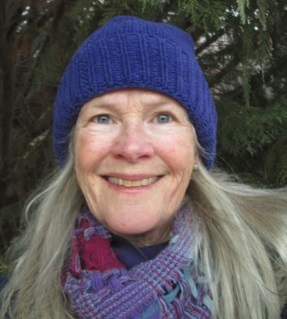
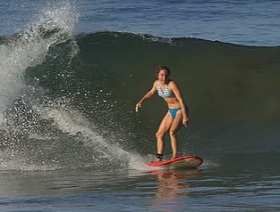
  • Today’s blog post is by Suzanne Murray.

    THE POWER OF COMMITMENT

    Let yourself be silently drawn by the strange pull of what you really love. It will not lead you astray. – Rumi  

    I’ve been thinking about the difference between trying and doing and how it applies to our creative lives.   Consider how it feels to say “I’m going to try to write a book versus I am going to write book.”

    The word try brings with it a lot of resistance and a sense of effort, whereas I am going to do it carries the sense “I can do this.”  

    Perhaps the most well-known line in the Star Wars movies is when Yoda says to Luke Skywalker “do or do not, there is no try.”   Yoda is encouraging Luke to commit fully because he know that if Luke is uncertain that he can achieve the goal, he will not be able to.

    Note from Marlene: Pause for a minute. Think about that.  
    If you are uncertain you can achieve a goal, you will not be able to.  

    Back to Suzanne:  There is always a learning curve to anything new we do or to increasing our skill level at something. With commitment we bring our heart to the task which helps fuel our capacity to show up and find pleasure in the doing.

    Suzanne Murray is a gifted creativity and writing coach, soul-based life coach, writer, poet, EFT practitioner and intuitive healer committed to empowering others to find the freedom to ignite their creative fire, unleash their imagination and engage their creative expression in every area of their lives.

    Check out Suzanne’s Blog for ideas about creativity and life coaching. Her April 13, 2019 post tells about how she came up with the name for her business, Creativity Goes Wild.
    The post starts out like this, “When I received the inspiration for the name of my business, Creativity Goes Wild, I was on a modern day vision quest in an extraordinary canyon in southern Utah that allowed me to really open to the flow of new ideas.
    Follow her on Twitter at @wildcreativity where she tweets inspirational quotes for creativity and life.