Today’s guest blogger, Frances Lefkowitz, writes about the importance of family stories and keeping memories alive.
Telling stories ‘round the table, can increase well-being,
reduce anxiety and depression, reinforce feelings of closeness among family
members, and build resilience for navigating life’s normal ups and downs.
Stories about something good coming from something bad are
particularly therapeutic.
When something bad happens, but you find a way to use it to
your advantage, you redeem (and transform) the negative experience.
The tales need to be structured, with a beginning, a middle,
and — most crucial — an end, a conclusion that makes sense of the situation and
gives it meaning.
Tips for getting the storytelling started:
1. Share photos: Albums, yearbooks, holiday photos, loose
photos in shoeboxes.
2. Start and continue traditions. Rituals contribute to
stories.
3. Share stories during mealtimes.
Frances Lefkowitz has spent over twenty years writing and publishing.
The author of two biographies and a memoir, To Have Not, about growing up poor in
1970s San Francisco.
Frances leads popular writing workshops, and has developed a
self-editing technique that she teaches to writers so they can revise and edit
their own work. As founder and director of the grant-funded Community Memoir
Project, she brings free memoir-writing workshops to public libraries and
community centers, and publishes anthologies of these under-represented voices.
Frances finally making it down the face of an 8-footer in Costa Rica, after getting dumped over the falls approximately 50 times. Practice makes perfect, in surfing and in writing.
Excerpt from “Submission Control” article about submitting
your writing to publications, in the March/April 2019 issue of Writers Digest
magazine, by Dinty W. Moore.
Sending your work to
literary magazines puts you at the whim of editors—but there’s more in your power
than you may realize.
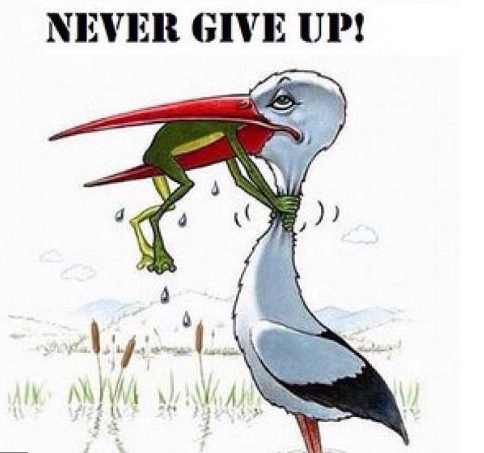
Every few months, ask yourself why you’re doing this [writing]. If writing, waiting, and facing rejection make you truly miserable, maybe you should stop.
But if you don’t want to stop, if writing is necessary, like
breathing, then change your way of thinking. The long wait, the long odds, the
sometimes inscrutable aesthetic taste of the editorial staff: You have to put
all of that aside and write new poems, essays and stories.
And that’s a good thing.
Because the more you write, the better you get.
Dinty W. Moore is the author of the memoir Between Panic & Desire, the writing
guide Crafting the Personal Essay and
other books. He is the editor of Brevity,
a journal of flash nonfiction.
Guest Blogger Rachael Herron writes about one of my favorite topics: Revision:
I’m in the middle of revision of a book, and
I’m swimming in the water I love.
What I adore about revision is this: I know the
world. I invented it, after all! When I open the document, I’m right in the
middle of something I understand. It’s much easier, for me, to drop in
for hours and rest on the page. It’s also easier to come out of, to shake off.
First drafts remain torture for me. Many writers
love first drafts, and I can admit that sometimes, the writing of new words is
glorious.
You surprise yourself with a turn of phrase
that you’re pretty sure is genius and has probably never been said before. The
plot bends and a tree you wrote about comes to life and points a branched
finger in a direction you never saw coming. Inspiration flows, hot and heavy.
But maybe I’m just more of a down-to-earth gal.
I love falling in love, but I love remaining in love more. Give me a passionate
kiss before you take the trash out—that’s happiness to me. I like the comfort
of What I Know. I like to tuck my feet under the thighs of my manuscript as we
cuddle on the couch. I love knowing my manuscript likes the lights on till
sleep-time, even though I prefer to read in the dark.
Revision is both comfortable and
exciting, like a sturdy marriage. Oh, I love the word sturdy. It’s
prosaic, but it’s so me. My legs are sturdy. My emotions are, too. I
love my books to be sturdy enough to lean on.
And lean on them, I fall into them, really.
Revisions are getting in the bed you made out of words and pulling up the
covers. Then you roll around, making those words better, cleaner, more focused.
Revision is when the REALLY big ideas show up.
Then you have to move parts around, like those flat puzzle toys you slid pieces
around on to make a picture, to make those new ideas fit. You might have to pry
out some pieces and manufacture new ones. But then you click one piece left,
and another one right, and suddenly, you’re looking at it. The whole picture.
Your book.
Ahhh. I’m reveling.
Note from Marlene: I love Rachael’s enthusiasm about revision. If you dread revising, here’s a positive way to look at it: It’s an opportunity to look at your writing with new eyes; a prospect to improve your writing; to be sure your writing is clear, concise; to make sure you are saying what you really want to say.
Best wishes with your revision projects.
Rachael Herron is the internationally bestselling author of more than two dozen books, including thriller (under R.H. Herron), mainstream fiction, feminist romance, memoir, and nonfiction about writing. She received her MFA in writing from Mills College, Oakland, and she teaches writing extension workshops at both UC Berkeley and Stanford. She is a proud member of the NaNoWriMo Writer’s Board.
Links to other guest posts on The Write Spot Blog by Rachael Herron:
For years I wrote
without sending my work out for publication. Publishing, and rejection, seemed
rather beside the point. I wrote because I was a writer. Felt the pull, found
the chair. Occasionally I’d send out a story. Some were published. I won a few
contests. But mostly I was content with writing and teaching. I created a
literary magazine, Bust Out Stories, and published books by others. One student
called me a story midwife.
Two years ago,
for whatever reason, I decided it was time to send out my work in earnest. I
created a stable of revised stories and poems that felt ready to go and began
to research and read — a lot. It was fun. I embarked on my own maniacal sending
binge, sending out work every day, or at least several times a week.
Since then I’ve
had over 500 rejections. I live for rejections. It means I’m sending. I’ve also
had 60 acceptances, published a book, received invitations to be a featured
reader, and in April, I’ll be hosting The Floating Word, on commercial-free Radio
Sausalito.
I share my research
with friends and they share with me. I believe in three essential ingredients—inspiration,
deadlines, and a place to send the work. It was important to shift and change
the narrative of this process.
Instead of submitting, I send. Instead of rejections, I’m declined. I record
where, when, and what I send, and of course, the results. I record quality declines
if I’m given feedback, especially from those who invite me to try them again. And
when accepted, I write Yes! next to that entry in Zapfino font, just to party a
little.
When someone
declines my work, I send ’em two more. Unexpected
pleasures have included correspondences and email friendships I’ve developed
with publishers and editors. They’re writers, too. They appreciate being
acknowledged and respected. They appreciate when I buy their magazines and
chapbooks and let them know what I like about their books. They appreciate
knowing I’m not scatter-shot sending, but sending with care and purpose.
I’ve had impersonal
responses, funny responses, encouraging responses with suggestions that
eventually led to that same story being accepted by another journal. Once I had
a story declined that I hadn’t even sent. It was like they had peeked into my
files and said, ‘Don’t even think about sending us that one, dude, don’t even
write it.’
Of course I sent
it elsewhere.
To paraphrase Goethe,
as soon as we begin, we put ourselves into the flow and things start to happen.
Little steps lead to big. It’s a numbers game. Send send send.
If you send out a hundred times, with care and purpose, you’re
going to receive some acceptances. Attend open mics. Listen to new voices, lend
your own.
You’ll meet
people. Venn diagram relationships will form. Recently after a reading, I was
handed a flyer and invited to send my work to a journal. I did. They accepted a
story and a poem.
Last week a
friend forwarded me the link to an online magazine. According to the guidelines
(editors are grateful when writers read and follow them!), submissions were
closed. I liked the magazine, made a small donation, expressed my admiration, and
inquired about the next open submission period. That editor emailed back,
thanking me. She had found my stories online, asked if I could send some work
her way. I did. She accepted three.
This is what
happens when you send your work out and it starts getting published. You
develop a presence online. People from all over the world find you, read your
work and get in touch. My stories and poems have appeared in New Zealand and
England, as well as in the U.S.
I still love print magazines, too. Some publications have both.
It’s not either/or, but and/or when it comes to publishing.
One of my
concerns with this new practice was that it might adversely affect my writing
and/or my teaching. It hasn’t. I still write at the same pace and my new work
is being accepted. I may even be a better writer than before. I still teach. In
fact, I now have an offering called Send It! for those who want to send their
work out but desire some tools.
One thing leads to another. Work appears in print and online. Friends are made. Poems and stories enter your world and change your life. For me, it started with the decision to send my work out. I shifted. I changed the way I looked at rejection and developed momentum. Now when I’m asked to share my experience and discoveries, I distill my advice to two simple words: Send It!
For a signed copy of Soundings & Fathoms, email Guy at Guyb-at-sonic.net
Creating The Impossible
Today’s Guest Blogger is Bella Mahaya Carter. I have enjoyed her blog posts. I hope you do, too. Here is one of her inspirational stories.
When I was a film student in the eighties, my then-boyfriend and now-husband, Jim, and I borrowed a professional ¾-inch video camera from school and spent a long, magical afternoon taping an interview with his beloved grandmother. When we finished we had two-and-a-half hours of raw footage that required editing, but we didn’t have the equipment. One day we’ll get around to this, we thought.
A few years later, after we’d married and after his grandmother had died, we wanted to keep her legacy alive by sharing the footage we took of her with the family. We agreed it would make a great holiday gift for Jim’s siblings, aunts, uncles, and cousins. We had it transferred to VHS, but when we viewed it, we were painfully reminded that it was raw footage. It needed to be cut. But again, we had no editing equipment, nor funds to rent it.
Years later we reached out to John Crane, a talented filmmaker friend who’d created a beautiful video of his own grandmother, and asked if we could hire him to edit ours. He was busy at the time and couldn’t take on our project, but encouraged us to do it ourselves. “You have a problem with the sound,” he said. “Hear that background hiss?” He told us it could be adjusted if we uploaded the footage to our computer. But Jim had to teach himself iMovie, and despite our best intentions, more years passed by.
The subject of the grandmother video often surfaced right after Thanksgiving, which was our busiest time of year. Taking on a project like that at year’s end seemed impossible. It was this past December when Jim mentioned the grandmother video again. I once again cringed and thought, Yeah, right. We’ll whip it out in all our spare time. Impossible.
But then, a few days later, early one Saturday morning, on the eighth of December, I found myself listening to Michael Neill’s new podcast, Creating the Impossible. I’d read and enjoyed his book with the same title. For his podcast Michael interviewed speaker and author Anita Moorjani. Their discussion was lively and inspiring. When I finished listening, a small voice inside said, What if making that video is not impossible? What if you just think it is? What if it doesn’t have to be perfect? What if you can just crank it out? What if there really is enough time and you only think there isn’t? Jim’s birthday is the week before Christmas. I knew there was no greater gift I could give him than completing this project.
When he woke up, I announced, “We have a busy weekend.” “Why?” he asked. “What are we doing?” “We’re going to crank out the grandmother video.”
He was thrilled. He’d been teaching himself iMovie and had the technical, hands-on editing skills I lacked, but what I hadn’t realized until we tackled this project together was that I had big-picture writing and editing skills that he needed. Although he knew how to use the software, he wasn’t sure how to approach the project. I knew we had to organize the material by first logging the footage and then organizing stories by theme.
We worked 10-hour days for four days and ended up with a half-hour tribute we both liked. And it was fun. It turned out we needed each other’s skills to complete the project. But first I needed to believe this project was possible. It wasn’t until I questioned my thinking, until I believed it could be done, that we accomplished this long-held goal.
Writing is like this. It takes time, sometimes years, as well as the acquisition of skills. Sometimes collaboration is necessary. Writers do well in communities, with support from teachers, coaches, and colleagues. And success is definitely swifter when you leave your limiting thinking alone. When, as Caroline Myss says, you don’t invest your “belief dollars” in limiting or self-defeating thoughts.
I leaned this while keeping my eye on the finish line of my memoir. This time last year I was four months away from publication. I still can’t believe it’s behind me. For years it loomed ahead—it was my future—and now that book launch is my past.
It’s nice to get to the other side of creative dreams and goals, whether personal or professional. And our success is directly related to what we believe about our own thinking.
I’ve started outlining my next book about how to Find Freedom and Peace of Mind While You Write, Publish, and Promote Your Book. The other day I detected a tiny but insidious thought: Who do you think you are writing a book like this? There are many more experienced and worthy writers who could do it. Why you? As a younger, less experienced writer I may have taken that thought at face value. I might have believed it. It may have temporarily stopped me. But I quickly responded: That may be true, but it’s something I want to do. It’ll be fun. I may not be perfect, but who is? The fact is I’m learning and growing all the time and I have tons to say on this topic. Why not me?
Thoughts arise in the mind all the time. I’ve discovered that I can amplify them with my emotions (energy in motion) and belief or tune them out and let them pass. It’s my choice which thoughts to believe.
People create the impossible every day, but to do so, you must believe that you can—despite the naysaying voices within and without.
What “impossible” venture are you ready to create? If it’s a writing project, or if you just want to start writing again, or for the first time, check out my workshops. I’d love to help you create the “impossible.”
Bella’s Personal Story
I’m a poet, author, writing teacher, developmental editor,
and empowerment coach who believes in the power of writing to heal and
transform lives.
My expertise is in helping students and clients find their
voice on the page and in the world. I am passionate about facilitating artistic
expression, and my mission is to heal myself and others through creative work.
My memoir, Raw: A
Midlife Quest for Health and Happiness.
Book summary:
In an effort to cure chronic stomach problems, I adopted a
100 percent raw, vegan diet, which eased my symptoms and produced impressive,
unexpected perks—but didn’t completely heal me. So I looked to my mind for
answers, and discovered that unconscious negative thoughts, combined with a
stressful, hectic life, were sabotaging my health and happiness.
Anxiety and a desire to heal it holistically—even before I knew what it was—is at the heart of this story, which reveals my struggle to face my fears, release perfectionism, surrender things beyond my control, and find validation within for my life and work.
Divided into three sections—body, mind, and spirit—Raw is a chronicle of my journey, which dragged me, kicking and screaming, into spiritual adulthood.
What is it about your life that isn’t satisfying right now?
Can you change that?
Brad Yates, one of the top teachers of Emotional Freedom
Techniques® (EFT), is today’s guest blogger.
He wrote about “Granting Wishes Incrementally” in his November 2017 free monthly newsletter.
Brad:
Just for a moment, close your eyes, and imagine walking along a beach.
Imagine that you come across a lamp in the sand, and as you
brush the sand off it, a puff of smoke emits from the opening, eventually
growing and taking the form of a genie.
“I will grant you any wish you desire. What is your
command?” the genie says.
So… if you could have a wish granted in this way, what would
you ask for?
A huge sum of money? A
killer body? A dream vacation?
Give it some thought. Is that what you really want?
Now consider this . . . Would you change your mind if the
genie said in response to your request, “Okay, you’ve got it. However, it
will take some time and probably some effort on your part?”
Would you say, “Well, if that’s the case, no thanks, I’ll
pass?”
If not, then who needs a genie? You can grant your own
darn wishes. (And, it’ll be more satisfying.) It’s just that they will be
granted incrementally.
The challenge of granting wishes incrementally is that
there’s too much room to change your mind. Our actions at one moment may
suggest that we are granting our wish of being financially independent, and
then later it looks like we are determined to manifest a life of financial
struggle.
One moment we are taking great care of our body, and the
next we are acting in a way that suggests we wish to be morbidly obese.
I suppose that’s the allure of having a genie grant our wish
– it manifests so quickly that we don’t have time to get in the way.
Make a list of things you would ask for if you found a genie
who was willing to grant your wishes. Could be a list of three wishes,
could be a list of 25 wishes. Or 100. Give yourself permission to
think about the things you’d like to have.
Then ask yourself if you would only want them if they could
be delivered immediately and without effort.
Ask yourself what you would choose to manifest, no matter
how long it would take.
Now notice where you might have conflicting wishes. Desiring
fame and fortune is going to be tough if you also desire a quiet life of anonymity. This
is where the incremental wish granting gets tricky, because there is too much
time to switch back and forth between these contradictory desires.
Consider that this is why you may not have everything you
want right now. You have the power of a genie within you… you also have
the power to thwart yourself. Not because you are bad or stupid, but because
you have contradictory ideas about what you want.
Give yourself permission to choose, and tap to clear any
resistance to doing so.
You may also have contradictory ideas about what is safe
and/or acceptable to have.
With each item on your list of wishes, close your eyes,
imagine having it, and say, “It’s safe to have this…”
Notice what you feel in your body, see how true this feels
on a scale of 0 -10. Write that number next to the wish.
You can also check the veracity of such statements as, “It’s
okay for me to have this,” and, “I deserve to have this.”
To the extent that it’s not a 10 (and if you haven’t already
manifested this, or aren’t already in the process of doing so, it’s a pretty
good bet that it’s not a 10…), ask yourself why you couldn’t or shouldn’t have
this.
Then take each of those objections and start tapping to
clear them. As you do so, you will find greater freedom to do what it takes to
get what you want . . . and greater freedom to allow them into your life.
Congratulations, you are now in the process of incrementally
granting your own wishes. And the more resistance you clear, the quicker the
manifestation.
No genie required. 😉
Brad Yates is the author of the best-selling children’s book “The Wizard’s Wish,” co-author of the best-seller “Freedom at Your Fingertips,” a featured expert in the film “The Tapping Solution,” and has been heard internationally on a number of internet radio talk shows.
Today’s guest post is by Nancy Julien Kopp. I have been enjoying Nancy’s posts on her blog, Writer Granny’s World.
Nancy writes:
Here we are in the last month of the year and one of the busiest. I went to a Christmas party Friday evening and a Christmas Tea at my church Saturday. Definitely getting me in the mood for the season.
One of the things the hostess of the tea did was ask each person to tell about a Christmas gift that was very special. What a delight it was to listen to the 25-30 women share details about the time and circumstance of their gifts.
Stories ranged from engagement rings to dolls to pets and a few other things. Many prefaced the story by mentioning that there were very few presents given in their family when they were children because money was short. One woman told us about the Christmas her parents had no money for gifts so her mother made each child something from whatever she had on hand. This woman received twin rag dolls that turned out to be one of her very favorite gifts ever.
As the memories came alive, I couldn’t help but wonder if any of these women had written the story somewhere for her family. Had she ever even told her own children or grandchildren about that special gift? It’s precious memories like this that should—no, must—be recorded. As we moved from woman to woman and listened to their memories, I thought that many of them could turn into a story for a Chicken Soup for the Soul book. But would they? Most doubtful.
I wanted to tell each one that they had a great story and I’d write it for them. But, no, that would not be the thing to do. She should do it on her own.
How about you? What Christmas or Hanukkah memories have you written about for your family or for publication? Why or why not? There are reasons for both sides. I did write a memory of a special gift I received when I was six years old. It was published in one of the Chicken Soup for the Soul Christmas books quite a few years ago. I’ll post it below. Maybe it will trigger a holiday memory for you and give you something to write about for your own family or for another Christmas anthology.
Note from Marlene: Please do write your story . . . for fun or for someone to read. Just Write!
My Special Christmas Doll
A special doll named Katherine lives in my four-year-old granddaughter’s room. The doll perches on the window seat, arms out and head cocked a bit. Muted red polish covers her fingernails, and a few of her fingers and toes are chipped. The doll’s dark blonde hair could use a bit of attention, for it looks limp and badly in need of a stylist.
“This was my mommy’s doll,” Jordan tells me.
I pick up the doll, smooth the flower-print flannel gown she wears. “A long time ago, she belonged to me.” I give Katherine a little hug and place her on the window seat again.
Jordan grasps my hand. “I know that, Grandma. Will you tell me about her?”
I scoop Jordan into my arms. “Time for bed now, but maybe tomorrow we’ll talk about Katherine.” I tuck her into bed and kiss her twice.
Later that evening, I sip a cup of tea and think about the doll Santa brought me more than sixty years ago. The decades slip away like quicksilver, and I am six years old again. My parents and little brother are asleep, still snuggled under warm comforters, but I’m tip-toeing down the hallway early on Christmas morning. It’s so quiet and very dark in the hallway, but I know my destination and continue on.
When I reach the living room, the early morning light filters through the windows. I kneel in front of the decorated Christmas tree, and a little shiver runs up my spine. It’s cold in our apartment, but the shiver comes from what I spy next to the gaily wrapped packages. Santa left me a beautiful doll looking very much like Shirley Temple. She’s dressed in a bridal gown made of a snowy, gossamer material. Tiny satin rosettes run from waist to hem, and lace adorns the neckline and sleeves. The matching veil, trimmed in lace, surrounds her head like a billowy cloud. A white nightgown and soft blue robe lie beside her. It’s the kind seen only in the movies. So pretty! Her dark blonde hair curls to perfection, and her eyes appear to glow. I inch as close as I dare, for I know I should not touch her yet, not until Mommy and Daddy wake up. For now, the anticipation of holding her seems to be enough. I name her Katherine while I wait for my family to wake up.
Years later, I learned that my mother had made the bridal gown and night clothes for the doll in the late hours on December nights. My grandmother was the one who took hair she’d saved from my mother’s first haircut to a specialty shop where they created a wig for my doll. Hearts and hands joined in this special gift.
I played with Katherine for many years, then saved her in hopes I might pass my special doll to a daughter someday. My daughter, Karen, loved the doll too, even though she no longer had the original clothes. Once again, Katherine made a little girl happy. Karen secreted the doll away in hopes that she, too, could pass her on to her own child someday. Now, Karen’s daughter, Jordan, is the keeper of the doll. Though a bit tattered, Katherine’s smile is just as sweet, and her blue eyes still appear to shine. Even her wilted curls are precious to me and to Karen.
I think one day Jordan will feel the same, for she is our special family doll and always will be. I will tell my granddaughter about the Christmas I found Katherine under the tree, and later, when she’s older, I will relate the part of the story about Jordan’s great-grandmother who made special clothes for Katherine, and about her great-great-grandmother who saved her child’s hair to make into a wig for a doll.
This one cherished doll holds five generations of my family within her heart. Two created her, three have played with her, and all have loved her. I hope Jordan will have a daughter one day so that this chain of love might continue.
“When a writer keeps things inside, it becomes a ball of tangled yarn. As each story is told, the ball becomes untangled. Writing from memory can help us to let go of those stories we tell over and over again. We may not even need to tell them again [after writing about them].”
Note from Marlene: I think writing from memory can also be a type of self-help . . . a vehicle for transporting oneself back in time and getting in touch with what really happened.
Patricia Hampl is an American memoirist, writer, lecturer, and educator. She teaches in the MFA program at the University of Minnesota at Minneapolis and is one of the founding members of the Loft Literary Center. Source: Wikipedia
New Writers Need To Believe—Memoirs and Family Stories, by Nancy Julien Kopp
Ever hear naysayers in the world of those who want to write a memoir or family stories who utter things like:
I’m not a professional writer.
I can’t write like some people do.
I want to write the story but I wouldn’t know where to start.
My grammar is not good enough to write.
My writing is boring.
All of the above can be overcome. But the first thing you must do is believe that you can write a memoir or a book of family stories. Sounds easy? Maybe.
Possible? Yes.
It takes some courage to do something new. Look at the people who zipline.
Looks like fun but maybe a bit scary, too. Those who try to zip from one end of a line to the other have to believe they can do it or they’d never take step 1.
An athletic kid who tries out for a sport has to believe in him/herself enough to make that effort. They know success is not ensured but they believe they can make it so they try. They’re brave enough to give it a whirl.
If you have a little bit of courage and a small dose of bravery, you can do many things you never thought you could.
Believing in yourself is only part of being able to overcome the problems listed above. Another part is having the courage to try. Still another is working hard to be a better writer. How?
Read. If you want to write a memoir, read as many as you can find. You’ll see the various methods used.
Read books on the topic of general writing—not just memoir or family stories.
Attend conferences to learn more about writing methods.
Do writing exercises. I pound and pound about this and too many writers want to skip it. Don’t!
Many books on writing have exercises at the end of each chapter. They are to help you. Try them!
Sign up for a writing class, either locally or online. Don’t be embarrassed to tell the others you’re new at this game and here to learn. They’ll admire you for that.
Don’t start out attempting to write a full book. Try short snippets that can be put together later.
Taking on too much at the onset is overwhelming and sometimes defeating, and can be a quick way to stop believing in yourself.
Becoming a better writer doesn’t happen overnight or in a week or two. Time and hard work and writing on a regular basis all help you achieve that goal.
Originally posted on Writer Granny’s World by Nancy Julien Kopp, August 15, 2018
Note from Marlene: Great advice, Nancy.
I’m currently reading The Sound of Paper by Julia Cameron. I highly recommend this book to help go from “What was I thinking” to “I can write this.”
Nancy Julien Kopp:
Nancy has been published in 21 Chicken Soup for the Soul books, several other anthologies, newspapers, magazines and ezines. Her writing includes award winning fiction for children, creative nonfiction, poetry, travel and personal essays. She was named Prose Writer of the Year in 2013 by the Kansas Authors Club. A former teacher, she continues to teach through the written word.