Warm-ups

  • You have ideas what to write about. But how do you get started? Do you sit at your computer, fingers poised above the keyboard . . . ready. . . but your mind swirls, goes blank. . . at a loss how to get started.

    How about starting your writing time like many famous author do? With warm-ups, using writing prompts.

    There are many blogs and websites with ideas for writing. One of them is my interactive blog, The Write Spot Blog. You can post your writing (~600 words) and receive comments on your writing.

    You can also use prompts posted on my Facebook Writing Page and writing prompts on my website. http://www.thewritespot.us/writingprompt.html

    The joy of writing freely . . . that’s what these prompts are about.

    How do you start your writing time? What are your rituals? Your writing habits?  Or, do you Just Write?

    Lola.200

  • I facilitate Jumpstart writing workshops in Petaluma, California and here, online, with you. People new to writing have a hard time saying “I’m a writer.” So did I, until my writing teacher, Pat Schneider, made me say it out loud.

    And now I’m encouraging you to say it out loud. Come on. I’ll say it, too.

    I am a writer.

    Again, louder. I AM A WRITER.

    There now. . . and if you weren’t able to say it louder, fake it until you make it.

    No need to fake your writing. . . Just fake having confidence in your writing.

    And now . . . select a prompt and Just Write!

    Lola.200

  • “Life often has a way of making people feel small and unimportant. But if you find a way to express yourself through writing, to put your ideas and stories on paper, you’ll feel more consequential. No one should pass through time without writing their thoughts and experiences down for others to learn from. Even if only one person, a family member, reads something you wrote long after you’re gone, you live on. So writing gives you power. Writing gives you immortality.” — Antwone Fisher, Screenwriter and author

    Note from Marlene:

    I write to get out of my head and onto paper. Writing, with a pen or pencil, is an extension of my arm. When I picture my arm, it’s elongated by the pen, which in my mind, is always there. Computer typing — same thing — the keyboard is an extension of me. Writing is as natural and as much a part of me as breathing. I would rather write than do almost anything else. I write because I get to see a side of myself that isn’t always present. My daily concerns revolve around household chores, gardening, helping my husband run his consulting business and whatever else needs to be done. My efficient me bustles about cleaning and scrubbing and waiting until I have a moment or two to write. And those moments are glorious. Because I’m writing for me. Not for any monetary gain. Not for notoriety. I don’t need to be noticed to enjoy writing.

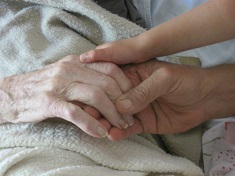
    Hand & PenI write because I not only can, I have to.

    Why do you write?

  • My dear friend, Karen Batchelor, was an inspiring and wonderful writing teacher. She passed away too soon, December 2013. I was looking through material to post here and came across this gem by Karen. I hope you enjoy it and hope it inspires you to Just Write.

    Lower Your Expectations, by Karen Batchelor

    When 2012 arrived, I dismissed the thought of making any new year’s resolutions. After all, those aspirations often died just days or hours after their birth. However, on January 1, a tiny little idea began to germinate. A few minutes later when the concept was fully formed, I started in on my new project.

     My goal: Write a minimum of five minutes a day.

     I can hear some of you chuckling. What kind of a goal is that?

    In fact for some time, neither grandiose nor modest intentions have worked. Although I could create a lot of excuses, I really didn’t create any pages of great or even mediocre literature. I just couldn’t make this determination stick. When puzzling over this phenomenon, I recalled a story told by a friend and former colleague. She confided that she made a bargain with herself. If she got up early and went to the gym, she wouldn’t have to do anything once she got there. She didn’t have to jog on the treadmill, lift weights, swim laps, stretch or bend into a yoga position. The goal was simply to arrive. Once there, the idea of working out wasn’t so daunting.

    Then I remembered my walking routine. About twenty-five years ago, I trained myself into the habit of taking a brisk walk every day—minimum thirty minutes. I only stopped walking when I had cancer surgery, but after some recovery time, I worked my way back into this habit (up to forty minutes daily) starting with just five minutes. After a week or two, I increased the time to ten minutes. Fifteen. And so forth.

    While contemplating all of this, I realized that my intentions had been good and honest—I really did want to write every day—but I had been looking for a big, elusive, intimidating block of time. For some reason, the writing task felt so overwhelming that I often postponed that trip upstairs to the computer, or even avoided it. I needed something more attainable, something to help me form a new habit. Maybe I needed to lower my expectations.

    Thus my new goal was born. And it’s working.

    Why? I can only guess, but this is what I think. The task is to get into the habit of writing regularly. In order to form a new habit, I have heard, is to perform it twenty times regularly. If I am overwhelmed by the task, I will probably be discouraged and give up.

    So instead of vowing to write 1,000 words a day (Jack London) or five hours a day (advice from any number of respected authors), what about five minutes a day? Anybody can write five minutes a day—my three-year-old grandson probably could. Lowering the bar relieves some kind of fear of failure. And of course, similar to my friend’s experience at the gym, once I’m there, sitting at the computer, I usually write a lot more than five minutes.

    It’s early February and I have kept my commitment to write a meager five minutes a day. Usually that five-minute promise grows to ten, fifteen, thirty minutes or more. But even when I put in just that tiny five minutes, I write something, and I feel just fine because I’m writing every day, forming a good habit and getting practice.

    Progress report? I have started and finished a short-short story, written this article, started another essay, revised a short story to submit and outlined a novel. The total output is only about ten pages.

    You’re laughing again. Ten pages? What’s that? It’s ten pages more than I produced in all of October, November and December combined. The dread is gone and I make that trip upstairs to the computer every morning instead of waiting until the day is nearly gone. And occasionally now, I make that trip upstairs more than once a day.

    For me, it has come to this: By lowering expectations, I have raised my level of success. Even though this concept might not work for everybody, it probably won’t hurt to try.

    Note from Marlene:  Thanks, Karen. Your idea is working for me!  I have managed to write a blog post almost every day, for eleven months and I hope to keep on writing. Five minutes at a time!

    Batchelor.OceanKaren Batchelor spent 35 years teaching English and ESL. She has published several poems, essays, short stories, and professional articles. She has co-authored eight textbooks and a novel, Murder at Ocean View College. Karen has edited several anthologies for Redwood Writers, where her short stories continue to delight readers.

    Karen, an esteemed Past President of Redwood Writers branch of California, was the recipient of the 2009 winner of the Jack London Award for service to the California Writers Club.

    Click here to read one of Karen’s short stories.

  • There are more how-to-write books than we have time to read. IF we tried, we would spend all our time reading about writing and not writing. But there are a few especially good how-to write books. Here are some of my favorites. What are your favorite writing books?

    Dorothea Brande was an early proponent of freewriting. In her book Becoming a Writer (1934), she advises writers to sit and write for 30 minutes every morning, as fast as they can.

    Peter Elbow advanced freewriting in his books Writing with Power and Writing Without Teachers (1975), and freewriting has been popularized by Julia Cameron through her books The Artist’s Way and The Right to Write.

    A few more writing books:

    Aronie, Nancy Slonim – Writing From the Heart

    Baldwin, Christina – Storycatcher

    Barrington, Judith – Writing the Memoir, From Truth to Art

    Baty, Chris – No Plot? No Problem!

    Bennet, Hal Zina – Write From The Heart

    Clegg, Eileen M. – Claiming Your Creative Self

    DeSalvo, Louise – Writing As A Way of Healing

    Epel, Naomi – Writers Dreaming

    George, Elizabeth – Write Away

    Goldberg, Natalie:   Living Color, Long Quiet Highway, Wild Mind, Writing Down the Bones, The Great Failure

    Heffron, Jack – The Writer’s Idea Book

    Kabat-Zinn, Jon – Wherever You Go, There You Are

    Keene, Sam and Anne Valley-Fox – Your Mythic Journey

    Kelton, Nancy Davidoff – Writing From Personal Experience

    King, Stephen – On Writing

    Lauber, Lynn – Listen to Me

    Lamott, Anne – Bird by Bird

    Lara, Adair – Naked, Drunk and Writing

    Nelson, Sara – So Many Books, So Little Time

    Rosenfeld, Jordan – Make a Scene

    Saltzman, Joel – If You Can Talk, You Can Write

    Schneider, Pat – Writing Alone And With Others

    Smith, Michael C. and Suzanne Greenberg – Everyday Creative Writing

    Ueland, Brenda – If You Want to Write

    Walker, Christine – A Painter’s Garden

    Walton, Todd & Toomay, Mindy – The Writer’s Path

    Zimmerman, Susan – Writing to Heal The Soul

    Just a few of my books on writing. Yes, I have two copies of Jordan’s Make A Scene: One for my personal use and one for lending.

                               writing books 1                                writing books 2

  • When you are writing in a “freewrite” style of writing, using the types of prompts suggested in The Write Spot Blog, you can use your personal experiences for your writing. Or you can write about something that happened to someone else. Or you can write fiction. If you are writing fiction, respond to the prompt the way your fictional character would respond.

    Freewrites are also referred to as free flow writing, free association, writing freely and I’m sure there are more descriptions for this type of writing.

    Writing prompts are also referred to as: sparks, jumping-off points and, again, I’m sure there are more references to writing prompts.

    bookphoto I’m curious and interested. . . what do you call this type of writing? And what other phrases do you use for writing prompts?

    Whatever you call this form of writing and whatever sparks your imagination . . . Just write.


  • I think we all have an intuitive sense, but we get side-tracked by what others think or we get distracted by all the “noise” both inside our heads and outside. It’s hard to get quiet and listen to what we think. But when we do, we experience the joy of discovering what’s going on for ourselves.

    A passage in Reading Water, Lessons From The River, by Rebecca Lawton, describes a situation when Becca was a white water rafting guide and had one person, a friend, in her raft. They capsized, lost the boat and nearly drowned. Becca managed to save the life of her friend.

    After it was all over, Becca asked her friend: “Do you regret running it?”

    Becca’s friend answered, “It might have been the right choice for you,” she said, “But from now on, I’m making my own decisions.”

    Here’s an idea for getting in touch with your intuition and writing deeply.

    You can use suggestions for relaxation from the June 24, 2014 Just Write Post, “Listen to your body as a way to creativity.”

    Settle comfortably in your chair. Breathe in deeply through your nose. Exhale loudly. Take a few deep breaths and let go. Release your worries. Let go of your fears. Just let go.

    Follow your inner sense, your intuition, your gut level feeling  …  pay attention, use what you’ve got. Don’t fight it. Relax into your own judgment and decision making.

    Choose a writing prompt and Just Write.

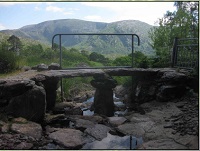
    Old meets new bridge.Jim C. March Old bridge meets new. Photo by Jim C. March.


  • “A lot of times I write these songs because I need to reinspire myself,” Katy Perry, in the July14, 2014 issue of People magazine.

    “I need to find my voice again. I need to be heard.”

    How about you? Are you writing to be heard? Is anyone paying attention? We are. . . here at The Write Spot Blog.

    Choose a prompt and then write. Post your writing on The Write Spot Blog. Maybe the person who most needs to hear what you have to say will be reading.

    Katy Perry“I just want to stay authentic and keep dreaming my dreams.” — Katy Perry

    Me too, Katy, me too~!

    Let’s gather ’round the table, put pen to paper or fingers on keyboard and Just Write!

  • Guest Blogger Kathy Myers writes:

    Computers are great and all— without them, this blog wouldn’t exist and then what would I do? But when I was younger, my image of a writing life was less technical and more romantic: Jo in Little Women, writing her books in a drafty attic wearing fingerless gloves against the winter chill, or Jane Austen dipping her nib and contemplating her next chapter, while her parents plan a ball where she can meet eligible bachelors. Ah, the good old days.

    At a Jumpstart Writing Workshop in May, I wrote a fictional scene on the prompt “It happened because . . . ”  Marlene Cullen, always benevolent and encouraging to writers said, “That would be a good beginning for a romance novel.”

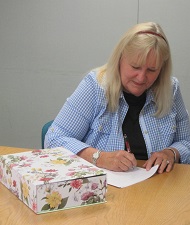
    Jumpstart was on hiatus for the month of June, and this coincided with a flirtation I’d been having about trying the fabled “sit-your-ass-in-a-chair-and-write-a–thousand-words-a-day” method I’d heard so much about— a discipline that so many writers (who actually have books published) swear by. So I thought what the heck, if Marlene can drag herself to her exercise boot camp, I can drag myself into the kitchen: make some toast and coffee, go back to bed with my fully charged laptop, and write until it runs out of juice. This averages about three hours and about a thousand words. I am no worse for wear for the effort, and I have the rest of the day ahead of me—fully charged with a great sense of accomplishment. I press print, and then put my day’s work into a lovely flowered document box (Home Goods $7.98). My box is fancy and romantic—much nicer than poor Jo’s manuscript—wrapped with brown paper and twine. It might not be as nice as Jane’s satin lined box inlaid with elephant ivory, but hey—now I’ve got something to buy with my future royalties.

    It’s July now and I’m thirty thousand words into my first novel. I have to tell you: The ass in a chair/ book in a box method works. You are free to do as you wish with your writing, of course. Do it on a whim or when the muse strikes. But get a fancy box to put it in. Remember that everything you write is a legacy of sorts. You can have a time capsule where your stories, journals, or Jumpstart notebooks can be collected—honoring your efforts with a neat and lovely testament to your creativity. Your voice in the form of your words can reside there in style.

    Kathy M. + boxKathy Myers is a big fan of Jumpstart and Writers Forum. She has waded into the submission pool this past year and been published by Every Day Fiction, Petaluma Readers Theater and Redwood Writers Anthology. She has done several guest book reviews on The Write Spot Blog and is an advocate for fancy boxes everywhere.