Live in the world of your imagination and take young readers with you.

  • Want to write books for children or young adults?  Here are some ideas for you.

    Excerpted from “Child’s Play,” Yvonne Coppard and Linda Newberry, March 2014 issue of The Writer Magazine.

    An author must find his or her own voice and style and use them to express concerns that are passionately felt and imagined. Good writing for children has the same qualities as good writing for any age group: What stands out is authority, the confidence to be what it is. It tells the reader that the journey will be worthwhile. To write well, an author must have an ear for rhythm, control of pace and awareness of what drives a story and engages a reader.

    The author needs the knack of evoking universal experiences from the particular, inviting the reader to share the trials and triumphs of the viewpoint character. There are no right ways to do this, and no wrong ways, either. What it takes is the commitment to live in the world of your imagination and the skill and persuasiveness to take young readers with you.

    Click here for information about: Writing Children’s Fiction: A Writers’ and Artists’ Companion (Writers’ and Artists’ Companions) by Yvonne Coppard and Linda Newberry

    child's tea setFor practice with this kind of writing: Write about a game you played as a child – Prompt #32, or An imaginary gift – Prompt #35 or an imaginary party – Prompt #64.

    Set your time for 12 minutes. Now, write. Just write.

  • The following is an excerpt from “When every letter counts,” by Kevin Cullen (no relation to me that I know of). —  March 2014 issue of The Writer Magazine.

    Kevin writes:

    I have been in the newspaper game for more than 30 years, which qualifies me as a card-carrying old fart.

    I have tried to embrace new technologies and platforms pushed upon us by enthusiastic, young tech geeks who talk about Facebook and Twitter with the zeal of evangelicals. Online is where it’s at, even though we still  make most of our  money from the dead tree version.

    But what has all this meant for writing? Because, let’s face it, the biggest advantage all forms of written journalism have over the immediacy of TV and radio is the ability to deliver depth and strong, evocative writing.

    Writing short and writing long require different disciplines. It’s the differences between writing a poem and writing a short story. When you tweet, every letter counts. When you write for the web, enjoy the freedom.

    Note from Marlene: Ideas for strong and evocative writing posted on The Write Spot Blog. Click on titles below for inspiration for strong and evocative writing.

    Crafting scenes a reader can see — and sense

    Watershed Moment Prompt #57

    The Power of Place

    Essence of You Prompt #45

    Pen


    What to do?  Just write!


  • Jessica Strawser, editor of The Writer’s Digest magazine, writes about the benefits of writing short pieces in the March/April 2014 issue of the Writer’s Digest magazine.

    “Writing short is a too-often overlooked way to break out in any field of writing. Even if —perhaps especially if —your ultimate goal is to publish a book one day.”

    She continues, “. . . a diverse approach to getting your name ‘out there’ —whether through personal essays on popular websites, feature articles in leading glossies, or short stories in respected literary journals—is far smarter than focusing your efforts in one place.”

    So, if you want to write short pieces . . . go ahead!  Follow the prompts in this blog and post your writing here!

    Lola

  • Have you heard of the da Vinci Disease?

    Here it is:  You have ideas of what to write about. But you never finish because you never start.  Or you start and can’t find a way to finish to your satisfaction.

    You may have a burning desire to write, but there’s never time or maybe you suffer from the da Vinci Disease.

    The following is excerpted from “The da Vinci Disease,” by Don Fry, March 2014 issue of the Writer Magazine.

    Leonardo da Vinci never finished anything because he thought he couldn’t achieve perfection.  We all know writers, including ourselves, who can’t (or don’t) finish their work. The root cause is usually a da Vincian rage for perfection, which takes many forms.”

    Don Fry’s list of why we don’t finish our writing. Italics are Marlene’s comments.

    We don’t start. ‘Nuff said.

    Too much gathering.  Some writers keep gathering information but never start actually putting words on the screen. They want perfect information. Raising my hand here. Guilty!

    Faulty Organizing. Many writers never finish because they can’t organize their information into what they regard as a perfect structure.  This isn’t about organizing your desk nor files, rather what you want to write and how. Guilty. Again.

    Drafting, drafting and more drafting. Many writers never finish drafting because they try to write a perfect first sentence. Gulp. Is there a miniature Don Fry sitting on my desk watching me?

    Endless Revising. Many writers simply cannot let go of a piece until they believe it is perfect.

    Don, I hear ya and I admit to all of these. So, please excuse me. I’m on deadline to finish a short piece I’ve started, gathered, organized and drafted.  Time for that final edit and then.  . . tap the send key.

    To read more about The Da Vinci Disease by Don Fry, click here.
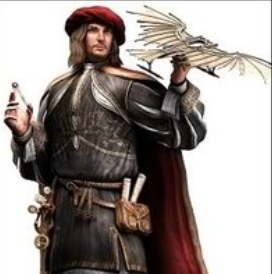
    Leonardo da Vinci


  • Tips to writing deeply and comfortably.

    Stretch – either standing or sitting in a chair. Do whatever whatever stretching feels good to you.

    Sit easily in a comfortable chair.

    Take a deep breath in through your nose, exhale out through your mouth, like you are blowing out a candle.

    Take several deep breaths and whoosh out on the exhalations.

    Relax into your chair.  Smile.  Escort your inner critic out the door.

    Shed your ideas about what perfect writing means.

    Give yourself permission to write the worst stuff possible.

    Writing isn’t about talent, it’s about practice and going into another dimension.

    Creative writing is an act of discovery.

    Take another deep breath. Relax into your breathing. Exhale with a satisfying sigh.

    Rather than write for an audience, write from an instinctual level.

    Immerse yourself in writing. Let go of your worries and write. Just write to a satisfying inner desire to go to a meaningful place.

    Go deeper into the recesses of your mind and really write.

    Write from the well that stores the fears. Let the tears come. Let the stomach tie up in knots.

    It’s okay to write the story that is difficult to tell.

    Get through the barriers to go to a deeper level.

    See your story and tell it.

    When you are writing, if you run out of things to say, write “I remember. . .” and see where that takes you.

    Or write, “What I really want to say . . .”

    You can use the prompts on this blog to jumpstart your writing.

    beach filled heart

    Photo by Jeff Cullen. Click here to see Jeff’s portfolio on fotolia.

  • Constance Hale launches Sin and Syntax, How To Write Wicked Good Prose with:

    “The French mime Étienne Decroux used to remind his students, ‘One pearl is better than a whole necklace of potatoes.’ What is true for that wordless art form applies equally to writing: well-crafted prose depends on the writer’s ability to distinguish between pearls and potatoes. Only some words are fit to be strung into a given sentence. Great writers are meticulous with their pearls, sifting through piles of them and stringing only perfect specimens upon the thread of syntax. The careful execution of beautiful, powerful prose through beautifully, powerful words is guided by my five principles.”

    Hale’s five principles:

    • Relish Every Word
    • Aim Deep, But Be Simple
    • Take Risks
    • Seek Beauty
    • Find The Right Pitch

    Peruse Sin and Syntax to discover the pearls of wisdom of these principles and how to distinguish between words that are pearls and words that are potatoes. Read a review of Sin and Syntax, How To Write Wicked Good Prose by clicking here.

    IMG_1451

  • “When you’re beginning a book, or getting back into a book, as I am now, you have to learn to deal with the nervousness and stress of it. The blank page or the stalled page is incredibly intimidating. And you have to turn that nervousness – rather than into something that blocks you, rather than into something that makes you try to over-think, that makes you feel that you can’t proceed unless you have a clear idea of where you’re going – you have to harness that nervousness, almost like a natural force, and make it work for you. You have to trust that you’re just going to get inside the page and get inside the sentences, and you have to release the desire to feel in control and just follow the writing where it takes you and have faith that you’re eventually going to find the way.  — Francisco Goldman 

    January 2014 issue of The Writer magazine.“Writers on Writing: Find the power to overcome writing fears.”

    The Writer magazine article written by Gabriel Packard

    Francisco Goldman

  • From the Hard Life to the Writing Life by Jay Baron Nicorvo

    Put into written words your understanding, and misunderstandings, of the world. — Jay Baron Nicorvo, Jan/Feb 2014 issue of Poets & Writers magazine.

    “The Miracle of Mentors: From the Hard Life to the Writing Life,” by Jay Baron Nicorvo.


    Book


  • I am fortunate to have experienced the wonderful and intrepid Pat Schneider, founder of Amherst Writers and Artists (AWA) . . . both in her books and in writing workshops.

    Pat was born in 1934, lived in tenement housing with her brother and single mother where there was seldom food in the cupboards, let alone on the table. When she was ten, Pat and her brother went to live in an orphanage. Those early experiences deeply influenced her writing, and fueled her passion for those who have been denied voice through poverty and other misfortunes. Through the help of a caring teacher, Pat was awarded a scholarship and was able to attend college, where she met her future husband. And so a life of writing began for this remarkable woman who lives and loves passionately.

    Here’s a story about Pat, from her website:

    I was a young poet, published in a few small journals, but I didn’t yet have a book of poems, when another poet in my neighborhood who did have a book, suggested we exchange poems and give each other critical suggestions. I was flattered – after all, she was a published poet! We exchanged poems, wrote our comments on the pages, and when I read her comments, I was devastated. My poor pages were bleeding red ink! So many criticisms! So little that was affirmed! For several days I felt sick – thinking I knew I shouldn’t have given her my poems! I’m not a good poet! I’m so embarrassed! and on, and on.

    But after a few days, one of her comments bothered me. “Mama,”she said, “is a childish word for ‘mother.’ Change to ‘mother.’”

    The poem began like this:

    Mama

    Mama knew a family in the Ozarks
    named their baby “Vaseline Malaria”
    because the words were pretty.

    I could just imagine my very dignified big-city poet friend’s reaction to that. But changing the name to “Mother” and putting “who” before “named” so it would work with “mother” — would make it an entirely different poem. The problem for my friend was the voice. And then I saw that almost every one of her comments were aimed at changing my voice into her voice.

    I don’t speak with an Ozark dialect now (except for a few words that I choose not to alter). I don’t write all the time using Ozark rhythms. But writing about my mama or my grandma – even writing about my own childhood frequently requires Ozark speech. Like this one, written in response to that experience:

    WHAT I WANT TO SAY

    Well, I was playing, see,
    in the shadow of the tabernacle.
    I was decorating mud pies
    with little brown balls
    I found scattered on the ground
    like nuts, or berries.
    Until some big boy came walking by
    and laughed. “Hey,
    don’t you know you’re puttin’ goat doo
    on your mud pies? I bet
    you’re gonna eat ‘em, too!”

    That day I made a major error
    in my creative life.

    What I want to say is this:
    I liked those little balls
    on my mud pies. I was a sculptor,
    an artist, an architect. I was
    making pure design in space and time.
    But I quit
    because a critic came along
    and called it shit.

    Click here to read more about what Pat Schneider wants to say.

    In this interview with Cary Tennis, Pat shares some of her deepest passions.  If you want inspiration for writing, watch Pat in her most sincere conversation about her passion for writing.

    Writing Alone and With Others, a film about Pat Schneider and the writing process.

    House-Pat-was-born-in

    The house Pat Schneider was born in the year 1934.