Sometimes writing badly leads to something better.
Some days I fear writing dreadfully, but I do it anyway. I’ve discovered that sometimes writing badly can eventually lead to something better. Not writing at all leads to nothing.
— Anna Quindlen
Anna Quindlen was asked this question. She answers:
Some days I fear writing dreadfully, but I do it anyway. I’ve discovered that sometimes writing badly can eventually lead to something better. Not writing at all leads to nothing. — April 20, 2014 Parade magazine.
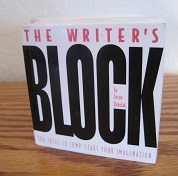
The Writer’s Block, 786 Ideas To Jump-Start Your Imagination by Jason Relulak.
Discover, flaunt, and celebrate your authentic assets.
“Her early work was often experimental, creating melody, using striking conceits, new rhythms, and confusing private allusions. Her efforts at change were resisted, but, as the New Statesman observed, ‘losing every battle, she won the campaign,’ and emerged the high priestess of twentieth-century poetry.” Poetry Foundation
David Shiyang Liu recorded Ira talking about storytelling. In Part One of the interview, you can watch Ira in the recording studio. You can also read about parts two, three and four in the caption.
In Part Three Ira talks about the creative process. Watch Ira’s words unfold in a whimsical way.
Ira Glass, the art of storytelling (typed with minor modifications):
Nobody tells people who are beginners, and I really wish somebody had told this to me, is that all of us who do creative work . . . we get into it, and we get into it because we have good taste, but it’s like there’s a gap.
For the first couple of years that you’re making stuff, what you’re making isn’t so good; it’s not that great. It’s trying to be good, it has ambition to be good, but it’s not quite that good.
But your taste, the thing that got you into the game, your taste is still killer and your taste is good enough that you can tell that what you’re making is kind of a disappointment to you.
A lot of people never get past that phase. A lot of people at that point, they quit.
The thing I would like to say to you, with all my heart, is that most everybody I know who does interesting, creative work . . . they went through a phase of years where they had really good taste. They could tell what they were making wasn’t as good as they wanted it to be. They knew it felt short. It didn’t have this special thing that they wanted it to have.
Everybody goes through that. And for you to go through it, if you are going through it right now, if you’re just getting out of that phase . . . it’s totally normal.
The most important possible thing you can do is do a lot of work. Do a huge volume of work.
Put yourself on a deadline so that every week, every month, you know you’re going to finish one story. It’s only by actually going through a volume of work that you’re going to catch up and close that gap. The work you’re making will be as good as your ambitions.
In my case, I took longer to figure out how to do this than anybody I’ve ever met.
It takes awhile, it’s going to take you awhile, it’s normal to take awhile.
You just have to fight your way through that.
The temptation is to not go where it hurts. The temptation is to lie in order to resist the painful truth.
If we become honest in our talking and dealing with people, if we go deep and tell the genuine truth, will that carry over to our writing? And will we then go deep and become authentic in our writing?
The temptation is to not go where it hurts. The temptation is to lie in order to resist the painful truth.
I recently read Pack Up the Moon by Rachael Herron and The Interestings by Meg Wolitzer. Both of these authors went deep in their writing and the resulting books are genuine, authentic and fabulous reads. . . where the characters and their problems deeply touched me. Rachael and Meg did not resist writing about painful truths.
How about you? Can you recommend books that deeply touched you? What other authors go deep in their writing? I can think of Jodi Piccoult. Your turn.
In an interview in the February 2014 issue of The Writer magazine, interviewer Alicia Anstead asked Monica Wood, “One of the nuns who taught you as a child said explorers should have courage, goals, imagination and, finally, humility. Which of these is most important for a writer, and why?”
I have a sign in my studio: Run your own race. Some other writer will always write lovelier books, reach more readers, make more money, win more awards. the writing trade – which is full, full, full of rejections and failure – is a lifelong lesson in humility, and we are wise to take that lesson into the other arenas of our life. Writing is engaging, gratifying and often profoundly discouraging and difficult. But not as discouraging and difficult as coal mining or warfare.
— Monica Wood
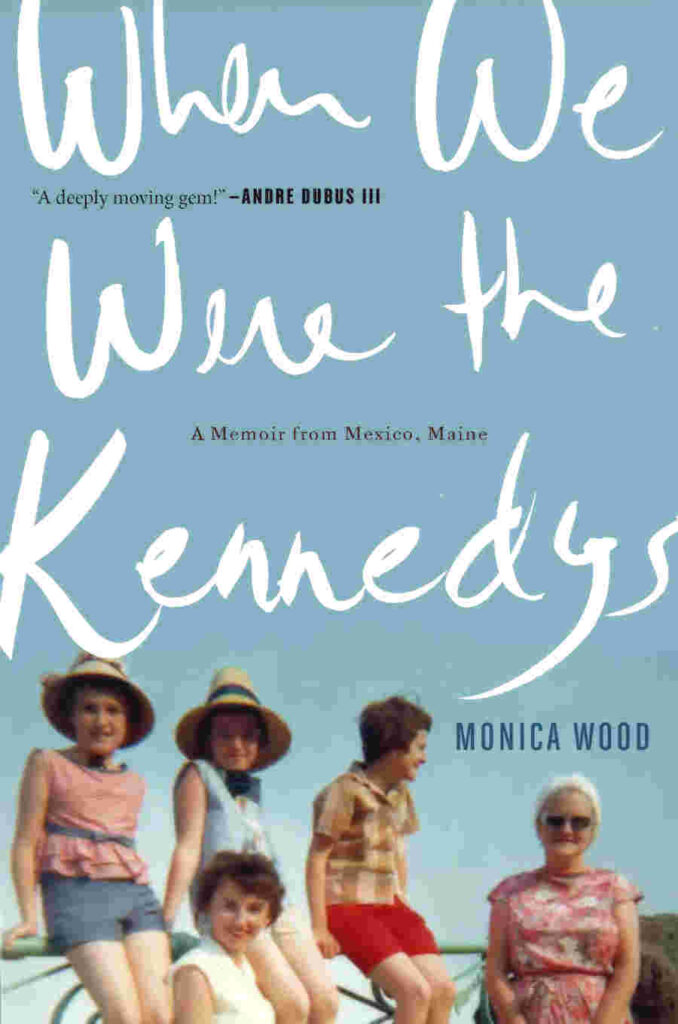
Monica Wood is the author of When We Were the Kennedys: A Memoir from Mexico, Maine, her story about growing up in the 1960s in a Catholic family in a mill town in northern New England.
Bruce would always give me this advice: ‘Be in the moment. Just find the truth of the scene.’ I’m not a trained actor, so that just seemed like drama school hogwash, but the further we got into the movie, it really made a lot of sense to me, and then I started thinking, maybe that’s what I’m supposed to do in comedy too. The truths might be very different, the levels of reality might be different, but you have to commit 100 percent either way.
— Will Forte
In an interview with The Costco Connection, Will Forte – an eight-year vet of Saturday Night Live – talks about his experience working with Bruce Dern in the movie “Nebraska.” When asked what he learned from Bruce Dern, Will answered, “Bruce would always give me this advice: ‘Be in the moment. Just find the truth of the scene.’ I’m not a trained actor, so that just seemed like drama school hogwash, but the further we got into the movie, it really made a lot of sense to me, and then I started thinking, maybe that’s what I’m supposed to do in comedy too. The truths might be very different, the levels of reality might be different, but you have to commit 100 percent either way.”
Note from Marlene: I think this is true with writing also. When “the truth of the scene” is conveyed, writing is strong and readers feel a visceral reaction.
I love stories that are inspirational yet have a lot of heartache, because I think that’s what life is. Life is filled with struggles and yet there’s always beauty, and that’s what I get from films.
— Ellen DeGeneres
Parade Magazine, March 2, 2014
Hard work got me here and only hard work will keep me here.
— Brandon Stanton
Brandon Stanton, photographer and author of Humans of New York. Brandon is the amazing young man who founded the Humans of New York Project.
The idea for HONY came very organically from a love of photography. It wasn’t really modeled on anything. It emerged from many small evolutions rather than coming from a fully formed idea. For my first year or so of doing HONY full time, there weren’t even captions or interviews. It was just a photography blog.
What kept you going in the first months of HONY?
Obsession, really. I just truly loved doing it, and I thought the work was unique and important. Even early on, I had a lot of confidence that if I kept working, an audience would eventually develop. I didn’t expect it to be easy. I knew that I was going to have to put a ton of work into HONY before it would be fair to ask anyone to pay attention to it. I feel like one mistake new artists make is that they expect people to care about their work before they’ve really demonstrated that they care about it themselves.
How is your new fame affecting your life and work?
Obviously it’s very nice to have your work appreciated on such a large stage. I try my best not to change as HONY gets bigger. I think I’m doing a pretty good job of it. Main thing is just to remember that hard work got me here and only hard work will keep me here.
Click here for more about Brandon Stanton and the Humans of New York Project
You can build a career as an author by playing to your strengths, following your true passion, going at your own pace and never shying away from your unique voice.
Listen closely to yourself and dispute the thoughts that don’t serve you – even if those are true. For example, you might think, “Writing a novel is hard. Selling a novel is hard.” Yes, both thoughts are true, but they don’t serve you. The only thought that serves you is, “I’m off to write a novel.”