Dust to Dust

  • Memorable writing that sparks imagination. Lean in. Hear the writer’s voice on the page.

    Dust to Dust

    By Brenda Bellinger

    This post happens to fall on what would have been my mother’s 86th birthday if she were still with us. She passed away thirteen years ago, yet I often feel her presence. Recently, I was dusting a small antique genie lamp that belonged to her mother, my grandmother. Made of white china, its glaze bears the spiderwebbing of many tiny cracks. Miraculously, the hurricane glass and original brown paper shade, though faded, are both still intact. As I carefully pushed a corner of the dust cloth through the curled handle, I thought of all the times this had been done before. Both my mother and grandmother were fastidious housekeepers. Myself? Not so much.

    I wonder at what point this lamp will cease to hold its significance. A time will come when the sleeping genie will no longer be woken by the caress of a dust cloth and the lamp will find its way to the land of the unwanted and unneeded.

    In the 1950s, the Lane Company of East Providence, Rhode Island gave graduating students at the local Catholic school for girls, a miniature hope chest. Mom gave hers to me many years ago and I use it for odd bits of costume jewelry. Amazingly, the cedar scent is still present. As I mentioned in my last post, times have changed. The idea of a hope chest today, though quaint, seems so horse-and-buggy.

    When she and my father first married, they struggled financially for a while as many young couples do, trying to get their footing. One Christmas, he bought her a bottle of Joy perfume by Jean Patou. She so treasured this bottle that she rarely used it. I remember how it sat regally in the center of a mirrored tray on her dresser. I have it now. One more thing to dust. It’s still about two-thirds full, the perfume having aged a deep amber color. Writing this, I paused for a moment to go open it; something I’ve never done before. As you might have guessed, it turned a corner a very long time ago. I’m not sure why, but I’ll keep it a bit longer.

    Memories. Something else to be thankful for when we gather around the table.

    Brenda Bellinger

    Born in Rhode Island, I spent the first eight years of my life in New England. I can still remember the delight of summer thunderstorms and the fragrance of fall in the air as leaves crunched underfoot. My parents moved to San Francisco and eventually settled in the North Bay Area.

    In 1992, a friend asked me to sign up for a writing class with her. I agreed, never anticipating that class would open a new door for me. At that time, my husband and I were raising four boys and I was working as a courtroom clerk. Writing provided a creative outlet I didn’t know I needed..

    For the month of November 2009, I cleared my calendar of all commitments other than work and Thanksgiving Day to participate in NaNoWriMo (National Novel Writing Month) – a challenge to write 50,000 words in thirty days. Fueled by good coffee and dark chocolate covered espresso beans, I zipped past the goal and completed the first (extremely rough) draft of what would eventually become my debut novel, “Taking Root.”

    My work has appeared in Small Farmer’s Journal, Mom Egg Review, Persimmon Tree, THEMA, the California Writers Club Literary Review, and in various anthologies, including The Write Spot: Reflections, and The Write Spot: Musings and Ravings From a Pandemic Year.

    Note from Marlene: Brenda’s Blog is a collection of thoughtful and entertaining reflections on what matters.

    “Dust to Dust” originally posted on Brenda’s Blog, November 16, 2021.

  • Today’s guest blogger, Mary Mackey, is a gem in a treasure chest filled with innovative inspiration for writers.

    Mary shares her unique perspective on accessing creative writing.

    Your unconscious is packed with ideas, metaphors, visions, plots, dreams, colors, characters, emotions—in short, everything you need to write a great visionary novel. But how do you get to it? How do you step out of the social agreement we call “reality,” and dip into this incredibly rich resource?

    You could go to sleep and try to mine your dreams, but even if you dreamed an entire novel, the moment you woke up, you would forget most of it within seconds, because you hadn’t processed the ideas into your long-term memory. Worse yet, when you dream, you are not in control, so you can’t do specific things like talk to one of your characters or work out a specific plot problem. Granted, some people manage lucid dreaming, but lucid dreaming is not a practical writing technique for a number of reasons. For example, you cannot always go to sleep when you need to.

    Many years ago, I started looking for a technique that would allow me to be asleep and awake at the same time. What I came up with, after much trial and error, was a form of creative trance that allows me to delve into my unconscious whenever I want to, get the material I need for my poems and novels, bring that material up to my waking reality, remember it, and write it down.

    Developing this technique wasn’t easy. Besides relying on my own imagination, I drew on many sources such as self-hypnosis, theta cycle sessions, neurophysiology, Proust’s Remembrance of Things Past, and the Surrealist technique of Automatic Writing.  As you might expect, I had many failures, but in the end I came up with a deceptively simple technique, which has proved extremely effective. Since I taught myself how to use creative trance, I have written many novels, collections of poetry, and screenplays. Better yet, I have avoided writers’ block.

    I’ve used my creative trance technique weekly, sometimes daily, for many years. As with all things that are visionary and out of the range of ordinary consciousness,  it can’t be completely described in words, only experienced. So, since I cannot sit down with you and personally guide you through the process step by step, I am going to give you a chance to get a feel for it by taking you into the heart of  my creative process as I worked on my most recent novel, The Village of Bones.

    The Village of Bones is Visionary Fiction, but even in my novels which are not visionary (such as my bestseller A Grand Passion, the story of three generations of women involved in ballet), I created most of the original storyline in a voluntarily induced creative trance.

    Unlike A Grand Passion, The Village of Bones presented a special problem. On one hand, it was meticulously researched historical fiction firmly based on archaeological evidence, yet at the same time, it was set in Prehistoric Europe in Goddess-worshiping cultures that were filled with myths, visions, and prophecies.

    With this contradiction in mind, I put my phone in Airplane Mode, sat down in a comfortable chair, picked up a pen (I find computers get in the way), opened my notebook, closed my eyes, took several deep breaths, and counted backwards to ten, imagining as I did so that I was walking down a flight of stairs. By the time I got to the bottom, I was in a light trance. The word “light” is important. I was neither awake nor asleep. Instead, I was poised on the threshold between my conscious mind and my unconscious mind, ready to move in either direction. 

    On this particular day, I had some work planned. Sabalah, my main character, was in big trouble. She was caught in a storm, her boat had turned over, and she was drowning. As she struggled to stay afloat, she going to have a vision of the Sea Goddess that might or might not be a hallucination. There were no surviving statues of this particular Neolithic Sea Goddesses as far as I knew, so my task for this afternoon was to envision the Sea Goddess so I could describe her.

    I started with the Goddess’ name which I had created the previous day: “Amonah, Amonah, Amonah,” I silently chanted. “Come to me.. A vague, shadowy form began to materialize behind my eyelids. 

    Before I go on, I want to be clear about what was happening. As I thought the word Amonah, I didn’t believe I was conjuring up a real spirit, channeling a mystical force, or having a religious experience. I believed, and still believe, that I was simply unlocking the resources of my own consciousness and my own imagination using the very practical tool of creative trance. I don’t claim to know where these visions come from, but I am convinced that under the right conditions, anyone can have them.

    The form grew brighter and more distinct. I saw a woman walking toward me across the waves. Walking on water. Interesting. Since question/answer is the key to this technique, I settled down and began to ask myself questions.

    “What color is her hair?” I asked myself. “Black, brown, blonde?” Suddenly the word “seaweed” came into my mind. Instantly, the woman’s hair turned green.

    “What kind of jewelry is she wearing? Diamonds, topaz, garnets?” No, she’s wearing pearls, and something else, something reddish, something like . . . coral!

    “What color are her eyes?” For a moment her eyes shifted back and forth between brown and green. Then, suddenly they glowed. “Skin color?” All colors. No colors. She’s a Goddess. She is all of us.

    “What’s she wearing?” Not skinny jeans for sure. (Odd thoughts sometimes interrupt the flow of the trance). Long dress. Yes. She’s wearing a long dress. Wave-like. Blue of course like the sea.

    “What does she smell like? Wind, salt, kelp?” Like flowers.  She smells like flowers. “What kind of flowers?” Roses.

     “How much does she weigh?” She weighs nothing. She’s a spirit.

    For a long time, I sat there asking specific questions and waiting for answers most of which came in the form of wordless images. For some reason, I never could figure out how tall She was. My unconscious wouldn’t give that one up. But by now the Sea Goddess Amonah looked real to me. I could see Her distinctly right down to the coral rings on Her toes.

    Slowly I began to count backwards from ten to one, moving out of the trance as I climbed back up the stairs toward waking consciousness. On every step, I paused and made myself visualize Amonah again, and I commanded myself: “Remember. Remember.”

    This final command to “remember,” is perhaps the most important part of a creative trance. If I couldn’t carry a complete image of Amonah back into the waking world, I’d have to start all over again.

    When I got to ten, I opened my eyes just wide enough to see my notebook. Grabbing my pen before the last bits of trance faded away, I quickly wrote everything down paying no attention to grammar, spelling, or logic. I even wrote down the silly bit about the skinny jeans.

    The result was not something I could use immediately. What you get out of your own unconscious is raw material. After creativity comes craft. Over the course of the next year, I polished this description of Amonah. I worked wide-awake, using all the techniques of novel-writing that I had learned over the years. I read the passage out loud over and over again. Searched for better words. Took out commas and put them in again. Here is the result:

    A woman emerged from the wall of crashing waves and walked across the sea toward Sabalah. Sabalah abruptly stopped crying and stared at the woman, stunned. This was impossible! . . .The woman kept walking, stepping over the waves as if they were furrows in a field of wheat. Her flowing dress was blue as a summer sea; her hair long and green, twined with seaweed and pearls. Her skin was dark and light at the same time, her eyes so bright, they glowed like the last flash of the sun when it falls into the sea at midsummer. . .  A sweet scent suddenly filled the air like the perfume of roses blown across water.

    “Don’t be afraid,” the woman said. “I am Amonah, Goddess of the Sea,” and water is my path. I can walk above or beneath it as I wish.

    Sitting down beside Sabalah, Amonah let Her feet dangle in the water. They were bare except for toe rings of rose-colored coral. She must have weighed nothing, because the end of the mast didn’t tilt the way it would have it a flesh-and-blood human being had sat there.

     The Village of Bones was formed from scores of similar visions, as were all the poems I wrote that year, and even part of one of the screenplays which I co-wrote with director Renée de Palma.

    Using creative trance is a gentle, pleasant way to create the raw materials for a work of fiction. It is not like meditation because your goal is not transcendence. It is not like many forms of self-hypnosis because you are not trying to lose weight, stop smoking, or change your behavior in any way. It is not like prayer, because you are not seeking a closer relationship with God. Creative trance is a tool, a key if you will, that lets you unlock the riches you already have stored in your own unconscious.

    Yet its power should not be underestimated. So let me leave you with a warning: If you decide to go deeply into your own unconscious, you have to be ready to deal with what you find there. Creative trance is not therapy. If you are upset, unhappy, depressed, or anxious, wait until you have a calm mind and specific writing goals and can set firm limits on what you will accept from your unconscious.  

    When you are in a creative trance, you should always be in control. If your Goddess appears before you with a hairdo made of snakes, you should be able to instantly turn those vipers into cobwebs and seaweed. Nothing you experience should harm you, scare you, or make you uncomfortable for more than a few seconds. A creative trance should be enjoyable from start to finish.

    In The Village of Bones, the Goddess Earth gives Her people six commandments. The First Commandment is: “Live together in love and harmony.” The Sixth is: “Enjoy yourselves, for your joy is pleasing to Her.”

    Resources:

    Syllabi for courses in Women’s Visionary Fiction, Women’s Visionary Poetry, and Women’s Visionary Film can be found on Mary Mackey’s Educators Page.

    Mary Mackey, Ph.D. is a New York Time best-selling author who writes novels, poetry, and film scripts. A Professor Emeritus of English at California State University, Sacramento, she is the author of fourteen novels and eight collections of poetry including The Jaguars That Prowl Our Dreams, winner of the 2019 Erich Hoffer Award for Best Book Published by a Small Press and a 2018 Women’s Spirituality Book Award; and  Sugar Zone, winner of the 2012 PEN Oakland Josephine Miles Award.

    Garrison Keillor featured her poetry four times on The Writer’s Almanac. Her novels have made The New York Times and San Francisco Chronicle Bestseller Lists and been translated into twelve languages.

    Her visionary novel The Village of Bones: Sabalah’s Tale is a prequel to the three novels in her best-selling  Earthsong Series (The Year the Horses Came, The Horses at the Gate, and The Fires of Spring).

    Mary welcomes your questions and comments at www.marymackey.com  where, you can sample her work, read her interview series People Who Make Books Happen, learn more tricks for avoiding Writers Block, and sign up to get the latest news about her fiction and poetry.

    Mary’s literary papers are archived at the Sophia Smith Special Collections Library at Smith College in Northampton, MA.

    Note from Marlene: The creative trance that Mary describes might also be accessible with meditation. Katie Holmes, data scientist & chief editor for OutwitTrade has compiled stories on the benefits of meditation.

  • Guest Blogger Suzanne Murray shares why freewrites inspire writing:
    I have taught the creative writing process for more than twenty years, working in part with a technique known as “freewriting” where I encourage participants to “just let it rip”. We don’t worry about punctuation, spelling, grammar or whether it is good. We suspend the censor and let our first thoughts spill out onto the page. People new to the class are always nervous about this kind of letting go. Since I write and share my own raw writing with the group, I was rather nervous when I first started teaching the classes but found that by maintaining a safe and sacred atmosphere of unconditional acceptance for whatever wanted to come forth it really calmed the fear for everyone.

    We learn quite early to fear making mistakes. We all have a well-developed censor that confines us within the limiting parameters of being socially acceptable. Neuroscientists have identified a part of the brain, the dorsolateral prefrontal cortex (DLPFC) that is closely associated with impulse control. It keeps us from embarrassing ourselves or saying the wrong thing to our boss or spouse.

    Young children create so naturally because their censors don’t yet exist. The DLPFC is the last part of the brain to fully develop. Around 4th grade it engages and children lose interest in making art in the classroom. If we are worried about making a mistake, saying the wrong thing or doing something poorly we often end up doing nothing at all. The censor has us holding back our latent talent.

    In a study by a neuroscientist looking at brain activity in jazz musicians engaged in improvisation, research subjects showed increased activity in the medial prefrontal cortex, the part of the brain associated with self-expression, while at the same time the DLPFC or censor appeared to deactivate. At this point there is a surge of raw material coming forth but rather than being random or chaotic it is organized or structured by the rules of the form. In the case of jazz musicians, they naturally improvised in the right key and tempo.

    I have noticed this tendency in my freewriting workshops. Students bypass the censor yet they also naturally wrote in the form that seemed to most call or appeal to them. Individuals drawn to poetry and who read a lot of poetry had the raw writing take on a poetic quality.

    The same was true with fiction, memoir or non-fiction. It’s why I always tell people that reading the kind of writing you want to do is one of the best things you can do to improve your work because when you let go and let the creativity flow, your brain then has a sense of how to organize it. When we let go, we have access to the vast storehouse of the unconscious mind.

    I really encourage creative play and practice, free from the expectation that we have to produce something, as a way to opening up to our creative gifts and talents. Learning to let go and create an atmosphere of inner permission, acceptance and allowance can really help us more fully express ourselves creatively.

    Now in the time to really let our creativity fly in our own live and the world.

    Wishing you all well. Sending you all lots of love and inspiration,
    Suzanne

    Suzanne Murray is a gifted creativity and writing coach, soul-based life coach, writer, poet, EFT practitioner and intuitive healer committed to empowering others to find the freedom to ignite their creative fire, unleash their imagination and engage their creative expression in every area of their lives.
    Emotional Freedom Techniques (EFT)
    Combining Western psychology with Chinese acupressure, it works to actually rewrite subconscious patterns and limiting beliefs that keep us stuck. I’ve had miraculous results and have been working with EFT in new ways that allow us to laser in on the issue and shift it at the core and change your life from the inside out. We often make significant shifts in a single session. Sessions are available by phone and Skype.

    CREATIVE LIFE COACHING Would you like to live from an expanded place of grace, ease and flow? Would you like to tap the wisdom and power of your heart and soul? We work with soul based ways to let go of limitation and gain clarity of the next steps to living a more joyful, authentic life.

    CREATIVITY COACHING
    Do you want to experience the pleasure and joy that comes from adding satisfaction and meaning and a sense of well being to your life through creative expression. I will offer practical, emotional and soulful strategies to help you fully uncover your creative gifts and support yourself in expressing them. I will provide encouragement and support in understanding of the creative process and its stages and exercises for accessing the wisdom of your imagination. I’ll help you set realistic goals and support you in achieving them. We will work with tools for coaching yourself through the issues that get in the way of your creativity including career concerns, blocks, limiting beliefs, relationship issues and the existential and spiritual questions that can arise from wanting and needing to create. 

    THE HEART OF WRITING COACHING
    Do you want to ignite your creativity and show up to your writing on a regular basis or go deeper into the process and craft? I  offer online coaching to support you and coach you through any resistance or problems along the way. I can send you daily lessons and assignments that cover important aspects of the writing process and information on craft. I hold the space of unconditional acceptance and support to nurturing your unique voice  and work on the stories that are really important to you.  

    The Heart of Writing eBook

    Jumpstart  the Process, Find Your Voice, Calm the Inner Critic and Tap the Creative Flow

    I have been working an exercise a day through your The Heart of Writing eBook. I love it! It’s like being in class again. – Tonya Osinkosky
    Now available on Amazon Kindle! http://amzn.to/1d7oe60
      or still available is a pdf download from my website
    (includes a one hour mp3 interview about writing process)
    https://www.creativitygoeswild.com/the-heart-of-writing/  

    For more detailed information on all my offerings check web site at  https://www.creativitygoeswild.com  or call Suzanne Murray at  707.360.7776  or email  creativitygoeswild@gmail.com . Also check out my Blog at  https://www.creativitygoeswild.com/blog-1/  for ideas on writing, creativity and life coaching.  Follow me on Twitter at @wildcreativity where I tweet inspirational quotes for creativity and life.
  • Prompt #32

    What games did you play?

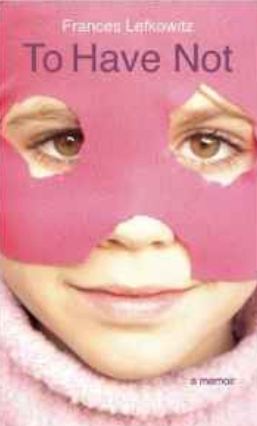
    Today’s prompt is from To Have Not, a fascinating memoir by Frances Lefkowitz.

    When us kids used to walk down 16th Street to the schoolyard or across Sanchez to the corner store, we’d keep a lookout for cool cars. When one drove by – a red mustang convertible, a tiny MG, a black Jag with the silver cat ready to pounce off the hood – whoever saw it first would point and say, “That’s my car!” We could play this game anywhere, my brothers and their buddies and I, shouting the words loud and fast to drown out anyone else who might be thinking about claiming the same car.  You could even play it alone, whispering the three magic words while walking home from school or sitting in a window seat on the bus, leaning your drowsy head against the sun-warmed glass. Then the car would speed through traffic, carrying your dreams out of sight. You’d covet, grasp, and lose, all in a few quick seconds of shiny colored metal whizzing by.

    Frances blogs about writing, publishing, and footwear at PaperInMyShoe.com.


    Lefkowitz.To Have Not

    Prompt #32

    What game did you and your friends or siblings make up? What does this say about your childhood?

  • Memories


    Prompt #29

    Today’s prompt:  Memories

  • Your best gift or your all-time favorite gift.

    You can use these prompts to write memoir, fiction, poetry, or to just write. It doesn’t matter what your genre is, you can use these prompts to develop the craft of writing.  You can respond to the prompt from your personal experience or as a fictional character would respond.

    Here we go:

    There are tacky gifts, insulting gifts, selfish gifts the giver secretly wants, cheap gifts and re-gifted gifts.

    But some gifts are transcendent. Have you ever received such a perfect gift? One that amazed you with its imagination? Perhaps it was a gift that completely touched your heart, changed your life, opened a new world? Maybe it was a gift so dear you held onto it for a lifetime.  What was it and why was it so special to you?


    Prompt #28

    Your best gift or your all-time favorite gift.

  • Photo prompt

    Photo prompt by Colby Drake. One of the things that Colby enjoys about photography is the adventure of going out to scenic areas and trying to capture those places to share with others. He believes that there is no better feeling than sharing his experiences with others when they weren’t able to be there in person. Now living in northwest Oregon, Colby has the opportunity to see some of the most beautiful places in the world (at least in his opinion). He hopes that he is able to share these places and experiences with many people that are not able to enjoy them for themselves. Enjoy!


    Field photo by Colby Drake

    Prompt #27

    With a photo prompt, write whatever comes up for you.

  • Something you keep, but . . .


    Prompt #26

    Today’s prompt:  Something you keep but have no use for, why do you keep it?

  • Amor Towles, author of Rules of Civility, interview by Hillary Casavant, November 2013 issue of The Writer magazine.