Mycorrhiza

  • Memorable writing that sparks imagination. Lean in. Hear the writer’s voice on the page.

    Mycorrhiza*

    by Patricia Morris

    I live under the canopy of a grandmother valley oak. It grows in what is now called “my neighbor’s yard,” due to the way we white settlers swept through this what-is-now-called a nation over the past 300 years and took over everything. Massacred people who were living here, infected them with deadly diseases, tried to re-make them in our image. Declared that we “owned” the land, bought and sold it; built structures to live in, structures that got bigger and more permanent as time passed; built fences to delineate MINE.

    But before all this, there was the valley oak. Like all oaks, it began as an acorn, scrunched into the dirt next to a small seasonal creek. Its roots sank deeper each year, reaching for the water. Its mycorrhizal fungi spread wide, linking fingers with the grandfather sycamore nearby, and the great buckeye at the deeper part of the creek. They grew up together sharing food; sharing information; sharing tenants such as woodpeckers, scrub jays, red-shouldered hawks, squirrels, and woodrats.

    The grandmother oak watched placidly as the Coast Miwok women gathered its acorns, ground them into mush, and fed them to their families; as the Spanish and then the white folks pushed in and planted crops and orchards, grazed cattle and sheep; as roads were laid down and houses sprang up, displacing meadows and pastures.

    Fifty-one years ago what I call “my house” was built beside the oak out of dead redwood trees. The oak, by this time the oldest living being in the area, grew protective of this redwood structure, and even of the humans within it, despite all the destruction they wrought. I’ve had no doubt, since first setting foot on what I now call “my lot,” that the tree is protecting me and sending me love. Its ever-expanding canopy of leaves covers over two-thirds of my house in the summer, keeping it cool on even the hottest days. In the autumn, as its acorns hit the roof, the deck, sometimes even my head, like small exploding artillery shells, I give thanks and gratitude for the way it shares its abundance.

    On a cold, dark winter night, silver stars glitter through the outline of the oak’s bare black branches, its ancient arms reaching to the cosmos. My tiny form sits in a tub of hot bubbling water. Boundaries between me, tree, and twinkling stars dissolve into emptiness.

    * fungus which grows in association with the roots of a plant in a symbiotic or mildly pathogenic relationship. Oxford English Dictionary

    Patricia Morris lives under the trees in Northern California and writes on Monday nights at Jumpstart Writing Workshops. She dates her love of stories to being read to while sitting on the lap of her Great-Aunt Ruth, a children’s librarian. Her writing has appeared in Rand McNally’s Vacation America, the Ultimate Road Atlas and The Write Spot anthologies Possibilities and Musings and Ravings From a Pandemic Year, edited by Marlene Cullen.
  • Guest Blogger Pat Tyler: About writing, a writer, and freewriting workshops

    For me, writing is like a shot in the arm. When I write alone, my mind becomes infused with new ideas. When I write with others, I’m included in a circle of writers who inspire me, enlighten me, challenge me, beckon me to take up the gauntlet, put on the gloves, step away from the ropes, dance my strategic dance of words, and punch my critic until he stays down at the count of ten, knocked out by my knuckle-punch of powerful, gutsy words.

    In recent years I became interested in publishing, but I soon learned that it’s not publishing that makes a writer – it’s writing that makes a writer.

    It may sound over-simplified, but I know this for sure: it’s the physical act of placing pen to paper and refusing to remove it until blood seeps from my pores and I’ve said something – hopefully something important. That’s what makes a writer.

    I’ve learned that if some particular subject is important to me, it can be, and probably will be, important to somebody else – perhaps lots of somebodies.

    But physically writing is only part of the writerly equation. Other factors include reading my words aloud, and listening to the words my fellow writers have written. We write to be heard.

    When I first attended Marlene Cullen’s Jumpstart writing workshop in Petaluma, CA, I had hoped to carve some publishing notches into my writer’s gun barrel. I wanted to review and edit pieces that had sprouted cobwebs at the back of my musty, dusty filing cabinet. But that didn’t happen. What did happen was far different from what I’d expected.

    Jumpstart wasn’t a spit-and-polish workshop. There were other times and places to spit- and-polish my words. This was a bim-bam-thank-you-mam workshop; the kind I love most.

    In Jumpstart, our simple outpourings of heartfelt thoughts, glimpsed moments from the past, glimmers of future dreams, sprinkles of laughter and tears, and tidbits of joy and sorrow were freely shared, but with one caveat; they were not to be shared outside the classroom. [Note from Marlene: It’s fine for writers to share their own work; but not discuss the writing of the other participants outside of the workshop group.]

    After participating in Jumpstart, I created a similar freewriting class called Quick Start, in Rohnert Park, CA, closer to my home in Cotati. Different venue. Different participants. But the same enthusiasm and appreciation for sharing each other’s words in a safe environment.

    I have enjoyed the experience of seeing my polished prose appear in several publications during my lengthy writing life. However, the writing I still enjoy most is the rough, raw, beginning of a new writing-in-progress. Like a newborn infant, each new writing must be cleaned up, severed from its umbilical cord, and nurtured toward maturity where it can finally stand on its own, ready to compete in the writing world.

    But until my work is ready, I’ll just take another deep breath and keep writing my words. When I’m finished I’d like to read them to you. Then I’d like to hear what you’ve written. I’m hoping our words will increase and multiply, much like the family of writers who wrote them.

    Pat TylerAt 81, Pat Tyler continues to be warm, vertical, reading, writing, publishing short works, self-publishing long works, painting, crafting, and most of all – retired! (on the only quiet corner in Cotati, CA)

    Pat received her Master of Arts degree from Sonoma State University.  Pat’s writing has been published in Good Housekeeping Magazine, Fate Magazine, and numerous anthologies. She is an award winner of four Writers Digest Competitions. Pat Tyler is the author of The Impossible Promise and her memoir, 2014 Moments Remembered. Pat’s next novel, Forgive Us Our Trespasses, will be available in 2016.

  • Excerpt from The Martian Chronicles by Ray Bradbury:There was a smell of Time in the air tonight.

    What did Time smell like? Like dust and clocks and people. And if you wondered what Time sounded like, it sounded like water running in a dark cave and voices crying and dirt dropping down upon hollow box lids, and rain. Time looked like snow dropping silently into a black room or it looked like a silent film in an ancient theatre one hundred billion faces falling like those New Year balloons down and down into nothing. That was how Time smelled and looked and sounded.

    HourglassMarlene’s Musings: I love the idea of writing what Time smells like. . . sounds like . . . looks like. . .

    Your Turn: Choose an item, an object, a thing, that interests you. . . what does it smell like? sound like? look like?

  • What is your body telling you?

    For today’s writing . . . sit comfortably. Take a deep breath in. Let it out. Another deep, refreshing breath in. Release. One more big, nourishing breath. Let it whoosh out.

    Mentally scan your body. Become aware of any area that draws your attention – notice what part of your body calls out to you.

    Place the palm of your writing hand on the place that calls out. Or bring your breath there if it’s not reachable with your hand.

    Allow your hand to be filled with the information from that place.


    Prompt #123

    When you are ready, write about what you have discovered.

  • Gifts!


    Prompt #122

    Write about one or more:

    • The most disappointing gift you have received and what it revealed about the giver.
    • The most unusual gift you have received, or given.
    • The most wonderful gift you have received, or given.
    • Write about intangible gifts.

  • “When there is an obstacle, you have to rise to the challenge, not be overwhelmed by it. And we’re not alone in the world. I don’t know if there’s a name for that — religion or faith — just that there’s something greater than all of us, and it’s uniting and beautiful.” — Angelina Jolie, December 22, 2014 People magazine.

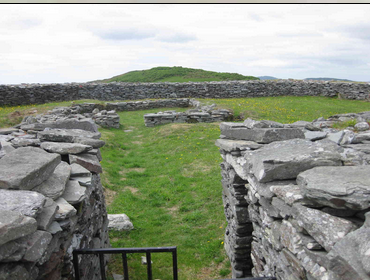
    March.stone wallFrom Marlene: Writing unites and connects us and that is, indeed, beautiful. When you reach an obstacle or challenge with your writing, see if you can work around it. Write sideways, in the margins. Come at the problem from a new angle. See the stumbling block as an opportunity to explore the problem and create a new solution. How? By doing a freewrite. Write down the first word that pops into your head and then write, for 12-15 minutes. Click here and here for more writing prompts. Just Write!

    Photo by Jim C. March

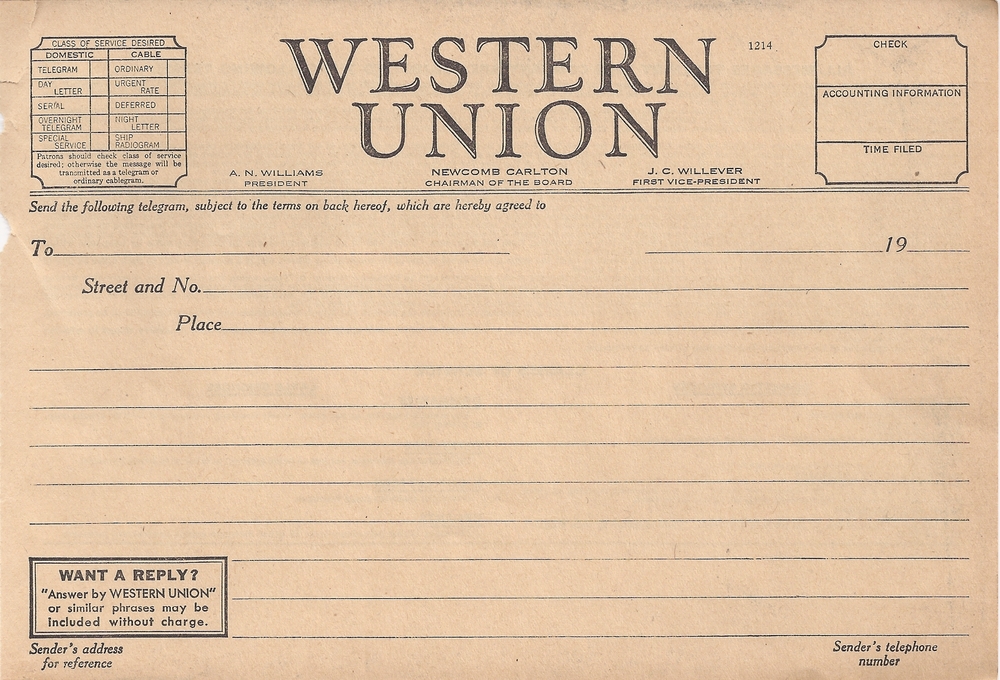
  • Write a telegram . . .

    Compose a telegram — a brief note that could be sent over the wires. Oh, I guess this sounds like an email, or a text message. But doesn’t “telegram” sound dramatic and perhaps romantic?

    Nostalgic for some people, a curiosity for others.

    Idea inspired from  From Family Tales, Family Wisdom —  How to gather the stories of a lifetime and share them with your family, by Dr. Robert U. Akeret with Daniel Klein


    Prompt #121

    So . . . write a telegram to someone who has touched your life in a significant way. Have your message tell him or her something you wish you could say in person. Or, if the person is no longer in your life, what do you wish you could have said?

    You could also write a telegram to or from your fictional character.

  • Write about something that happened . . .

    Write about something that happened to you this week. It can be something big, or something small. Maybe something you saw or observed. Perhaps something or someone touched you in a meaningful way. Write, using great detail. Or write sparse. Just write!

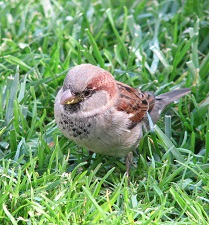
    Photo by Breana Marie


    Prompt #120

    Write about something that happened to you this week.

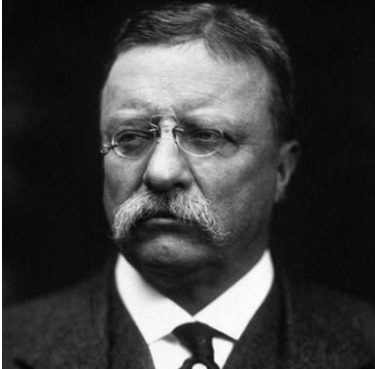
  • Theodore Roosevelt.1“Far and away the best prize that life offers is the chance to work hard at work worth doing.” — Theodore Roosevelt, from a speech given in Syracuse, New York (September 7, 1903) From Real Simple magazine, September 2014

    Note from Marlene:  Your writing, your work matters.  Just write!

  • Write about a gift. . .


    Prompt #119

    Part 1:  Write about a gift someone gave you that you didn’t like, didn’t know what to do with or had no use for.

    Part 2:  What does this gift say about the person who gave it to you?
    Whenever there is a prompt like this, you can also write about the opposite.

    Part 1A: Write about a gift you loved, a gift that was a surprise in a good way, a gift that worked really well.
    Part 1B: What does this gift say about the person who gave it to you?