Books on writing

  • There are more how-to-write books than we have time to read. IF we tried, we would spend all our time reading about writing and not writing. But there are a few especially good how-to write books. Here are some of my favorites. What are your favorite writing books?

    Dorothea Brande was an early proponent of freewriting. In her book Becoming a Writer (1934), she advises writers to sit and write for 30 minutes every morning, as fast as they can.

    Peter Elbow advanced freewriting in his books Writing with Power and Writing Without Teachers (1975), and freewriting has been popularized by Julia Cameron through her books The Artist’s Way and The Right to Write.

    A few more writing books:

    Aronie, Nancy Slonim – Writing From the Heart

    Baldwin, Christina – Storycatcher

    Barrington, Judith – Writing the Memoir, From Truth to Art

    Baty, Chris – No Plot? No Problem!

    Bennet, Hal Zina – Write From The Heart

    Clegg, Eileen M. – Claiming Your Creative Self

    DeSalvo, Louise – Writing As A Way of Healing

    Epel, Naomi – Writers Dreaming

    George, Elizabeth – Write Away

    Goldberg, Natalie:   Living Color, Long Quiet Highway, Wild Mind, Writing Down the Bones, The Great Failure

    Heffron, Jack – The Writer’s Idea Book

    Kabat-Zinn, Jon – Wherever You Go, There You Are

    Keene, Sam and Anne Valley-Fox – Your Mythic Journey

    Kelton, Nancy Davidoff – Writing From Personal Experience

    King, Stephen – On Writing

    Lauber, Lynn – Listen to Me

    Lamott, Anne – Bird by Bird

    Lara, Adair – Naked, Drunk and Writing

    Nelson, Sara – So Many Books, So Little Time

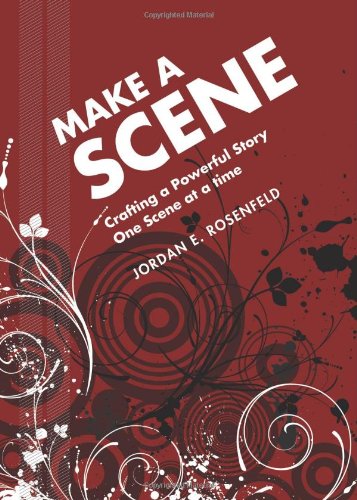
    Rosenfeld, Jordan – Make a Scene

    Saltzman, Joel – If You Can Talk, You Can Write

    Schneider, Pat – Writing Alone And With Others

    Smith, Michael C. and Suzanne Greenberg – Everyday Creative Writing

    Ueland, Brenda – If You Want to Write

    Walker, Christine – A Painter’s Garden

    Walton, Todd & Toomay, Mindy – The Writer’s Path

    Zimmerman, Susan – Writing to Heal The Soul

    Just a few of my books on writing. Yes, I have two copies of Jordan’s Make A Scene: One for my personal use and one for lending.

                               writing books 1                                writing books 2

  • Wand

    Note from Marlene: What strikes me as being important in this passage is when Becca let go of the thought of publishing, she was able to go “deep into storytelling mode.” That’s my wish for you.

    Write whatever you want to write. Don’t worry about a thing. . . don’t think about publishing, don’t think about anyone looking over your shoulder. No judging. No criticizing. Just write.

  • Today’s writing prompt is inspired from the book, Write Free, Attracting the Creative Life by Rebecca Lawton and Jordan E. Rosenfeld

    This writing exercise is called: I Spy

    List a few things that happened this morning or yesterday. They don’t have to be big or memorable, just whatever falls into your mind.

    The goal is to slow down and take stock of those things you do not normally notice.

    Writing Prompt: Focus on one event and write how you felt about this encounter. Jot down your feelings and then do a freewrite.

    fish 2Did the event make you think of anything else? Did it remind you of other events, experiences, memories or feelings? What were you thinking while it happened, or just before or after?

    Write your freewrite. Type your freewrite and save it.  Log on and post your writing on The Write Spot Blog.

  • Prompt #48 was about how to “Grow Your Character.”  Prompt #49 was about setting the mood. Prompt #50 was “The Problem.”

    Let’s put them all together and write the scene.  If you have freewrites on character, mood and a problem. . . use these elements to write a scene. Or, write a scene, using all new material.

    If writing memoir, write what actually happened, as best as remembered. Be sure to include details. Be specific. Not “car,” rather “1966 blue Dodge van.”

    “Scenes are capsules in which compelling characters undertake significant actions in a vivid and memorable way that allows the events to feel as though they are happening in real time. When strung together, individual scenes add up to build plots and storylines.  — Make A Scene, Crafting a powerful Story One Scene at a Time,  by Jordan E. Rosenfeld

    In Make A Scene, Jordan includes a recipe for basic ingredients for compelling scenes. If you are looking for an excellent book on how to write, this is it! Click here for my review of Make A Scene.

    Make A Scene.Rosenfeld

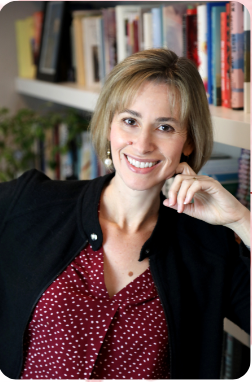
  • Jordan Rosenfeld

    How to Stay on the Writing Path

    Guest Blogger:

    “The seeker embarks on a journey to find what he wants and discovers, along the way, what he needs.”  —Wally Lamb,The Hour I First Believed

    “Not all who wander are lost.”J.R.R. Tolkien, The Fellowship of the Ring

    How to Stay on the Writing Path by Jordan E. Rosenfeld

    I believe that most writers are also seekers. While we may have a larger-reaching goal to find an audience and be published, ultimately, the writers who stick out the hard times do so because there is gold to be found along the journey. Sometimes it’s the kind of gold that requires mining and panning and sweat and agony. Other times it comes silently, a gift in the night from a willing muse. But one thing is for sure: writing gives as much as it takes—and it takes a lot.

    So how do you stay on the path of writing without falling off? How do you overcome the critical voices (internal and external) without giving up? Every writer soothes themselves differently, but sometimes soothing is in short supply, and it’s then you have to turn to other resources beyond yourself to find that boosting. And if you’re letting despair or discouragement drag you down, remember you don’t have to. You’re not alone! There are as many allies on the path as there are villains. It’s my goal to be one of your allies.

    For this month, remind yourself that a writer’s life is a worthy endeavor, a high calling, an important purpose. For this month I ask you to put in place one new support for yourself, be it a quote of kind words over your desk, or a buddy who will hold you accountable.

    Starting in the New Year I will be blogging the topics of my book in the works: A Writer’s Guide to Surrender. I chose the word surrendernot to imply giving up, but instead, a settling in to what matters most. It’s also a concept I find immensely helpful when things are not going as we hope; when rejections roll in, when the writing isn’t flowing, when criticism stings. Surrender is, at root, a state of accepting your vulnerability and not letting anything harden you.

    Let’s stay flexible and gentle with ourselves. But don’t get off the path. It’s your right to walk it!

    Jordan E.  Rosenfeld is author of the novel Forged in Grace, the writing guides Make a Scene: Crafting a Powerful Story One Scene at a Time, Write Free: Attracting the Creative Life (with Rebecca Lawton) and the forthcoming: A Writer’s Guide to Surrender: A Tool-kit to Build and Bolster a Lasting Writing Practice. Jordan’s essays and articles have appeared in such publications as AlterNet.org, Marin Magazine, Publisher’s Weekly,  San Francisco Chronicle, The St. Petersburg Times, Whole Life Times, The Writer and Writer’s Digest magazine. Her book commentaries have appeared on The California Report, a news-magazine produced by NPR-affiliate KQED radio.
    Learn more about Jordan and her writing wisdom at: www.jordanrosenfeld.net