Today’s prompt. . . look at the photo and write whatever comes up for you.
Jiffy Pop!
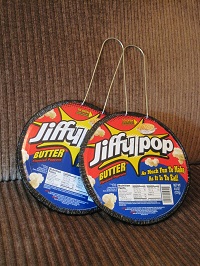

Writing and editing is like sculpting a garden
— M Cullen
I love to work in the garden, pulling weeds, and occasionally being creative with new plantings. I love tugging at weeds and hearing the slrrp as they surrender their grip and let go. Writing is a lot like weeding . . . letting go and enjoying the moment. Not always worrying about the end product; just enjoying the moment of complete surrender.
Later, after the writing seedlings have sprouted, it’s time for editing, which is a lot like pruning. When I’m pruning a fruit tree or a rose bush, I make a few snips, stand back to see how it looks and how it’s shaping up. It’s the same with editing. . . . make a few changes, then re-read. Keep what’s good and continue pruning until the piece has shaped to satisfaction.
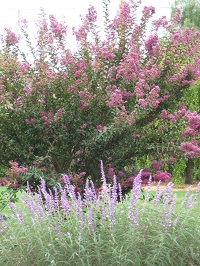
Yard sale, garage sale, tag sale. . . whatever you call ’em, what do you think about ’em?
Or . . . write about an unusual find at a yard sale, garage sale, tag sale . . . whatever you call ’em.
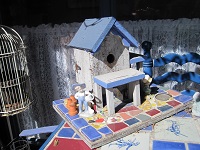
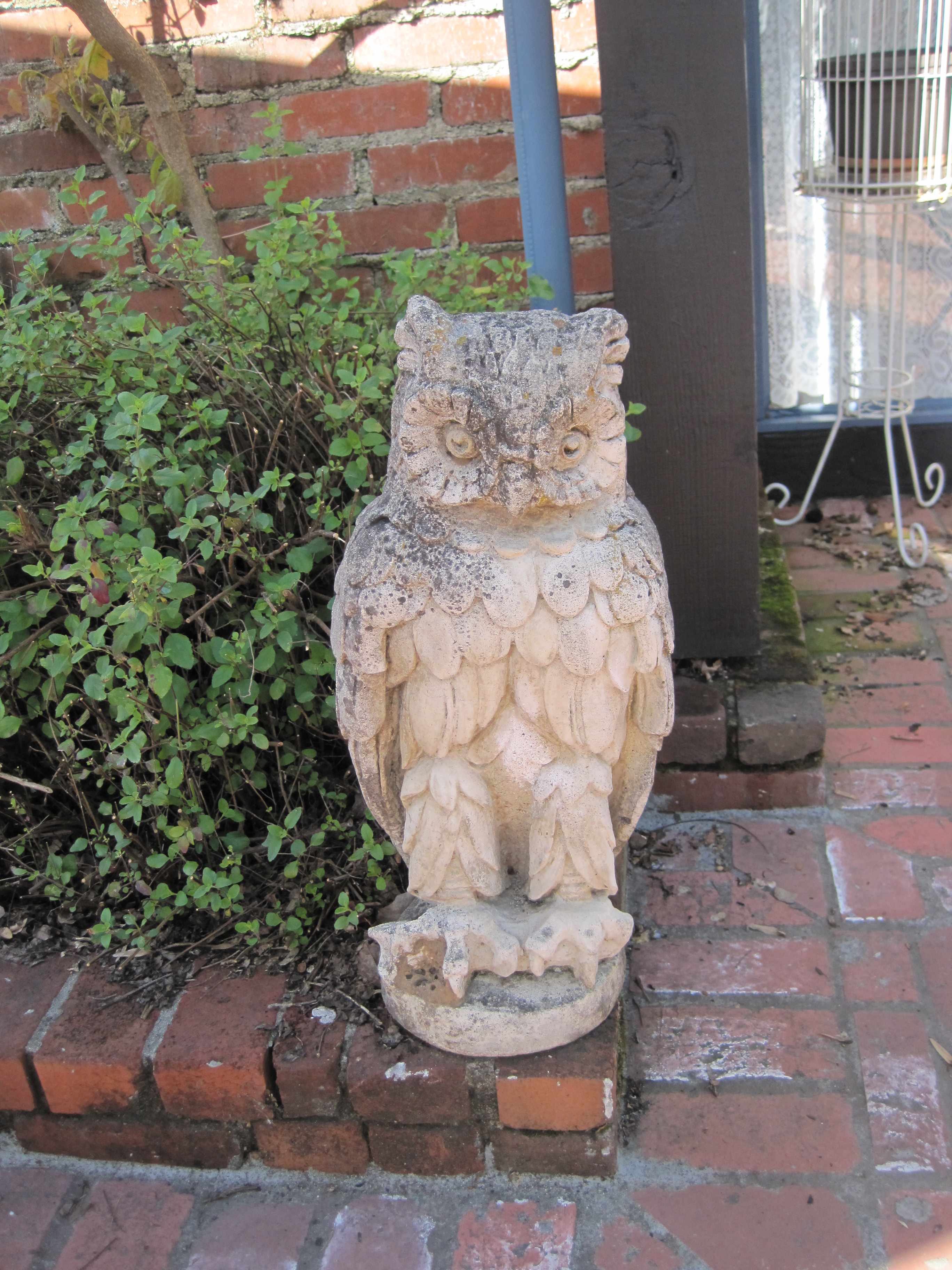
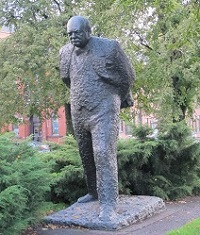
The only sin writers can commit is not to write
— Eleanor Hyde
Eleanor Hyde, originally in the August 1976 issue of the Writer Magazine, reprinted in the August 2014 issue.
Note from Marlene: So, you are itching to write and need a jumpstart? Go to the prompts page of this blog for ideas.
Click here for more prompts and read what others have written. Scroll down and click on a plaque.
I think we all have an intuitive sense, but we get side-tracked by what others think or we get distracted by all the “noise” both inside our heads and outside. It’s hard to get quiet and listen to what we think. But when we do, we experience the joy of discovering what’s going on for ourselves.
A passage in Reading Water, Lessons From The River, by Rebecca Lawton, describes a situation when Becca was a white water rafting guide and had one person, a friend, in her raft. They capsized, lost the boat and nearly drowned. Becca managed to save the life of her friend.
After it was all over, Becca asked her friend: “Do you regret running it?”
Becca’s friend answered, “It might have been the right choice for you,” she said, “But from now on, I’m making my own decisions.”
Here’s an idea for getting in touch with your intuition and writing deeply.
You can use suggestions for relaxation from the June 24, 2014 Just Write Post, “Listen to your body as a way to creativity.”
Settle comfortably in your chair. Breathe in deeply through your nose. Exhale loudly. Take a few deep breaths and let go. Release your worries. Let go of your fears. Just let go.
Follow your inner sense, your intuition, your gut level feeling … pay attention, use what you’ve got. Don’t fight it. Relax into your own judgment and decision making.
Choose a writing prompt and Just Write.
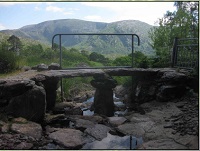 Old bridge meets new. Photo by Jim C. March.
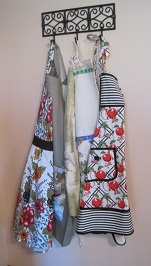 My grandmother put her apron on every morning right after she put on her house dress. She wore an apron every day, even to parties. She made all her clothes, including her aprons. She always chose a small flower design and used colorful seam binding for trim around the edges.
I also wear aprons, but only when cooking and eating. . . saves many an outfit from food stains.
Thank you, Kathy Myers, for the inspiration to hang my aprons in the kitchen.
Thank you, Pam Swanson, for emailing so many years ago, “The History of Aprons.”
THE HISTORY OF APRONS
The principal use of Grandma’s apron was to protect the dress underneath. Because she only had a few dresses, it was easier to wash aprons than dresses and they used less material, but along with that, it served as a potholder for removing hot pans from the oven.
It was wonderful for drying children’s tears.
From the chicken coop, the apron was used for carrying eggs, fussy chicks, and sometimes half-hatched eggs to be finished in the warming oven.
When company came, aprons were ideal hiding places for shy kids.
And when the weather was cold, Grandma wrapped her apron around her arms.
Those big old aprons wiped many a perspiring brow, bent over the hot wood stove.
Chips and kindling wood were brought into the kitchen in that apron.
From the garden, the apron carried all sorts of vegetables.
After the peas had been shelled, it carried out the hulls.
In the fall, the apron was used to bring in apples that had fallen from the trees.
When unexpected company drove up the road, it was surprising how much furniture that old apron could dust in a matter of seconds.
When dinner was ready, Grandma walked out onto the porch, waved her apron, and the men knew it was time to come in from the fields to eat.
It will be a long time before someone invents something that will replace that ‘old-time apron’ that served so many purposes, especially what many children and grandchildren received from the simple apron. . . Love!
Adapted from: The History of Aprons, which may have been originally from Grandma’s Apron.
Writing Prompt: Aprons
It doesn’t matter whether the story is set in the present day, 100 years ago hence, or in a place that has never and could never exist outside the pages of a book: The writer’s job is to present an utterly convincing and wholly seamless world
— Simon Morden
Simon Morden, author of fantasy novel Arcanum. — The Writer Magazine, July 2014
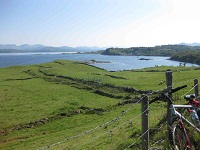
Photo by Jim C. March
Today’s prompt is three parts. Take about 20 minutes, or as much time as you need, for each section.
What aggravated you?
What frustrated you?
What made you laugh or cry?
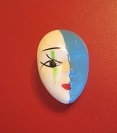
What made you lose your temper?
What was the worst thing that happened?
The best?
The most disturbing or weird?
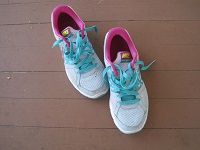
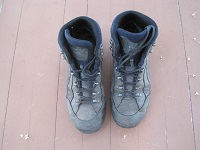
Write about something you should throw away but just can’t.
