Revision Is Your Friend. Really.

  • Guest Blogger Rachael Herron writes about one of my favorite topics: Revision:

    I’m in the middle of revision of a book, and I’m swimming in the water I love.

    What I adore about revision is this: I know the world. I invented it, after all! When I open the document, I’m right in the middle of something I understand. It’s much easier, for me, to drop in for hours and rest on the page. It’s also easier to come out of, to shake off.

    First drafts remain torture for me. Many writers love first drafts, and I can admit that sometimes, the writing of new words is glorious.

    You surprise yourself with a turn of phrase that you’re pretty sure is genius and has probably never been said before. The plot bends and a tree you wrote about comes to life and points a branched finger in a direction you never saw coming. Inspiration flows, hot and heavy.

    But maybe I’m just more of a down-to-earth gal. I love falling in love, but I love remaining in love more. Give me a passionate kiss before you take the trash out—that’s happiness to me. I like the comfort of What I Know. I like to tuck my feet under the thighs of my manuscript as we cuddle on the couch. I love knowing my manuscript likes the lights on till sleep-time, even though I prefer to read in the dark.

    Revision is both comfortable and exciting, like a sturdy marriage. Oh, I love the word sturdy. It’s prosaic, but it’s so me. My legs are sturdy. My emotions are, too. I love my books to be sturdy enough to lean on.

    And lean on them, I fall into them, really. Revisions are getting in the bed you made out of words and pulling up the covers. Then you roll around, making those words better, cleaner, more focused.

    Revision is when the REALLY big ideas show up. Then you have to move parts around, like those flat puzzle toys you slid pieces around on to make a picture, to make those new ideas fit. You might have to pry out some pieces and manufacture new ones. But then you click one piece left, and another one right, and suddenly, you’re looking at it. The whole picture. Your book.

    Ahhh. I’m reveling.

    Note from Marlene: I love Rachael’s enthusiasm about revision. If you dread revising, here’s a positive way to look at it: It’s an opportunity to look at your writing with new eyes; a prospect to improve your writing; to be sure your writing is clear, concise; to make sure you are saying what you really want to say.

    Best wishes with your revision projects.

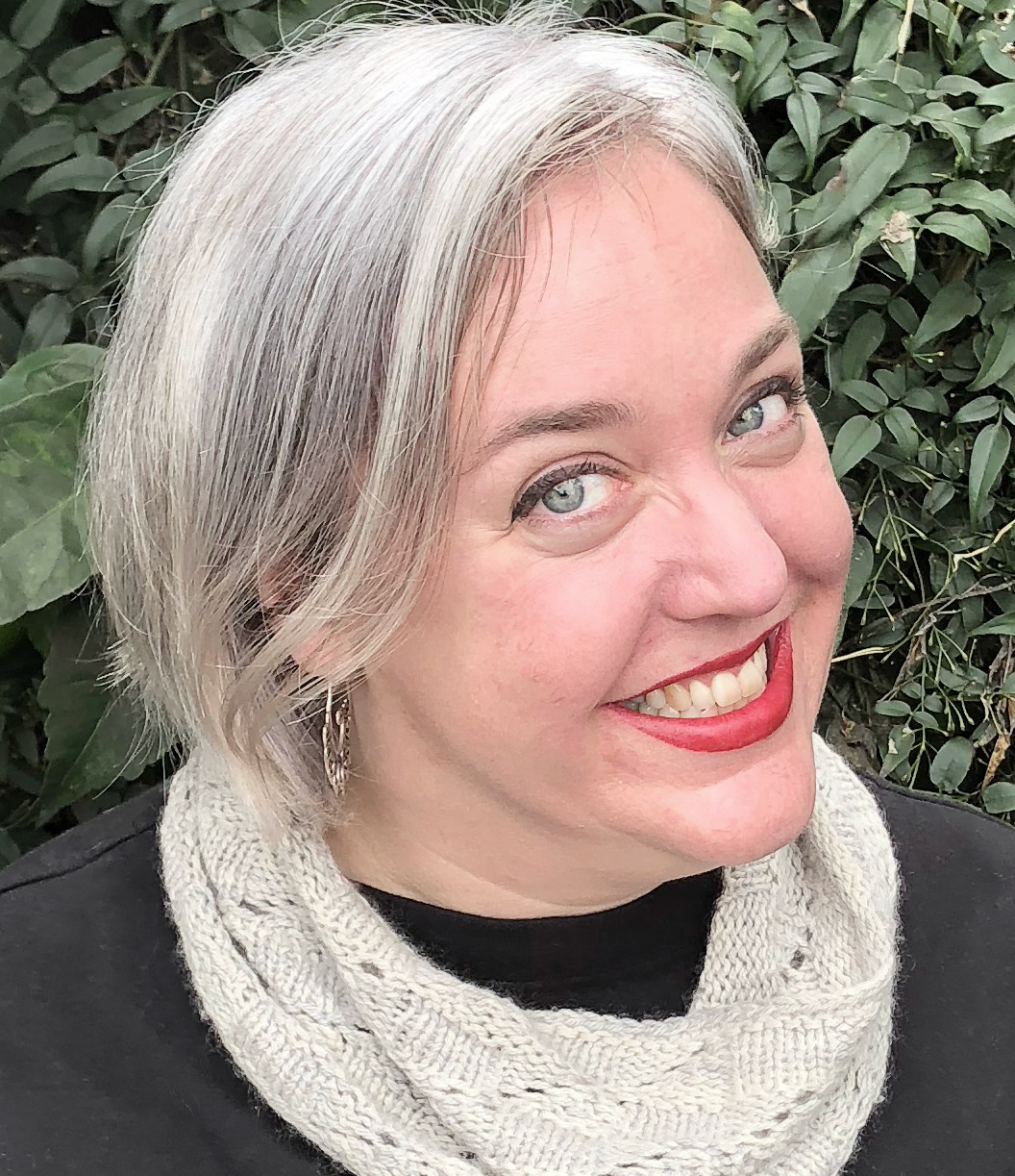
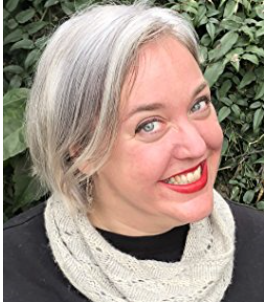
    Rachael Herron is the internationally bestselling author of more than two dozen books, including thriller (under R.H. Herron), mainstream fiction, feminist romance, memoir, and nonfiction about writing. She received her MFA in writing from Mills College, Oakland, and she teaches writing extension workshops at both UC Berkeley and Stanford. She is a proud member of the NaNoWriMo Writer’s Board.

    Links to other guest posts on The Write Spot Blog by Rachael Herron:

    Keeping the spark alive

    The biggest failure    

    Reviews for Rachael Herron’s books on The Write Spot Blog. Type “Rachael Herron” search box for reviews about her books.

  • Guest Blogger, Author Rachael Herron has this to say:

    Hi readers and writers,

    You’re an artist in some way.

    Yes, you. I see you there, hiding there in the back shaking your head. I just like to read books. I’m not creative.

    What do you do that brings you joy? What do you make? Cookies? Scarves? Do you sing in the car? Do you have a great eye for color?

    Yes, keep reading. You’re creative, and I’m so glad to talk to you.

    I’m back from my month off (oh, joy), and I’m so relieved to be back at work (I don’t relax well). I’m currently revising a thriller. It’s a departure for me, and it’s what I’ve wanted to write for years. The 911 dispatcher picks up the phone to find her daughter on the other end of the line, and it’s bad, y’all.

    I was a dispatcher for many years, and I always knew that when I didn’t work for the department anymore, I’d write about the long, tedious hours, and the pure adrenaline that pounds through your system when lives truly hang in the balance. I’d make it exciting and realistic.

    I wrote the thriller. It’s got a mother/daughter team that I just love. I adore the book.

    And man, is it kicking my ass.

    My incredible, intelligent, and very market-savvy agent is having me revise it again, to get it into the best shape possible before she tries to sell it. She’s right about everything that I need to fix, even though the last time I sent it to her, I was pretty sure it was just about perfect.

    It wasn’t.

    And every single day, I don’t want to work on it. It feels like doing the same thing over and over. What’s the point?

    Sometimes?

    It’s just hard to keep going, no matter what we’re in the middle of doing. The political climate is beating us down. Loss happens. Grief arises.

    Just getting through the day can be rough.

    • If you’re a mother, tomorrow will dawn, and you’ll have to get up to do it all over again, no matter how little sleep you get tonight.
    • If you’re a musician, you wonder if your best composition is behind you.
    • If you’re a writer, you struggle to string three words together, even though it’s all you want to do.
    • If you’re a mother and a musician and a writer, then I simply bow your magnificent direction. 🙏

    So that begs the question:

    How do we keep going?

    I had a chat with my friend Marrije this morning. I asked how her writing is going, and she held up a small blank book. She told me that every day, no matter what, she writes one page in it from the point of view of one of her characters. Often that work makes it into the novel she’s working on, and sometimes it’s background work to better understand her characters.

    But it’s her baseline.

    It’s the least she allows herself to do.

    It keeps her creative writing spark alive.

    I picture Marrije leaning down and blowing gently over the paper, once a day. Even if she has no time for anything else, the fact that she touched the work, that she blew until the ember glowed, keeps her going.

    And because she does that, the world speaks to her. She finds synchronicity in the happenings around her—she sees an article that inspires a new plot point, or she hears a conversation that illuminates a character trait.

    What’s your baseline?

    What’s the bare minimum you can decide to do daily to keep your spark alive?

    Marrije also pointed me to an AMAZING (truly) talk by the wondrous Austin Kleon with 10 Tips to Keep Going. You should watch this. You won’t regret the time spent. The end, especially, moved me.

    So, my friend, find your baseline. Name it. Know it.

    Then blow on that spark gently. Grow the ember to a flame and then to a blaze. Feel that warmth. You’re worth it.

    Note from Marlene: I watched the 26 minute  Austin Kleon video. Totally worth the time. 🙂


  • Today’s Guest Blogger is Rachael Herron, one of my favorite writers. Read one of her books and you’ll know why. More on that later.

    For now, you get to sneak a peek into how she gives priority to the problem, rather than to the answer.

    Hi Writers,

    I spent yesterday morning in the tub, thinking about writing. It wasn’t procrastination, I promise. It was actually the most delicious thing ever.

    Usually, I get up and have coffee and do yoga and write in my journal, and then I jump into work. I work all morning on writing and revision, and I use my afternoons to answer email, record my podcasts, teach, and coach.

    Yesterday, my “writing” took the form of thinking.

    And I was cold.

    So I got in the tub at ten in the morning.

    I lit a candle to help me think, for something to stare at. I brought in with me a notepad and a pencil (I love the Aquanotes waterproof writing pad) but I turned to my phone instead, making voice memos in Evernote. I didn’t look at Twitter or Facebook, I just thought. I allowed myself to go down deep internet rabbit holes (when was the last orphanage in Venice closed? What’s a debilitating disease that requires care but doesn’t immediately kill?).

    I paddled. I splashed.

    It was, pretty much, heaven.

    And it was part of the job.

    I want right now to remind you of that. If you’re stuck in the middle of something, PLAY.

    Write out all the frustrating questions you can’t figure out answers to and get in the bath with them. No bath? Go (alone!) to a hot tub place, bonus points if it’s outside and you can see the sky. Or go to the beach or lake, bundling up if it’s cold. Get your favorite splurge-y coffee drink and drive to the best view you can find. Tilt the seat back and just think.

    Meander in your mind. Wander around. If the answer stumps you, go in a different direction.

    Give priority to the problem, and not to the answer. I felt that yesterday — I kept trying to latch on to the “right” answer until I realized there wasn’t one, not really. I can write a book about anything. Poking around and trying to grab the “correct” book idea wasn’t going to work, but letting myself play with the problem did work.

    What you’re doing when you do this is priming your mind to keep working on it in the background, while you go to work or feed the kids or sleep at night. Your brain will keep working on this, the more you play with the ideas, and then one afternoon while you’re searching for the Tom’s of Maine that doesn’t suck (spearmint), the answer will drop into your mind. A flash of inspiration, yes, but it’s a flash that you set yourself up for.

    Remember to play. Writing is hard work, yes. I spend a lot of time acknowledging that it’s often a painful thing to push yourself to do. So if it’s been awfully hard lately, or if you just haven’t been getting anything done, give yourself permission to play.

    See what happens.

    Onward! Rachael

    Rachael’s Bio includes my favorites of her books.

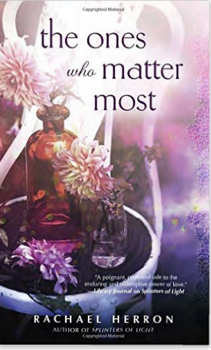
    Rachael Herron is the bestselling author of the novels The Ones Who Matter Most (named a 2016 Editor’s Pick by Library Journal), Splinters of Light and Pack Up the Moon (all from Penguin), the Darling Bay and the Cypress Hollow series, and the memoir, A Life in Stitches (Chronicle).

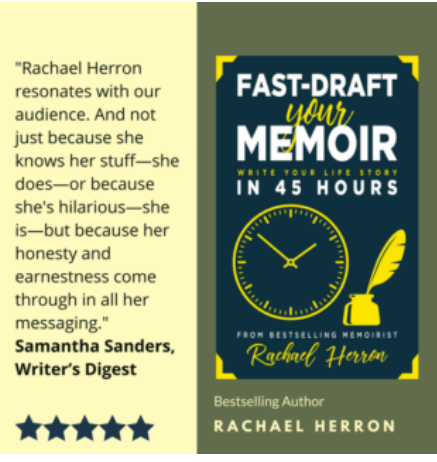
    Rachael’s latest book, Fast-Draft Your Memoir: Write Your Life Story in 45 Hours, is about writing quickly while still creating a compelling narrative arc out of the story only YOU can tell.


    She received her MFA in writing from Mills College, Oakland and she teaches writing in the extension programs at both UC Berkeley and Stanford. She’s proud to be a New Zealander as well as a US citizen, though her Kiwi accent only comes out when she’s very tired. She’s honored to be a member of the NaNoWriMo Writers Board. She is currently a Writer in Residence at Mills College.

  • Today’s Guest Blogger Rachael Herron has this to say about revision.

    I’m back in the middle of revision of a book, and I’m finally swimming in the water I love.

    What I adore about revision is this: I know the world. I invented it, after all! When I open the document, I’m right in the middle of something I understand. It’s much easier, for me, to drop in for hours and rest on the page. It’s also easier to come out of, to shake off.

    First drafts remain torture for me. So many of you love the first drafts, and I can admit that sometimes, the writing of new words is glorious. You surprise yourself with a turn of phrase that you’re pretty sure is genius and has probably never been said before. The plot bends and a tree you wrote about comes to life and points a branched finger in a direction you never saw coming. Inspiration flows, hot and heavy.

    But maybe I’m just more of a down-to-earth gal. I love falling in love, but I love remaining in love more. Give me a passionate kiss before you take the trash out—that’s happiness to me. I like the comfort of What I Know. I like to tuck my feet under the thighs of my manuscript as we cuddle on the couch. I love knowing my manuscript likes the lights on till sleep-time, even though I prefer to read in the dark.

    Revision is both comfortable and exciting, like a sturdy marriage. Oh, I love the word sturdy. It’s prosaic, but it’s so me. My legs are sturdy. My emotions are, too. I love my books to be sturdy enough to lean on.

    And lean on them, I do. I fall into them, really. Revisions are getting in the bed you made of out words and pulling up the covers. Then you roll around, making those words better, cleaner, more focused.

    Revision is when the REALLY big ideas show up. Then you have to move parts around, like those flat puzzle toys you slid pieces around on to make a picture, to make those new ideas fit. You might have to pry out some pieces and manufacture new ones. But then you click one piece left, and another one right, and suddenly, you’re looking at it. The whole picture. Your book.

    Ahhh. I’m reveling.

    Note from Marlene:  Yes! I also love revising. Moving parts around, like a puzzle = Exactly! And the euphoria when the pieces fit = Joy!

    Rachael Herron is the bestselling author of the novels The Ones Who Matter Most (named a 2016 Editor’s Pick by Library Journal), Splinters of Light and Pack Up the Moon (all from Penguin), the Darling Bay and the Cypress Hollow series, and the memoir, A Life in Stitches (Chronicle). She received her MFA in writing from Mills College, Oakland and she teaches writing in the extension programs at both UC Berkeley and Stanford. She’s proud to be a New Zealander as well as a US citizen, though her Kiwi accent only comes out when she’s very tired. She’s honored to be a member of the NaNoWriMo Writers Board. She is currently a Writer in Residence at Mills College.

  • Today’s Guest Blogger post is from one of my favorite authors, Rachael Herron.

    Rachael writes:

    A comment by David Sedaris on a podcast gave me an a-ha moment recently, and I wanted to share it with you.

    I’d always wondered how he got his essays so brilliantly specific—filled with the kind of particulars that put you right into the spot where he stands.

    From Me Talk Pretty One Day, “For the first twenty years of my life, I rocked myself to sleep. It was a harmless enough hobby, but eventually, I had to give it up. Throughout the next twenty-two years I lay still and discovered that after a few minutes I could drop off with no problem. Follow seven beers with a couple of scotches and a thimble of good marijuana, and it’s funny how sleep just sort of comes on its own. Often I never even made it to the bed. I’d squat down to pet the cat and wake up on the floor eight hours later, having lost a perfectly good excuse to change my clothes. I’m now told that this is not called “going to sleep” but rather “passing out,” a phrase that carries a distinct hint of judgment.”

    His humor comes from the details.

    But how did he remember those details? When you’re reading his work, you’re right there, exactly with him.

    I have a legendarily bad memory. This is why I blog and journal.

    But I’ve been stumped in the past as to how to catch the things that flit by, the words I want to remember, the colors of the sunset I’m in front of, the smell from the Korean barbecue on the corner.

    I’m not willing to drag out my big ole journal and plop down on the sidewalk to catch my ideas and put them into beautiful sentences. Therefore, I lose a lot of them. I want to live in the moment, not next to it.

    The tip David Sedaris gave me? He jots down snippets, and then later transcribes and expands them in his diary.

    I’ve often jotted snippets into a tiny Moleskine (because those can seriously go through the washer and come out with your words intact — ask me how I know). And I journal.

    But combining the two — grabbing the few words and expanding them later — this is a really powerful combination that’s netted me some great stuff recently.

    So I’ve taken to carrying a purse, even though I hate to do so. I find that tapping ideas into my phone doesn’t have the same feel as grabbing a notebook and pen and scribbling the words that lead to other ideas.

    Of course, I don’t stop the party. I don’t announce that I need quiet for my creative inspiration. My goal is that no one notices what I’m doing. It’s the bank robbery of journaling — get in and get out before anyone sees your face.

  • A conversation with Rachael Herron, author of Herron. The Ones Who Matter MostThe Ones Who Matter Most.

    “How did you get the idea for this book?”

    “The original idea for any of my novels usually gets buried so deep that by the time I’ve finished writing, I can barely remember what the first ideas was. This book, though, was different. The first scene was my original idea.”

    “Do you always know the endings of your novels when you start them?”

    “I wish! I know writers who know their endings and aim for them like marksmen. Rather than apples to be hit with arrows, though, my endings are always asymptotes. I write toward them forever, getting closer and closer but never quite getting there. Usually I have to revise the whole book (minus the ending) a few times until I figure out what should really happen.”

    Excerpted from the Conversation Guide at the end of Rachael Herron‘s book, The Ones Who Matter Most.

  • Guest Blogger Rachael Herron writes about successes and failures.

    It’s December! I know this for a fact (I just rechecked the calendar). No matter which hemisphere you’re in, regardless of season, this year is getting ready for her final bow. It’s completely impossible that 2015 is almost over because about seventeen minutes ago the year was just starting, full of potential and wonder and pale spring-green hope.

    I’m prone to doing what everyone else does at the end of a year: weighing the past year’s successes and failures against each other.

    But you know what? Failure weighs way more than success. When you put things on that imaginary scale, each small failure weighs as much as a wheelbarrow full of rocks while each huge success weighs almost nothing. Success makes you lighter—it makes you able to float for a minute or even an hour—while failure drags you so low your chin scrapes the pavement.

    That? Is not fair. I don’t know about you, but I can have a million successes each day (I woke up alive! I made the best cup of coffee known to mankind! I wrote a sentence I could be proud of and wouldn’t mind other people reading! I knitted a row without stabbing myself with the needle and bleeding to death!) but that one thing I screw up makes me feel like the amazing things don’t count. The scale isn’t affected by the airy happy things I place on the success side, and then it cracks in half with the weight of that awkwardly worded email I sent in which I accidentally hurt someone’s feelings.

    So hey. Let’s do things differently this year.

    Throw away the scale.

    Let’s NOT tally up our successes and failures. Failure will win because it’s big and loud and hulk-smashy. Success (with its fairy wings and gossamer breath) will get pummeled and then go hide in the bathroom to cry.

    Screw that.

    If you just have to make a year-end tally, write down what you’re proud of this year. Things like:
    •    At your day job, you didn’t smack a single person.
    •    Your blueberry muffins disappear from the kitchen within seconds.
    •    You made someone laugh until they cried.
    •    Your socks matched more days than they didn’t.
    •    You started that novel, and now you have more words written than you did last year.

    If your fingers get itchy to list the failures, DON’T. Break the pencil and marvel at your own strength. You already spent enough time on what didn’t go well—I know you did. From enormous impossible things like not saying the right thing before a loved one died to tiny silly things like only remembering to put eyeliner on one eye: You have spent enough time hurting.

    Forgive yourself like you would forgive the person you love most. Don’t spend time “learning” from it — you did that already without even having to try. Be kind to yourself. In three weeks let’s turn the calendar page without fanfare. Last January we thought we had a whole year to finally get things right, but come on. What a burden to place on a brand new year. What was really true was that we noticed where we were in time. We can do that any old day. Let’s do that today, December 10th. Or September 17th. Or February 3rd.

    Every day is a good day to notice where you are, right now.

    Celebrate your successes because they are daily and many and they are spectacular.

    Rachael HerronRACHAEL HERRON is the bestselling author of the novel Splinters of Light and Pack Up the Moon (both from Penguin), the five-book Cypress Hollow series, and the memoir, A Life in Stitches. She received her MFA in writing from Mills College, and when she’s not busy writing, she’s working her other full-time job as a 911 fire/medical dispatcher for a Bay Area fire department. She’s a New Zealand citizen as well as an American, and she is a proud member of the NaNoWriMo Writers Board. She can probably play along with you on the ukulele.

    Sign up for Rachael Herron’s Blog, so you don’t miss a single episode in the life of author Rachael Herron.

  • I love gorgeous writing and wonder how authors produce writing so vivid you feel as if you are in their world.

    One idea is to watch what people really do when talking, use sensory detail and be specific.

    For example, author Rachael Herron creates believable fictional characters. There is so much to like about her writing. One tool she employs well is the actions her characters engage in while talking. The dialogue develops character and moves the story along. The action makes the characters believable. Here are some examples from “How to Knit a Heart Back Home.

    Owen twisted the [plastic] spoon in his fingers. He would not rub the scar on his hip, which suddenly burned.

    Lucy took the now mangled plastic spoon out of his hand and then threaded her fingers through his.

    Dropping his eyes from hers, Owen watched Lucy’s pulse flicker rapidly in the hollow of her throat. For a moment there was no sound but the crash of the waves below.

    Back to me. . . Oh, my. I can see and hear and feel . . . the mangled plastic spoon, feel the burning scar, see the hollow of her throat and hear the crashing waves.

    Action: twisted, dropping, watched, threaded, flicker, crash

    Specific: plastic spoon, hip

    Sensory detail: burn, sound

    Your turn: give us examples of exquisite writing that use strong verbs, is specific and employs sensory detail. Share your finds with us.

    Write a scene or a vignette: a freewrite using action words (strong verbs), be specific (sycamore, not tree), sensory detail (sight, hearing, taste, touch, smell). Herron. How to Knit A Heart

    Just write!


  • If we become honest in our talking and dealing with people, if we go deep and tell the genuine truth, will that carry over to our writing? And will we then go deep and become authentic in our writing?

    The temptation is to not go where it hurts. The temptation is to lie in order to resist the painful truth.

    I recently read Pack Up the Moon by Rachael Herron and The Interestings by Meg Wolitzer. Both of these authors went deep in their writing and the resulting books are genuine, authentic and fabulous reads. . . where the characters and their problems deeply touched me.  Rachael and Meg did not resist writing about painful truths.

    How about you? Can you recommend books that deeply touched you?  What other authors go deep in their writing? I can think of Jodi Piccoult. Your turn.

  • Rachael Herron

    The biggest failure . . .

    Guest Blogger:

    Description: Guest Blogger Rachael Herron talks about the biggest failure. . .

    Last night I went out with (as I think of her) my Young Writer friend. My favorite barista at my beloved but now defunct cafe, she has stars in her eyes about writing, and is applying to MFA programs all over the country. We ate sushi and talked about writing, and I remembered myself in her.

    When I was 25 — her age — I packed up my tiny Ford Festiva with its roller-skate wheels and headed to Mills for my MFA. I was going to light the world on fire with my prose. Or at least, I was going to write. And I lit a lot of things on fire, namely the cigarettes I was still smoking back then. I was giving myself two years in the ivory tower, two years to really focus on craft.

    Then, for those two years, I avoided writing as much as possible. I did the bare minimum, because that’s what we do sometimes, when it comes to what we love most, right?

    Artists don’t draw. Musicians don’t play. Writers don’t write. If we write, we fail (because when we’re learning something, DOING anything at all, we fail. Just part of the process). And as artists, we strive for perfection and failing is really not ideal.

    So we don’t write. I managed my 150 pages of a terrible novel for my thesis. I took an amazing dialogue class in which we read a book famous for dialogue every week and then wrote a three page scene in the voice of that writer (that did more for my skill with dialogue than anything else). I took a poetry class which almost killed me.

    Then I graduated and spent the next ten years also avoiding failure by not writing. Not writing = safe! Not writing = dreaming about the perfect words you’d string together if you just had time.

    What I didn’t realize was this:

    Not writing was the biggest failure of all. 

    No matter how spectacularly I screwed up in the writing itself (which I did! Still do! Spectacularly!), when I finally started to write everyday (thanks, NaNoWriMo 2006), I was succeeding!

    And seven years (JEESH!) later, I’m still writing, all the time. Every day. Even when I fail, I win.

    The job has gotten harder the more I learn. A rank amateur says LOOK I WROTE A BOOK YOU SHOULD READ IT OMG — a writer who’s spent years actively learning how to craft emotion out of words says, Well, you don’t have to read it. It’s the best I could do but it’s still not as good as Murakami. Maybe someday. *kicks rock* (Also known as the Dunning-Kruger effect *see below.)

    I’ve been both of those people. (Admission: I’ve been both of those people this WEEK.)

    But now, after publishing six books with two more on their way to shelves, I know I can do it. And I’ve changed my website a little bit because I want y’all to see that book up there to the left with its quotes and overview and all that because I’m proud of it and I’m excited for it.

    Pack Up the Moon. It’s literally the book of my heart, and it’s available for preorder right now. I’ll be releasing excerpts and reasons for you to preorder at my website, yarnagogo (gifts! prizes! kisses on the mouth if I see you IRL and you want one!) but the real truth is this: It’s a good book. It will make you cry, and then–I hope–it will help heal you a little bit. And maybe it will encourage you to write that book you have been wanting to write.

    I love the stars in my Young Writer friend’s eyes. The funny thing is I still have them, too.

    * “The Dunning–Kruger effect is a cognitive bias in which unskilled individuals suffer from illusory superiority mistakenly rating their ability much higher than average . . . Actual competence may weaken self-confidence, as competent individuals may falsely assume that others have an equivalent understanding.”