I Scream, You Scream

  • Memorable writing that sparks imagination. Lean in. Hear the writer’s voice on the page.

    I Scream, You Scream

    By Nona Smith

    It’s been well over a year since I’ve done any grocery shopping at Safeway. Early on in the pandemic, it was Harvest, our other local supermarket, who quickly adopted safety precautions: it made mask-wearing mandatory, limited the number of shoppers inside the store at any given time, provided handwashing stations outside, and offered free Latex gloves. Safeway was slow to adopt protective measures, making me feel unsafe in Safeway.

    Fast forward eighteen months, and I’m fully vaccinated and in need of a cake mix Harvest doesn’t carry. Being as health conscious as it is, the shelves in the baking section at Harvest are laden with organic, gluten-free, paleo, KETO, dairy-free cake mixes. There are only a handful of non-organic, full-on gluten, white sugar mixes on the very bottom shelf. I’m guessing their placement there is to give the consumer time to re-think their unhealthy choice while bending over to reach one of those boxes. So, I’m off to Safeway to find my cake mix.

    Of course, it’s there, nuzzled amongst dozens of others of its ilk, within easy reach. I pluck it from the shelf and decide to do the rest of my grocery shopping while I’m already in the store. I pull out my grocery list.

    When all the items are checked off, I crumple the list and stuff it into my purse. Then I go in search of the shortest check-out line, which––because shoppers are encouraged to stand on the six-feet-apart circles painted on the store floor––brings me half-way down the ice cream section of a freezer aisle. And, because I have nothing else to do while waiting for the line to move, I begin perusing the freezer cases and discover an ice cream trend. The highest end ice creams––Haagen-Dazs, Ben and Jerrys, Talienti––have adopted “layering” as a new marketing gimmick. Only pint cartons are offered this way: four layers of different textures and flavors. I’m imagining plunging my ice cream scoop far enough down into the container to reach all four layers at the same time. Nope, I determine, it can’t be done. One would need a spoon to get the effect the product promises. I suspect the idea really is, to sell more product by encouraging shoppers to have their very own pint to dip their very own spoon into. I can’t imagine this trend will last beyond the summer.

    The line moves, and I find myself in front of a section containing lesser-known brands, such as Fat Boy and Fat Boy Junior. I’m wondering what kind of market research led someone to name their product that when the line shifts again.

     Now I’m in the popsicle section and looking at a product that reminds me of the summers of my childhood. I can almost hear the tinkling notes of the white ice cream truck as it announces its tour through my neighborhood. And here it is in Safeway’s freezer: the Good Humor Creamsicle, orange popsicle on the outside, velvety vanilla ice cream on the inside. I’m tempted to put a package in my shopping cart. The only thing that stops me is knowing the Creamsicles would melt before I got out of the store.

    Another five minutes pass, and I’m now standing in that spot between the end of the aisle and the conveyer belt, leaving enough space for shoppers to pass through with their carts. An idea strikes me, and I reach into my purse for the crumpled shopping list and a pen. Smoothing out the list, I jot some notes about what I’ve just discovered. As a writer of personal essay, I know that anything––and everything––is fodder for a story. Why not ice cream?

    By the time I’m wheeling my cart out of the store, I’ve decided to make a stop at Harvest on my way home and do a little market research of my own.

    Standing in front of the ice cream freezer at Harvest, it’s just as I suspected. Yes, the high-end, four layered, products are there, but there’s no sign of Fat Boy or his son. Instead, there’s a product called Skinny Cow. Also, it appears there’s an equal amount of low fat, sugar-free, nonfat, nondairy ice creams made from soy, almond or coconut milk as those made from actual full-fat cow’s milk. The Rebel label promises “high fat/low carbs” for people on a KETO diet. There’s even an ice cream designed for kids who don’t like vegetables. It’s called Peekaboo and is made with “hidden veggies:” vanilla ice cream with zucchini, chocolate with cauliflower. Who knew? The freezer is filled with organic, health-conscious choices, seemingly designed to keep the Harvest shopper living a nutritious lifestyle.

    I tuck the note-filled grocery list back into my purse and head home. Maybe one day I’ll write a piece about ice cream.

    Nona Smith is the author of Stuffed: Emptying the Hoarders’ Nest and numerous other short stories published in various anthologies, including The Write Spot: Musings and Ravings From a Pandemic Year, journals and the St. Petersburg Times (now Tampa Bay Times.) Currently, she is writing a mystery about a woman named Emma whose dear friend goes missing. In her search for her friend, Emma finds herself. Nona writes personal essays and memoir pieces as well as fiction, always with an eye towards finding the humor in situations. She lives on the Mendocino coast with her husband Art and two mischievous cats.

    Stuffed: Emptying the Hoarders’ Nest and The Write Spot: Musings and Ravings From a Pandemic Year are available at Gallery Bookshop and on Amazon.


  • By Susan Bono

    “That’s quite a sack of rocks you’re carrying, sweetie,” my father’s friend Bruce said more than once during phone calls last year. It was his way of acknowledging how heavily Dad’s poor health, hard-headedness and self-imposed isolation weighed on me. But I also took it as a tribute to Dad’s stubbornness and my strength, too.

    “Dumb as a rock” never made much sense to me, since stone strikes me as having its own unassailable intelligence. Its ability to endure illustrates its genius. I have never believed in the ability to factor equations or compose sonnets was proof of brain power, although I shared with Dad the idea that someone with rocks in his head was lacking in foresight and flexibility. Rocks may be smart, but they are slow. Time measured in stone is something else again.

    There were moments during my dad’s dying that were as slow as serpentine, sandstone, rose quartz, chert. His unseeing eyes were obsidian, and the pauses between breaths were long enough to form fossils. But just after that great wave rolled down from the crown of his head, darkening the air around him so his spirit glowed like a white shell at the bottom of a silty river, a tear slid from beneath his closed eyelids. That’s when the sack of rocks fell empty at my feet and I was surrounded by the tumult of released wings.

    Originally published in The Flashpoints 2008 issue of Tiny Lights. This issue was dedicated to the memory of Susan Bono’s father, Morris N. Zahl (12/24/24-3/22/09), whose light guides Susan.

    Susan Bono, a California-born teacher, freelance editor, and short-form memoirist, has facilitated writing workshops since 1993, helping hundreds of writers find and develop their voices. Her work has appeared online, on stage, in newspapers, on the radio, and in anthologies, including The Write Spot series.

    Susan is the author of “What Have We Here: Essays About Keeping House and Finding Home.”

    From 1995-2015, she edited and published a small press magazine called Tiny Lights: A Journal of Personal Narrative, as well as the online component that included quarterly postings of micro essays and a monthly forum dedicated to craft and process.

    She was on the board of the Mendocino Coast Writers’ Conference for more than a decade and was editor-in-chief of their journal, the Noyo River Review, for eight years. Susan often writes about domestic life set in her small town of Petaluma.

  • Today’s post is inspired by Nancy Julien Kopp’s blog post about using sound in writing.

    Nancy wrote:

    This morning, I was catching up on email when I heard the whine of a train whistle, blown several times. I wondered if it was the historic Union Pacific train, known as Big Boy, making its way across Kansas this week in celebration of 150 years of the Transcontinental Railroad. It was due to stop here in our town at 9:30 a.m. 

    The sound of that whistle made me stop and listen. I always liked to hear train whistles when I was a child. We lived across the street from the railroad tracks, so we were treated to that arresting sound on a frequent basis. I can remember being in bed on a summer night, windows open, hoping for the train to come by and announce its presence. When I did hear it, I wondered where it was going. My own world in those days was quite small, but I knew a train went to many places.

    What do you think of when you hear a train’s whistle? Does it trigger any memories for you? Do you think of it as mournful or cheerful? Is it different at nighttime when the train moves through the darkness than it is on a sunny day? 

    Readers knows what a train whistle sounds like, so you don’t need to write “The train blew its whistle.” You can enlarge that thought to make it more interesting: The train’s whistle whined loudly as it passed by the crossing gates, growing dimmer and dimmer as it sped down the track. 

    Write a sentence or two for each of the items below, using sensory detail.

    jet plane

    waves on the shore

    ball hitting a baseball bat

    washing machine

    school bell

    air brakes on a bus

    popcorn popping

    crying child

    church bells

    piano

    cow mooing

    birdsong

    Note from Marlene: Adding sensory details enhance the story and help readers “see” the scene and the characters.

    The Magic of Sensory Words by Enchanting Marketing.

    Write Spot Posts about sensory detail:

    The neurological impact of sensory detail.

    Imagery and sensory detail ala Adair Lara Prompt #277

    Sensory Detail – Sound

    Sensory Detail

    Using sensory detail in writing.

    See more posts about using the senses in writing by typing “sensory detail” in the Search Box on The Write Spot Blog.

  • Today’s Guest Blogger Lara Zielin:

          I often have the feeling I’m in trouble

          It’s this pervasive unease, like I’m doing something wrong.

          The problem is, I don’t know WHAT I’m doing wrong. Which means that if or when I get in trouble, it’s going to be a terrible surprise. 

          Because of this, I have my antennae up all day, scanning, looking, wondering what I could be doing that’s awful. I mind my P’s and Q’s and I try so hard to do everything right. I try to stay busy.

          I try to be so, so good. 

          But some part of me knows it won’t be enough. Trouble is still a-comin’. 

          Which means by the time I get to the end of the day, there is this exhausted part of me that is BEYOND READY to feel safe. To feel good enough. To feel comforted. 

          That part of me wants to eat ALL the carbs. And drink. And scroll Facebook. And numb, numb, numb. Because it’s painful out there, people. 

          This feeling has only gotten worse during the COVID-19 pandemic. 

          Without regular face-to-face check-ins with colleagues and friends, the gnawing unease that I’ve done something wrong only grows. My hankering for carbs only grows. My addiction to Netflix and my phone only grows. 

          That is, until I stop running and face the darkness. Until I open my arms to the fear and to the pain of thinking I’m not enough and just … sit with it. 

          I’ve been doing a LOT of writing around this lately. And I’m here for you if you want to do some writing around this, too.

          Instead of trying to run from the darkness, let’s invite it in. Let’s listen to it. And let’s meet it with love. 

          Because that’s the ONLY thing that’s going to help us feel better, feel lighter, and feel whole. If we run from the darkness, it will only continue to chase us. But if we embrace it, we can let it complete us. 
          To help us do just that, Lara is leading a free one-hour online group writing time on Thursday, April 23. 
          

    Note from Marlene: If you need ideas for relaxing and de-stressing, here ya go. You might already be doing some of these.

    I’m working on the next Write Spot book and will include these self-care tips and more!

    Creativity Coaching

    Alisha Wielfaert 

    Suzanne Murray

    Hypnotherapy

    Ted A. Moreno

    Inspiration

    Hands Free Mama – Rachel Macy Stafford

    Meditate

    Gaiam

    Headspace

    Insight Timer

    Mindful

    Movement

    Dance

    Ten minute Qi Gong

    Yoga

    And, of course. Write. Write what you know. Write what you want to know. Just write. If you need writing prompts, take a look at The Write Spot Blog.

  • Why write your story? So you can move on.

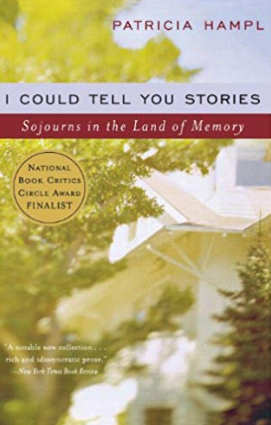
    Today’s post is inspired by Patricia Hampl’s book, “I Could Tell You Stories: Sojourn in the Land of Memory.”

    Tell your story so you can move on.

    “When a writer keeps things inside, it becomes a ball of tangled yarn. As each story is told, the ball becomes untangled. Writing from memory can help us to let go of those stories we tell over and over again. We may not even need to tell them again [after writing about them].”

    Note from Marlene: I think writing from memory can also be a type of self-help . . . a vehicle for transporting oneself back in time and getting in touch with what really happened.

    Patricia Hampl is an American memoirist, writer, lecturer, and educator. She teaches in the MFA program at the University of Minnesota at Minneapolis and is one of the founding members of the Loft Literary Center. Source: Wikipedia

    How to write without adding trauma

    Does your heart hurt?

    Writing about difficult times in your life by guest blogger Nancy Julien Kopp.

  • The Write Spot Blog is all about writing: Writing Prompts to inspire you; Just Write tidbits to motivate you; Quotes to let you know others are in the same boat as you; Places to Submit to get your work out there; Book Reviews to share authors’ work; Guest Posts for all kinds of writing-related things.

    Today’s Guest Blog Post by Suzanne Murray talks about increasing your creativity by relaxing. Sounds easy, doesn’t it? But what about cortisol, adrenaline, and epigenetics? Factor those in, and it becomes apparent that relaxation isn’t as easy as drifting in a hammock.

    Fortunately, Suzanne Murray offers strategies to help us learn to relax. 

    HOW CREATIVITY CAN HELP US RELAX

    We all know that relaxation makes us and our bodies feel good whereas stress causes us to tense up and feel less that optimum. New scientific research shows just how important relaxing our bodies and minds is.

    The emerging science of epigenetics shows that our genetic expression is not permanently fixed at birth, but actually evolves as we grow and learn. Environmental factors including nutrition, stress and our emotional responses can affect how our genes express themselves without changing the basic blueprint of our DNA, the genetic material in our cells.

    When we are stressed our genes produce hormones associated with fight or flight like adrenalin and cortisol that are associated with aging and making us more susceptible to disease. When we are relaxed and feeling good our genes produce chemistry that boosts our immune system and helps with cellular repair and growth. 

    A study looking at mindfulness practices like meditation, yoga, breath work, and other relaxation techniques, showed that we can actually “turn on” disease-preventing genes and “turn-off” disease-causing genes through relaxing. Research on the energy psychology modality EFT (Emotional Freedom Techniques), an easy to use self-help strategy that combines western psychology with Chinese acupressure, found that an hour session of EFT lowered cortisol levels by 24 percent.

    I’d like to add creativity to ways we can relax as well as develop more of our potential.

    Creativity is really a form of mindfulness since it puts us in the flow of the moment and feels good. Adult coloring books have been shown to reduce stress. I like doodling or free writing where you just let the words flow out of the pen with no thought to what you are writing.

    Bringing play to whatever process you are working with and letting go of attachment to outcome is important.

    Stress so often stems from the fact that our mind has leapt ahead with worry about the future or is chewing over something that happened in the past. When we do things that bring us into the moment we naturally relax.

    Find what works for you. Play with it and see if you feel better.

    Suzanne Murray is a gifted creativity and writing coach, soul-based life coach, writer, poet, EFT practitioner and intuitive healer committed to empowering others to find the freedom to ignite their creative fire, unleash their imagination and engage their creative expression in every area of their lives. She works with simple, powerful techniques to help clear whatever gets in the way and creates a safe and sacred space for your creative and soulful life to blossom. She provides an experience of the joy and beauty that comes from embracing your gifts and expressing them in the world. With a lifelong connection to the natural world, she enjoys sharing the grace and wonder that Nature can bring to your life and creativity

     Writing and Creativity in Nature
    One Day Workshop Point Reyes CA
    April 22, 2017, 10 am to 4 pm

    Spending time in nature is good for our health, enhances our creative capacities and increases our general sense of wellbeing. It can help us enter the flow. Join me for this one day workshop where we will work with our creativity in the beauty of nature.

    EFT (Emotional Freedom Techniques)

    I’ve been working with EFT in new ways that allow us to laser in on the issue and shift it at the core. We often make significant shifts in a single session. Sessions are available by phone and Skype


    Original posted on Suzanne’s April 2, 2017 Blog


  • irlThursdays are Guest Bloggers days on The Write Spot Blog. If you have tips about the craft or the business of writing, you could be a guest blogger. Email your idea to Marlene.

    Perhaps you have tips about:

    ~How to find time to write

    ~ Ways to develop characters

    ~How to incorporate location in writing

    ~Writing Resources

    ~Helpful writing websites

    ~How to research

    ~How to write realistic action during a dialogue scene

    Being a guest blogger is a great way to share what you know about writing. Think of it like writing an article for a writing magazine. What is your special writing tip?

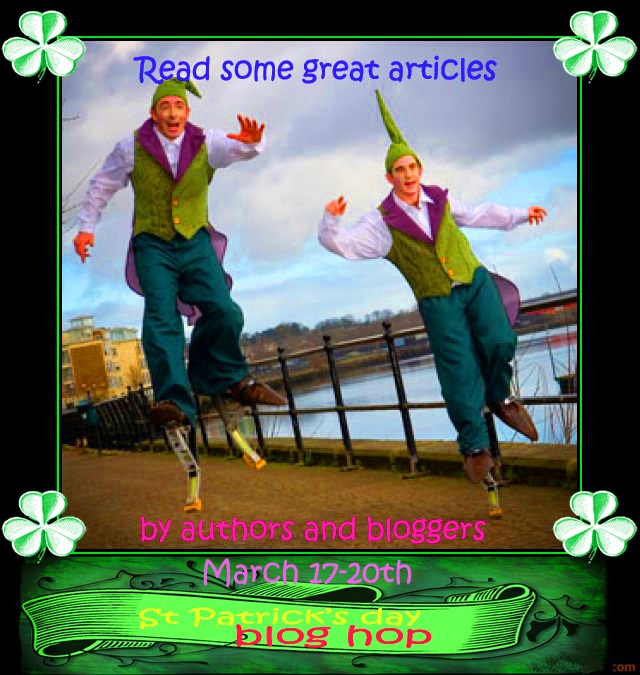
    BLOG HOP – Before participating as a Blog Hopper, I wondered what that meant. I could not picture it. Right now, I’m part of a St. Patrick’s Day Blog Hop, organized by author and blogger Francis H. Powell. Here’s how it works:

    Click on Blog Hop. You will be swiftly transported to a landing page that Francis created for this blog hop. Scroll down. Click on a blogger’s name and quicker than a leprechaun can tip his hat, you can explore the terrain of an entrepreneurial blogger.

    Bloggers: Contact Marlene or Francis to join us in our next Blog Hop. It’s really easy! And a fun way to get to know other bloggers and writers.

    March.Blog Hop

  • Guest Blogger Ron Salisbury talks about MFA – Master of Fine Arts writing programs.

    Everywhere I go, I’m asked if I think the universities stifle writers. My opinion is that they don’t stifle enough of them. There’s many a best seller that could have been prevented by a good teacher.”–Flannery O’Connor

    Flannery may be a little tough but not far wrong. What will you do with your MFA in poetry or fiction or non-fiction or children’s literature? Is it different from what you thought you would do before you started that MFA program?

    The proliferation of Master of Fine Arts Writing Programs in the United States (some 200 as of this writing) requires new crops of students every year; cannon fodder, inductees to charge over the lip of the trench into the guns of Admission Departments and Student Loans without much chance of becoming that famous author, a goal which is implied but never stated by these programs. (Is that what you thought you’d learn at that program?)

    When I started my MFA – Poetry program in 2013, I had few of those allusions given my age (70) and narrative style of poetry. I was not going to be offered that tenure track teaching position in some MFA program. At best, I would get some adjunct position. (the typical pay for a semester class as an adjunct is $2000 to $3000 with no guarantee of any future work) And would hope to worm my way into the hearts and pockets of the program directors and students. Last year the United States graduated approximately 2,000 poetry MFAs, 2,000 fiction and between 500 to 1,000 non-fiction and other. And there were less than forty tenure tract creative writing positions available in those universities and colleges. But, I did naively expect that in my program I would be among poets striving to become better poets. What I have mostly found is a cadre of wonderful people learning “how” to write poetry. My observations have been generally supported by other writers in other programs throughout the United States.

    To  satisfy the body count necessary for these 200+ programs, the threshold has been considerably lowered. If your goal is to teach in an MFA program, anecdotally, minimal requirements today are the MFA degree and two published books at least. If one or both books were contest winners, so much the better. Given the proliferation of book publishing options today such as high quality appearing print-on-demand and self-published, the vetting process for MFA instructors—ones skilled and with enough notoriety to attract students—has become more difficult for universities. It used to be just a book from a good publisher and you could be considered, then it became the book and the MFA. Now the field is murky. Which has led to an entirely new phenomenon, the PhD in Creative Writing which has begun to propagate much as the MFA programs did fifteen-twenty years ago (today, about 32 programs). It would not be a surprise to discover in less than ten years that the minimum requirement to be considered as an instructor in an MFA program is the book or two and the Creative Writing PhD. So, if you have a goal to obtain an MFA in Creative Writing and do more with it than hang it on your wall, continue to work at Starbucks or teach two classes of freshman composition at some Junior College, hurry.

    Your Turn: Should you or shouldn’t you join an MFA program? Have you done it? What do you think? Weigh in. Post your writing on The Write Spot Blog.

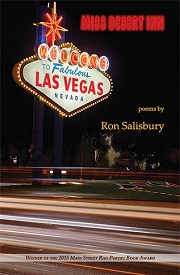
    Miss Desert Inn. Salisbury.180Ron Salisbury lives in  San Diego, CA where he continues to publish, write and study in San Diego State University’s Master of Fine Arts program, Creative Writing. Publications and awards include: Eclipse, The Cape Reader, Serving House Journal, Alaska Quarterly Review, Spitball, Soundings East, The Briar Cliff Review, Hiram Poetry Review, A Year in Ink, etc; Semi Finalist for the Anthony Hecht Poetry Prize – 2012, Finalist for the ABZ First Book Contest – 2014, First Runner-up for the Brittingham and Pollak Prize in Poetry – 2014, Winner of Main Street Rag’s 2015 Poetry Prize

    Miss Desert Inn published November 2015.


  • Excerpt from The Martian Chronicles by Ray Bradbury:There was a smell of Time in the air tonight.

    What did Time smell like? Like dust and clocks and people. And if you wondered what Time sounded like, it sounded like water running in a dark cave and voices crying and dirt dropping down upon hollow box lids, and rain. Time looked like snow dropping silently into a black room or it looked like a silent film in an ancient theatre one hundred billion faces falling like those New Year balloons down and down into nothing. That was how Time smelled and looked and sounded.

    HourglassMarlene’s Musings: I love the idea of writing what Time smells like. . . sounds like . . . looks like. . .

    Your Turn: Choose an item, an object, a thing, that interests you. . . what does it smell like? sound like? look like?

  • Lola.200Writers! Need to build your cred?   . . . or, as they say, need to build your platform? One way is to be a guest blogger. The Write Spot Blog seeks guest bloggers. ~600 words, something inspiring and informative for writers. Contact Marlene if interested. mcullen – at – comcast.net