If you could live one day without consequences, what would you (or your fictional character) do?

If you could live one day without consequences, what would you (or your fictional character) do?
What do you want?
Set your timer and write for 15 or 20 minutes. See what comes up for you.
If this prompt is too “open” or vague for you, how about this:
What do you want to do today? If you could do anything you want. . . what would you like to do today?
You can answer for yourself, or as your fictional character would answer. This might be a fun way to get to know your fictional character(s) a little deeper.
Above all, have fun with this prompt!
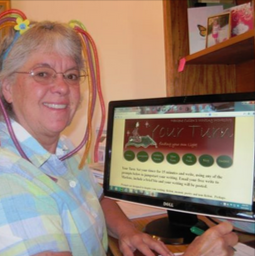 Do you think emails and Facebook posts can be considered as “writing?”
I do!
Today’s writing prompt is inspired from “Falling Down the Rabbit Hole” by Emily Hanlon, December 2007 issue of Writer’s Digest magazine.
Using an incident from your life, or your fictional character’s life, write a scene from your point of view (or, your fictional character’s point of view). Use dialogue. Inner thought is what defines point of view. The other character in this scene speaks and acts, but the reader doesn’t know the secondary character’s thoughts. All the inner thoughts belong to the point-of-view character.
 Basically, you are writing about an argument or a fight, or a heated debate between two people . . . yourself or your fictional character, and a secondary character, using dialogue.
Start a sentence with “The way I found out about . . . ” and go from there. Write! Just write.
You have ideas what to write about. But how do you get started? Do you sit at your computer, fingers poised above the keyboard . . . ready. . . but your mind swirls, goes blank. . . at a loss how to get started.
How about starting your writing time like many famous author do? With warm-ups, using writing prompts.
There are many blogs and websites with ideas for writing. One of them is my interactive blog, The Write Spot Blog. You can post your writing (~600 words) and receive comments on your writing.
You can also use prompts posted on my Facebook Writing Page and writing prompts on my website. http://www.thewritespot.us/writingprompt.html
The joy of writing freely . . . that’s what these prompts are about.
How do you start your writing time? What are your rituals? Your writing habits? Or, do you Just Write?

Write about your favorite food or drink and the last time you had it/them.
 Photo of fruit salad, prepared by Meals From The Heart at the French Market in New Orleans. If you go there, go to this Cafe. Seriously good food. The BEST gluten-free crabcakes!
Today’s prompt: Life is just a . . .
Set your timer for 15 minutes and finish the thought. . .

Today’s writing prompt is inspired from the September 2014 issue of Writer’s Digest magazine.
“A man opens his mailbox to find an envelope containing a set of instructions.”
Set your time and write for 20 minutes. Set it aside for twenty minutes. Then read. Tweak, make a few changes, but not too many. The energy from that first and fast writing is usually spot-on.
Write a short story of 750 words or fewer based on this prompt and enter Writer’s Digest Contest #60.
Send your story using the online form at writersdigest.com/your-story-competition or send via email to yourstorycontest@fmedia.com (entries must be pasted directly into the body of the email; attachments will not be opened).

I recently read a blog post by Maria Murnane at She Writes and asked Maria if I could share it with you. She graciously said yes.
Maria writes:
I’m currently working on my seventh novel, and one of the most valuable lessons I’ve learned about the writing process is when to hit pause on a particular scene/sentence/description and move on. If you’re a perfectionist or Type-A personality, that can be hard to do, but it’s extremely important. Trust me.
I use all caps to keep me focused on progressing the story.
When I was writing my first novel, if I wasn’t sure where to take the story next, I would spend countless hours tweaking, editing, refining, and tinkering the words I already had written. Where did that get me? Nowhere! The problem with spending too much time on a particular area of the book is that you aren’t moving the story forward, and if you don’t move the story forward, you will never finish the book. I’m convinced this is why it takes some people 10 years to complete the first draft of a novel. They work so hard making every sentence perfect that it takes forever to get to the finish line.
A good trick I’ve learned is to use the ALL CAPS function. My current manuscript is filled with notes in ALL CAPS such as:
It would be easy to spend days, if not weeks working on the above issues, but at the end of the day, they are details that aren’t critical to the story. If I want to finish the novel, my focus has to be on progressing the story.
Once you finish the first draft, then it’s time to go back and fix all the problem areas you’ve put in ALL CAPS along the way. That’s where the fun begins, because you know you’re in the home stretch!
 Books by Maria Murnane
Note from Marlene: I was so inspired by Maria’s wisdom and fun attitude that I signed up to receive her blog posts in my email inbox. Click here to read some of Maria’s inspiring posts. You can also sign up to receive The Write Spot Blog posts in your email inbox (scroll down, look on the right side for the sign-up box).
 Maria Murnane is the best-selling author of the romantic comedies Perfect on Paper, It’s a Waverly Life, Honey on Your Mind, Chocolate for Two, and Cassidy Lane. She also provides consulting services on book publishing and marketing. Click here to learn more about Maria and her consulting services.
 This blog post originally appeared on CreateSpace.com. Reprinted with permission. © 2014 CreateSpace, a DBA of On-Demand Publishing, LLC. All rights reserved.
