All Fools Day . . . Prompt #58

  • The roots of All Fools Day date back to at least the 1500s as an occasion to perpetrate tomfoolery, possibly in reaction to spring’s mercurial weather. It’s observed on April 1 in many Western countries.

    In Italy, France, Belgium, and French-speaking areas of Switzerland and Canada, pranksters cry “April fish” as they tape paper fish to people’s backs.

    In 1957, the BBC pulled a prank, known as the Swiss Spaghetti Harvest prank, where they broadcast a fake film of Swiss farmers picking freshly-grown spaghetti. The BBC were later flooded with requests to purchase a spaghetti plant, forcing them to declare the film a prank on the news the next day.

    Source:  Wikipedia 

    Prompt:  Write about pranks you used to play on April Fool’s Day, a prank pulled on you, or make up a story about how April Fool’s Day started.

    Court Jester

  • This prompt is inspired by Ianthe Brautigan from her Writers Forum workshop.

    Draw a circle with radiating arms, ending in circles (see below).

    In the center circle, write a note about a watershed moment where nothing was the same after that: A pivotal moment.

    Write details on the radiating circles. Include as many circles as you want for details.

    Write into the questions  . . . how did this moment shape me? How did this affect the rest of my life?

    Use this prompt to spark a freewrite.

    When you are finished with freewriting on this prompt, if you keep a journal, use that for details to flesh out the story.

    water circles new

  • Tips to writing deeply and comfortably.

    Stretch – either standing or sitting in a chair. Do whatever whatever stretching feels good to you.

    Sit easily in a comfortable chair.

    Take a deep breath in through your nose, exhale out through your mouth, like you are blowing out a candle.

    Take several deep breaths and whoosh out on the exhalations.

    Relax into your chair.  Smile.  Escort your inner critic out the door.

    Shed your ideas about what perfect writing means.

    Give yourself permission to write the worst stuff possible.

    Writing isn’t about talent, it’s about practice and going into another dimension.

    Creative writing is an act of discovery.

    Take another deep breath. Relax into your breathing. Exhale with a satisfying sigh.

    Rather than write for an audience, write from an instinctual level.

    Immerse yourself in writing. Let go of your worries and write. Just write to a satisfying inner desire to go to a meaningful place.

    Go deeper into the recesses of your mind and really write.

    Write from the well that stores the fears. Let the tears come. Let the stomach tie up in knots.

    It’s okay to write the story that is difficult to tell.

    Get through the barriers to go to a deeper level.

    See your story and tell it.

    When you are writing, if you run out of things to say, write “I remember. . .” and see where that takes you.

    Or write, “What I really want to say . . .”

    You can use the prompts on this blog to jumpstart your writing.

    beach filled heart

    Photo by Jeff Cullen. Click here to see Jeff’s portfolio on fotolia.

  • Prompt:  In a perfect world . . .

    Set timer for 12 minutes. Write.

    Post your writing here. Come on . . . share your writing with us.

    In a perfect world . . .

    IMG_1607


  • This is a two-part prompt.

    Part 1:  Get a photo of yourself.  We’ll wait.

    Toe tapping . . . humming.  Photo in hand?  If not . . . close your eyes for a moment and picture a photo of yourself.

    Write,  starting with:  “In this photo . . . ”

    Go! Now! Write before reading Part II.

    Wait. . . did you write on the prompt?

    If yes . . . proceed to the next part.  If not, take 10 or 15 minutes to write, “In this photo . . . ”

    We’ll wait for you to catch up.  Maybe we’ll hum a little tune. . . la. . . de. . . dum. . .

    Ready?

    Part II:

    Add three sentences after every sentence you have just written.  Start first additional sentence with “I felt” and then add two sentences after that.

    Example of adding three sentences to what you have already written.

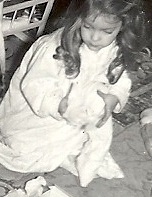
    Original Sentences:  In this photo, I’m opening a present. I’m four years old. It’s Christmas.

    Original sentence #1 plus three sentences:  In this photo, I’m opening a present. I felt happy. I loved being surrounded by my parents, grandparents, aunts and uncles. I’m excited to open this present.

    Original sentence #2 plus three sentences:  I’m four years old. I felt happy.  I am older than my sister. I liked playing with her.

    Original sentence #3 plus three sentences:  It’s Christmas. I felt content. I liked being in Nana’s living room. She made the nightgown and robe that I’m wearing in the photo.

    This is one way to go deeper in your writing.

    I first experienced this writing prompt with Adair Lara, at a writing class in her home, Summer 2009.  She teaches classes in her home. If you live in the San Francisco Bay Area and are interested, contact her. Click here for information about Adair Lara.

    scan0001


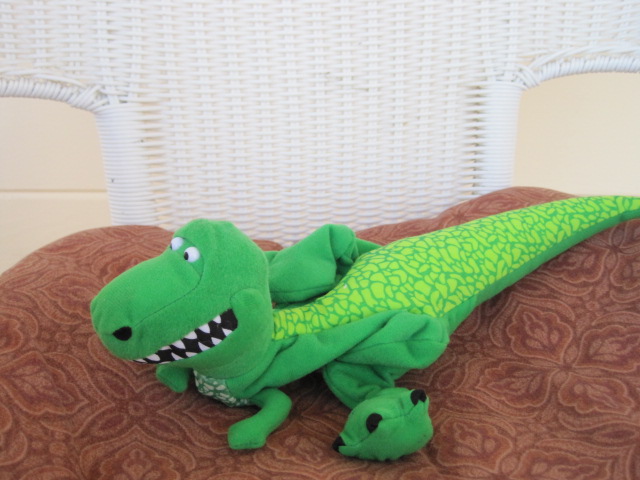
  • Tell a story from your past that has something to do with being a klutz or a time you were dazzling.

    Green Thing

  • “When you’re beginning a book, or getting back into a book, as I am now, you have to learn to deal with the nervousness and stress of it. The blank page or the stalled page is incredibly intimidating. And you have to turn that nervousness – rather than into something that blocks you, rather than into something that makes you try to over-think, that makes you feel that you can’t proceed unless you have a clear idea of where you’re going – you have to harness that nervousness, almost like a natural force, and make it work for you. You have to trust that you’re just going to get inside the page and get inside the sentences, and you have to release the desire to feel in control and just follow the writing where it takes you and have faith that you’re eventually going to find the way.  — Francisco Goldman 

    January 2014 issue of The Writer magazine.“Writers on Writing: Find the power to overcome writing fears.”

    The Writer magazine article written by Gabriel Packard

    Francisco Goldman

  • Today’s Prompt:  What I want to say . . .

    Post your writing and watch for comments.

    Tina-Turner-e03

  • Parade Magazine, March 2, 2014

  • Prompt #48 was about how to “Grow Your Character.”  Prompt #49 was about setting the mood. Prompt #50 was “The Problem.”

    Let’s put them all together and write the scene.  If you have freewrites on character, mood and a problem. . . use these elements to write a scene. Or, write a scene, using all new material.

    If writing memoir, write what actually happened, as best as remembered. Be sure to include details. Be specific. Not “car,” rather “1966 blue Dodge van.”

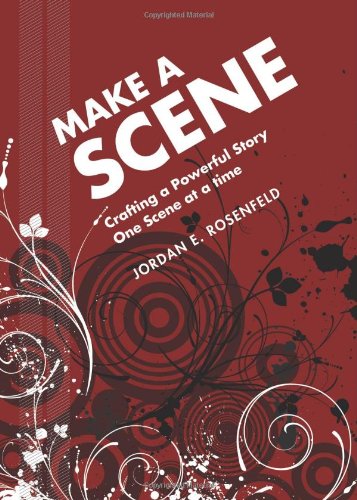
    “Scenes are capsules in which compelling characters undertake significant actions in a vivid and memorable way that allows the events to feel as though they are happening in real time. When strung together, individual scenes add up to build plots and storylines.  — Make A Scene, Crafting a powerful Story One Scene at a Time,  by Jordan E. Rosenfeld

    In Make A Scene, Jordan includes a recipe for basic ingredients for compelling scenes. If you are looking for an excellent book on how to write, this is it! Click here for my review of Make A Scene.

    Make A Scene.Rosenfeld