Jane Dystel: How long should it take to write a novel?

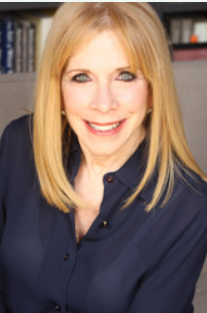
  • Jane DystelToday’s Guest Blogger is Jane Dystel, president of Dystel & Goderich Literary Management:

    Over the weekend, I finished a remarkable first novel.  The author had taken many years to complete this work and, in the end, I think the time it took her to do so has paid off (of course, only the marketplace will tell).

    Thinking about this – the time it takes a writer to finish a book – brought to mind how different each writer’s process is.  I found this very interesting piece on the subject in the Huffington Post.

    I have clients who take many years to finish their novels, much like the writer whose work I read this weekend.   Then, there are those who actually ask for deadlines (from me) by when they should have their next manuscript completed.  And then, of course, there are those who can conceptualize their stories and write them down much much faster.

    In the end, there is no right answer to how long it should take a writer to complete his/her manuscript.  It is what works for each individual.  I find it’s best not to compare your process to others’. Do what feels right for you.

    Originally posted on the Dystel and Goderich website, February 29, 2016, “How Long Should It Take Me To Write My Novel?”

    Note from Marlene: Jane’s thoughts about self-publishing are in the May 2016 issue of The Writer Magazine. Here’s an excerpt: “As an agency, we are now more interested in developing . . . authors’ careers and helping them be successful hybrid authors—those who are traditionally published and continue to self-publish at the same time.”

    Jane Dystel, President, has been an agent since 1986. Her publishing career began at Bantam Books. She then moved to Grosset & Dunlap, where she was a managing editor and later an acquisitions editor. From there, she went on to become Publisher of World Almanac Publications, where she created her own imprint. When she joined the agency that would soon become Acton and Dystel, Inc., she quickly developed a reputation for honesty, forthrightness, hard work, and real commitment to her authors and their writing careers. In 1994, with a growing roster of clients, she founded Jane Dystel Literary Management, which became Dystel & Goderich Literary Management in 2003. Born in Chicago, Jane grew up in Rye, New York. She is the daughter of publishing legend, Oscar Dystel, who is currently a consultant for DGLM. In her teens, she was an accomplished figure skater. Jane received her BA from New York University and attended Georgetown law school for one year before leaving for her first job in publishing. She has an abiding interest in legal subjects. She is married to Steven Schwinder and has a daughter, Jessica, and a son, Zachary. She lives in New York City with her family and two dachshunds and is a tenacious golfer.


  • Andrew Sean Greer answers this question in the September 2014 issue of The Writer Magazine.

    What’s the most important thing you’ve learned about writing?

    “That you be clever as clever, and people will be impressed, but they will only be impressed for so long. After that, unless you are very real in your writing, and donate some piece of your heart, and are vulnerable, someone else will come along much more clever than you. Better to be ready from the outset. There is no competition for vulnerability. We are all in that together.”

    Note from Marlene:  There’s that vulnerability thing again.  Feeling vulnerable seems to go along with sharing your writing with others. . . that’s what Steve Jobs and I were talking about in the August 14, 2014 post about the most important tool in life about making big choices.  Well, Steve and I didn’t actually have this conversation. . . but we could have, in my writerly imagination!

    Your turn:  What’s the most important thing you’ve learned about writing?

  • “When you’re beginning a book, or getting back into a book, as I am now, you have to learn to deal with the nervousness and stress of it. The blank page or the stalled page is incredibly intimidating. And you have to turn that nervousness – rather than into something that blocks you, rather than into something that makes you try to over-think, that makes you feel that you can’t proceed unless you have a clear idea of where you’re going – you have to harness that nervousness, almost like a natural force, and make it work for you. You have to trust that you’re just going to get inside the page and get inside the sentences, and you have to release the desire to feel in control and just follow the writing where it takes you and have faith that you’re eventually going to find the way.  — Francisco Goldman 

    January 2014 issue of The Writer magazine.“Writers on Writing: Find the power to overcome writing fears.”

    The Writer magazine article written by Gabriel Packard

    Francisco Goldman

  • January 2014 issue of The Writer magazine.

  • Pat Olsen has written an excellent article about writing personal essay in the December 2013 issue of The Writer magazine. Highlights:

    “. . . when I am so obsessed about an idea that I can’t wait to put pen to paper, the essay almost writes itself. That’s not so say I don’t struggle over every word, or that I’m done after the first draft . . . Some of the best advice I’ve received is that it’s not only what you choose to include in an essay that’s important, but it’s also what you choose to omit.”  She gives an example and then goes on to ask:

    “Are there actual rules for essay writing? If so, not all writers agree on them.” After consulting essayists, here’s what she discovered:

     Kate Walter:  “‘An essay should have a universal theme . . . No matter how unusual a story may seem,’ she says, ‘there should be a broader theme that every reader can identify with.”

     Andrea King Collier:  “‘Voice is everything,’ she notes. ‘Two people can write an essay on the loss of a parent, and it is the voice and the approach/lens of the writer that can make one sing over the other.’”

     Bob Brody: “Start with an anecdote, a scene or an observation, Brody advises. Go back in time or stay in the present. Have a single big moment or a series of big moments.”

     Amy Paturel:  “The best essays, she says, are about a transformation. ‘Between the beginning and the end of your essay, there has to be some sort of epiphany or awakening . . . ”

     Andrea Cooper:  “. . . take a break from your essay. ‘I studied once with memoirist Patricia Hampl, who encouraged us to think of revision literally,’ she says. “It’s re-vision, re-seeing.’”

    Lots of good information in this article about writing personal essay.

     Nina Amir posts writing prompts on her blog.  Her January 31, 2014 post, about personal essays, includes Writing Prompt #9, Brainstorm Personal Essay topics.

    Nina writes, “Personal essays tend to focus on one particular event and how it affected you or your life. They often have universal themes that makes it possible for readers to relate to personal stories.”


  • From December 2013 issue of The Writer magazine. “In the Classroom” with Kelly Caldwell.

    1. Don’t worry about What is My Larger Subject? in your first draft. Just get out of your own way, write the story and let the universal themes of the essay reveal themselves.

    2. When you’ve got that first draft, ask yourself, “So what?” and write down the answer.

    3. When you reach a point in the essay where you want to make things up because they would be more interesting or more satisfying or just prettier, don’t. This is creative NONfiction, after all, and yes, that matters. Also, those are usually places where you need to dig deeper, because that’s where the richer, more meaningful material usually lies.


  • by Larry Atkins, The Writer magazine, October 2013

  • Amor Towles, author of Rules of Civility, interview by Hillary Casavant, November 2013 issue of The Writer magazine.

  • Physical location and action to describe emotional state

    “Setting says something about character, says Rhodes,” in “Location Location” by Elfrieda Abbe, October 2013 issue of The Writer magazine. David Rhodes, author of Driftless and Jewelweed, goes on to say, “A person walking along an empty beach is thinking deeply. . . If a couple sits at a high place overlooking an open valley, they are in love and the future of that love extends before them. A character running through the forest is happy; one lying down is sick or sad. These associations are not hard-fixed symbols, but rather associative colorings that come to life in that split second between emergent images and first thoughts. In stories, such descriptive asides can be used to add depth to the passions and to suggest both strong and ambiguous states of mind.”


    Prompt #12

    Put yourself, or your fictional character, in a emotional frame of mind. Write, using physical location and action to describe character’s emotional state.  Don’t tell us what his or her emotion is. Write a descriptive scene.  Commentators:  What emotion do you think writer wants to convey?

  • – Andre Dubus III, in the November 2013 issue of The Writer magazine.