Guest Blogger Frances Lefkowitz writes:
The life of a freelance writer is full of the uncertain (“where will my next assignment come from?”) and the mundane (“did I spell that source’s name right?”), coupled with high deadline pressure and middling compensation. But every once in a while, I get to track down fascinating regular people and ask them to tell me stories. That’s what I did for a recent article for Good Housekeeping on the power of storytelling. The assignment was to write about the new evidence that storytelling has benefits for the health and wellness of individuals, families, and communities, and I had to read my fair share of academic research journals and talk to my fair share of M.D.s and Ph.Ds. But I also got to sit back, relax, and listen to tall tales.
The best, most enduring stories, it turns out, are those that contain both hardship and humor. Like the one Evelyn Karozos, who comes from a large Greek family in the Midwest, told me about how the whole family used to eat dinner in the parents’ bedroom on sticky summer nights—because that was the only room with an air conditioner. Or the one a southern grandmother—and who can beat Southerners for storytelling—told me the one about her great grandpa, who once wooed a wealthy widow by wrapping the few dollar bills he had around a wad of newspaper, then casually letting it drop from his pocket, leaving the impression that he was rolling in money.
And then there was the one from Emily Pickle, a young mother from Florida, who recounted a bittersweet story about the time her grandmother was going through a health crisis in which she suffered temporary dementia-like symptoms. “This was the year the Gators won the championship, and the quarterback was Danny Wuerffel,” she told me, adding, “Football is a very big deal where we come from.” When her mother and uncle went to visit Grannie in the hospital, they found her repeating, “Danny Wuerffel, Danny Wuerffel” over and over, as if she were reciting a prayer. When Pickle’s Uncle Jay shared the anecdote with the rest of the family, he mimicked Grannie’s reverence, rocking back and forth, repeating the beloved QB’s name, eliciting laughter and tears in his audience. “It was awful, but it was funny, too, the way he told us,” she pointed out. And beneath the laughter and the tears, Uncle Jay was sending an important message to the rest of the family, that “Grannie’s going to recover from this; she’s going to laugh, we’re going to laugh, and this will be one more family story — not a family tragedy.” And he was right.
Psychologists call these “redemptive stories,” because they “redeem” a negative experience, finding some silver lining in a bad event. The point is NOT to be a pollyanna and sugarcoat the fear, danger, or difficulty. The point is to acknowledge the negativity, and also find some kind of lesson or benefit in it—even if that benefit is simply that the family came together to overcome a challenge. When people hear these stories, they get a laugh, a release of tension, a sense of belonging, and a signal that together, we can find ways to carry on.
I tell you all this because, as writers, we deal in stories. We distill them and write them down and spruce them up and pass them on. And by doing so, we are not only making a livelihood; we are contributing to the health and well being of the people who read us.
Click here to read the Good Housekeeping article.
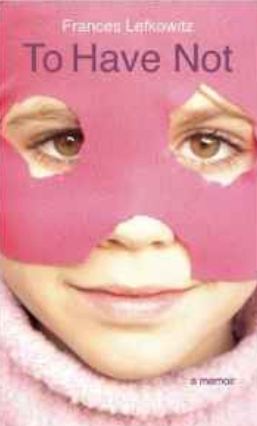
 Frances Lefkowitz is the former Senior Editor of Body+Soul (aka Martha Stewart’s Whole Living) and Book Reviewer for Good Housekeeping, as well as the author of the memoir To Have Not. She writes and edits fiction and nonfiction, and teaches for The Sun magazine’s writing workshops, the Omega Institute’s Memoir Festival (with Cheryl Strayed), Catamaran Literary Review’s August 2015 retreat, and other events.
Frances blogs about writing, publishing and footwear at PaperInMyShoe.com
Photo by Giacco Yanez
Frances will join other editors at Writers Forum on May 21. 2015 in Petaluma . . . meet editors, chat with editors, find an editor to help polish your manuscript.