California Winter

  • California Winter

    By Patricia Morris

    (with thanks to Ted Kooser)

    The wind turns the pages of rain

    As drops splatter on the skylights,

        beating a rhythm punctuated by

        the cracks of unmoored oak limbs

         hitting the roof.


     The rain chain dances,

        brass acorns jingling,

        water swooshing through its cups.


     The creek rushes over rocks,

          gushes into the culvert and out again,

          making its overground / underground way to the river.


    The thirsty earth soaks it in,

       filters it down into empty aquifers.

    One chapter ending, another beginning.


    Freewrite inspired by the poem, A Rainy Morning, by Ted Kooser


    Patricia Morris misses the summer thunderstorms of her rural Midwestern upbringing, but enjoys observing and writing about the California rains from her home in Petaluma.

    After careers as diverse as trial lawyer and organization and leadership development consultant and coach, she is exploring life beyond the workaday world.

    Every Monday night she writes with friends at Marlene Cullen’s and Susan Bono’s Jumpstart Writing Workshops. Her writing has appeared in Rand McNally’s Vacation America, the Ultimate Road Atlas and The Write Spot:  Possibilities edited by Marlene Cullen. Available on Amazon, print $15 and ereader $2.99.

  • The Write Spot Blog is all about writing: Writing Prompts to inspire you; Just Write tidbits to motivate you; Quotes to let you know others are in the same boat as you; Places to Submit to get your work out there; Book Reviews to share authors’ work; Guest Posts for all kinds of writing-related things.

    Today’s Guest Blog Post by Suzanne Murray talks about increasing your creativity by relaxing. Sounds easy, doesn’t it? But what about cortisol, adrenaline, and epigenetics? Factor those in, and it becomes apparent that relaxation isn’t as easy as drifting in a hammock.

    Fortunately, Suzanne Murray offers strategies to help us learn to relax. 

    HOW CREATIVITY CAN HELP US RELAX

    We all know that relaxation makes us and our bodies feel good whereas stress causes us to tense up and feel less that optimum. New scientific research shows just how important relaxing our bodies and minds is.

    The emerging science of epigenetics shows that our genetic expression is not permanently fixed at birth, but actually evolves as we grow and learn. Environmental factors including nutrition, stress and our emotional responses can affect how our genes express themselves without changing the basic blueprint of our DNA, the genetic material in our cells.

    When we are stressed our genes produce hormones associated with fight or flight like adrenalin and cortisol that are associated with aging and making us more susceptible to disease. When we are relaxed and feeling good our genes produce chemistry that boosts our immune system and helps with cellular repair and growth. 

    A study looking at mindfulness practices like meditation, yoga, breath work, and other relaxation techniques, showed that we can actually “turn on” disease-preventing genes and “turn-off” disease-causing genes through relaxing. Research on the energy psychology modality EFT (Emotional Freedom Techniques), an easy to use self-help strategy that combines western psychology with Chinese acupressure, found that an hour session of EFT lowered cortisol levels by 24 percent.

    I’d like to add creativity to ways we can relax as well as develop more of our potential.

    Creativity is really a form of mindfulness since it puts us in the flow of the moment and feels good. Adult coloring books have been shown to reduce stress. I like doodling or free writing where you just let the words flow out of the pen with no thought to what you are writing.

    Bringing play to whatever process you are working with and letting go of attachment to outcome is important.

    Stress so often stems from the fact that our mind has leapt ahead with worry about the future or is chewing over something that happened in the past. When we do things that bring us into the moment we naturally relax.

    Find what works for you. Play with it and see if you feel better.

    Suzanne Murray is a gifted creativity and writing coach, soul-based life coach, writer, poet, EFT practitioner and intuitive healer committed to empowering others to find the freedom to ignite their creative fire, unleash their imagination and engage their creative expression in every area of their lives. She works with simple, powerful techniques to help clear whatever gets in the way and creates a safe and sacred space for your creative and soulful life to blossom. She provides an experience of the joy and beauty that comes from embracing your gifts and expressing them in the world. With a lifelong connection to the natural world, she enjoys sharing the grace and wonder that Nature can bring to your life and creativity

     Writing and Creativity in Nature
    One Day Workshop Point Reyes CA
    April 22, 2017, 10 am to 4 pm

    Spending time in nature is good for our health, enhances our creative capacities and increases our general sense of wellbeing. It can help us enter the flow. Join me for this one day workshop where we will work with our creativity in the beauty of nature.

    EFT (Emotional Freedom Techniques)

    I’ve been working with EFT in new ways that allow us to laser in on the issue and shift it at the core. We often make significant shifts in a single session. Sessions are available by phone and Skype


    Original posted on Suzanne’s April 2, 2017 Blog

     

  • Excerpt from The Martian Chronicles by Ray Bradbury:There was a smell of Time in the air tonight.

    What did Time smell like? Like dust and clocks and people. And if you wondered what Time sounded like, it sounded like water running in a dark cave and voices crying and dirt dropping down upon hollow box lids, and rain. Time looked like snow dropping silently into a black room or it looked like a silent film in an ancient theatre one hundred billion faces falling like those New Year balloons down and down into nothing. That was how Time smelled and looked and sounded.

    HourglassMarlene’s Musings: I love the idea of writing what Time smells like. . . sounds like . . . looks like. . .

    Your Turn: Choose an item, an object, a thing, that interests you. . . what does it smell like? sound like? look like?

  • ClaraGuest Blogger Clara Rosemarda reveals how to write with depth and clarity.

    Clara writes:

    Many years ago I took voice lessons from a master teacher. He worked with people
    who believed they were tone deaf. I was one of those people. My voice seemed flat as the ground I walked on, and I was too embarrassed to sing unless I was in a group large enough to swallow the sound of my voice.

    My teacher, robust and powerful, sat opposite me on the floor of his music studio. With full-bodied fingers born to make music he plucked the strings of his tambura going up and down the scale. Then he sounded a note and had me repeat it. At first I couldn’t reproduce the exact sound, but after a few tries and great concentration, I was able to. He told me I had a good voice which was a surprise to me. Once I got the hang of it, whenever I missed a note, he looked straight at me with his burning brown eyes, and asked where I had gone. Then he’d have me try again, and again, until I finally got it.

    These few lessons taught me that the problem was not with my voice, but my inability to stay focused and present. Although I was capable of deep concentration in many other areas, the life-long belief that I couldn’t sing disrupted my ability to listen and to replicate what I heard. Frightened that I would get it wrong, I tried to think my way through instead of trusting that if I listened I would be able to repeat the sound.

    Even though I don’t plan on giving a recital in Carnegie Hall or anywhere for that matter, I do enjoy singing now for the pure pleasure of it. Most importantly, I no longer consider myself tone deaf. I have developed the ability to concentrate when I’m singing, to listen deeply, and to be present with the sounds. When you are of two minds, neither one can be used to its fullest.

    The same is true with writing. When your mind is concentrated on a single thought or image, when you ARE the writing, and not jumping ahead of yourself, or thinking of HOW you are writing, you will write with depth and clarity.

    In the initial creation, all that is required is that you put pen to paper and keep your hand moving. Stay with your original thought, rather than allowing the editor to sit on your shoulder telling you not to say that, or how stupid this is, or what makes you think you’re a writer? To sound a clear note, you cannot be of two minds; your mind must be fully present and focused on a single point.

    EXERCISES:

    1. “His reflection in the mirror … ” Write for 1 0 minutes.
    2. “Walking through … ” Write for 15 minutes.
    3. “When I woke up that morning … ” Write for 20 minutes.
    4. Read these pieces aloud to yourself, listening mindfully, as if someone else had
      written them. What did you, the reader, hear that you didn’t hear as you were writing?

    CLARA ROSEMARDA M.A. is an evocative writing teacher, poet, memoirist, intuition counselor, and workshop leader. She has been in private practice in Santa Rosa, California for over thirty years where she works with beginning as well as mainstream writers. Clara teaches workshops at Santa Rosa Junior College and internationally. In her private sessions as well as her teaching she helps people connect to and act from their most authentic selves. She was co-creator and coordinator of the popular writers’ program, The Writer’s Sampler, of the Sebastopol Center for the Arts. Her prose and poetry are published in literary journals and anthologies. She is co-author and co-editor of the anthology, STEEPED: In the World of Tea (Interlink Publishing, 2004). Clara has two poetry chapbooks: “Doing Laundry” (a letterpress limited edition, Iota Press, 2013) and “Naked Branches” (WordTemple Press, Small Change Series, 2014).

    Note from Marlene:  If you have a chance to take a workshop with Clara. . . do it!  I did and it was a transformative experience.

  • How do you want to be remembered?

    Humorous or serious – what would you write for your epitaph?

    Compose several brief epitaphs for yourself — the headlines you’d like to see on your headstone. Think of them as messages to future generations that convey how you want to be remembered. And then. . . write a story that explains why the epitaph is appropriate.

    You could also write this for your fictional character.

    Here are some ideas:

    • He Was Happiest When He Was Young. Strongest When He Was Old.
    • Family First, Last, and Always
    • I’d Rather Be Smelling the Roses (Than Lying Underneath Them)
    • Wish I Had It All to Do Over Again (So I Could Do It All the Same but Better)

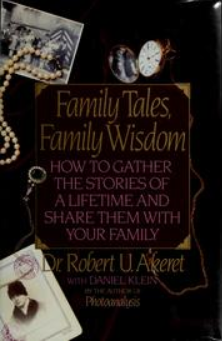
    From Family Tales, Family Wisdom —  How to gather the stories of a lifetime and share them with your family, by Dr. Robert U. Akeret with Daniel Klein


    Prompt #124

    Write your obituary, or your Life’s Tributes.  Share your writing here, on The Write Spot Blog.

  • What is your body telling you?

    For today’s writing . . . sit comfortably. Take a deep breath in. Let it out. Another deep, refreshing breath in. Release. One more big, nourishing breath. Let it whoosh out.

    Mentally scan your body. Become aware of any area that draws your attention – notice what part of your body calls out to you.

    Place the palm of your writing hand on the place that calls out. Or bring your breath there if it’s not reachable with your hand.

    Allow your hand to be filled with the information from that place.


    Prompt #123

    When you are ready, write about what you have discovered.

  • Gifts!


    Prompt #122

    Write about one or more:

    • The most disappointing gift you have received and what it revealed about the giver.
    • The most unusual gift you have received, or given.
    • The most wonderful gift you have received, or given.
    • Write about intangible gifts.

  • “When there is an obstacle, you have to rise to the challenge, not be overwhelmed by it. And we’re not alone in the world. I don’t know if there’s a name for that — religion or faith — just that there’s something greater than all of us, and it’s uniting and beautiful.” — Angelina Jolie, December 22, 2014 People magazine.

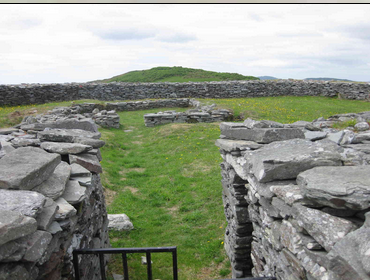
    March.stone wallFrom Marlene: Writing unites and connects us and that is, indeed, beautiful. When you reach an obstacle or challenge with your writing, see if you can work around it. Write sideways, in the margins. Come at the problem from a new angle. See the stumbling block as an opportunity to explore the problem and create a new solution. How? By doing a freewrite. Write down the first word that pops into your head and then write, for 12-15 minutes. Click here and here for more writing prompts. Just Write!

    Photo by Jim C. March

  • Write about something that happened . . .

    Write about something that happened to you this week. It can be something big, or something small. Maybe something you saw or observed. Perhaps something or someone touched you in a meaningful way. Write, using great detail. Or write sparse. Just write!

    Photo by Breana Marie


    Prompt #120

    Write about something that happened to you this week.

  • scarves

    From Marlene: Your writing comes from memory, imagination, good times and bad. Share your memories through your writing. Create good times for readers. Weave your words, like threads on a loom, into a pattern that others can enjoy. Share your story.